PewDiePie (Felix Kjellberg) Biography: Age, Height, Wife, Net Worth, Son & Career Milestones
Comprehensive biography of PewDiePie (Felix Kjellberg): early life in Sweden, YouTube breakthrough, height, marriage to Marzia, son Björn, and life in Japan.
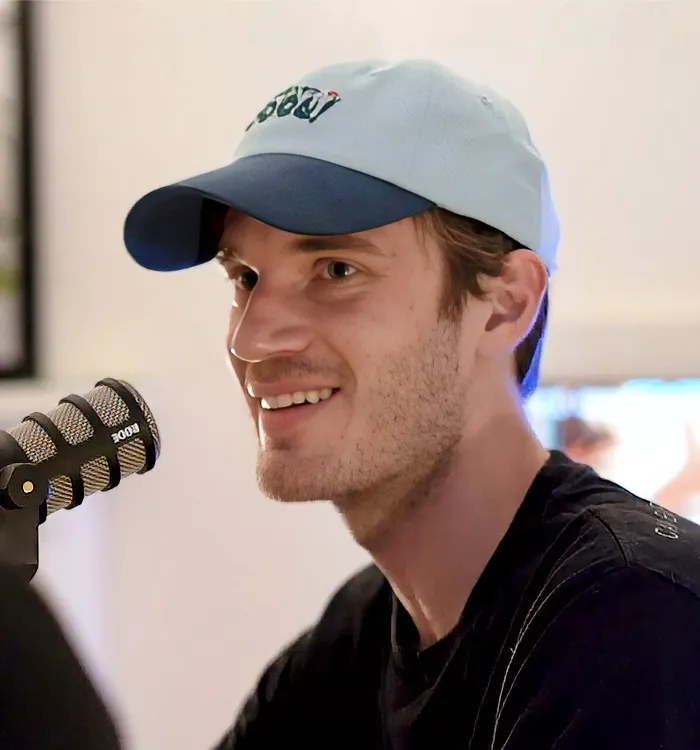
Photo: Cold Ones Clips / Wikimedia Commons (CC BY 3.0)
Long before YouTube was an algorithmic television substitute or an incubator for venture-backed creator companies, Felix Arvid Ulf Kjellberg sat in a rented Gothenburg apartment screaming at pixelated monsters. Most people around him thought he was wasting his twenties. His parents wanted him in engineering. He sold hot dogs at a street cart instead, funneling whatever cash he pocketed straight into a computer tower and an ordinary desktop microphone.
That gamble paid off in ways nobody anticipated. Performing under the handle PewDiePie, Kjellberg became the definitive figure of the platform’s wild, amateur era. By late 2026, he turned 37 years old and crossed 111 million subscribers. The hyperactive gaming sessions are mostly history now. Instead, his audience watches him build home gyms, walk suburban Tokyo streets, and adjust to life with his wife Marzia and their toddler son, Björn.
PewDiePie Quick Facts & Biographical Overview
| Full Name | Felix Arvid Ulf Kjellberg |
|---|---|
| Known Online As | PewDiePie |
| Date of Birth | October 24, 1989 |
| Age (as of 2026) | 37 years old |
| Birthplace | Gothenburg, Sweden |
| Nationality | Swedish |
| Current Residence | Tokyo, Japan (moved May 2022) |
| Height | 5 ft 9 ¼ in (176 cm) |
| Spouse | Marzia Kjellberg (née Bisognin, m. August 19, 2019) |
| Children | Björn Kjellberg (born July 11, 2023) |
| Parents | Lotta Kristine Johanna & Ulf Christian Kjellberg |
| Siblings | Fanny Kjellberg (sister) |
| Education | Göteborgs Högre Samskola (2008); Chalmers University of Technology (withdrew 2011) |
| Subscribers | 111+ Million |
| Net Worth | Not publicly disclosed or audited (tabloid speculations vary widely) |
Early Life in Gothenburg and Walking Away from Chalmers
Kjellberg grew up in Gothenburg alongside his older sister Fanny. His household ran on corporate precision. His mother, Lotta Kristine Johanna, served as a chief information officer for KappAhl, while his father, Ulf Christian Kjellberg, worked in corporate executive management. Felix did not share their enthusiasm for boardrooms. He spent late nights glued to his monitor, playing StarCraft matches and tinkering with Adobe Photoshop brushes.
He graduated high school at Göteborgs Högre Samskola in 2008 and got accepted into Chalmers University of Technology to study Industrial Economics and Technology Management. On paper, it was a golden ticket to a predictable corporate career. In reality, he hated the lectures. He spent hours drawing fantasy illustrations on his notebook margins. In April 2010, he opened a YouTube channel, pasting together a laser noise (“pew”), mortality (“die”), and a pastry (“pie”).
In 2011, he walked out of Chalmers. His parents were furious and cut him off financially. To pay his apartment rent and buy new graphics cards, Felix stood over a griddle selling hot dogs on Gothenburg street corners and sold digital prints of his artwork. It gave him complete days to edit videos.
The Let’s Play Era: Fear, Barrels, and Overnight Audience Growth
Gaming on YouTube in 2011 was mostly silent, clinical, and dry. Players uploaded spotless competitive walkthroughs or esports recordings with no face visible on screen. PewDiePie flipped that model completely upside down. He mounted an unglamorous little webcam, zoomed in on his frantic facial reactions, and played survival horror games in the pitch black.
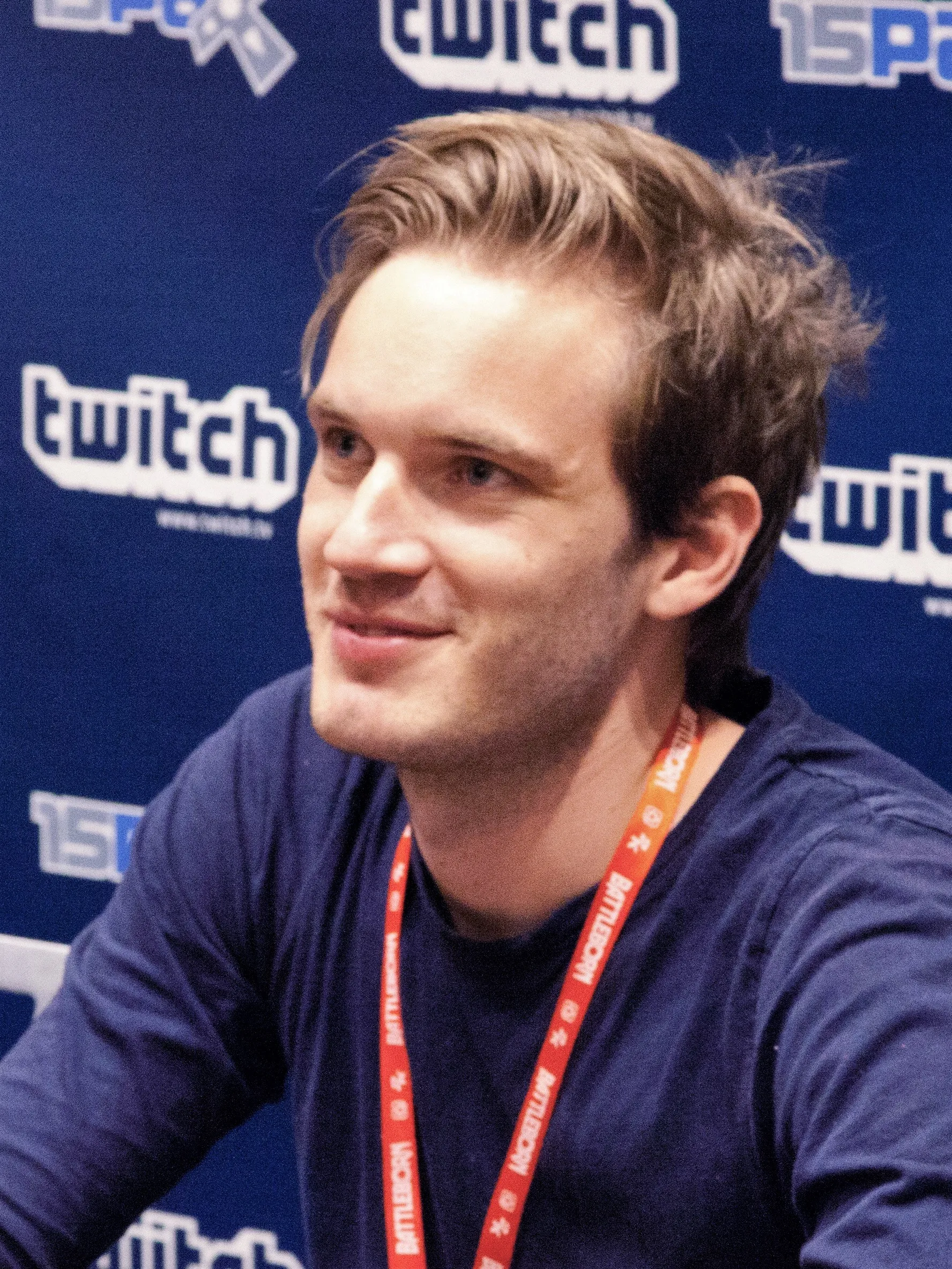
His playthrough of Frictional Games’ Amnesia: The Dark Descent struck a nerve. He screamed at shadows, threw his headset across the desk, and anthropomorphized random game items, starting a war with wooden barrels and carrying around a golden statue named Stephano. Kids and teenagers who could not afford gaming PCs watched him daily after school. The format took off like wildfire.
In July 2012, his channel crossed 1 million subscribers. Two months later, it was 2 million. By August 2013, PewDiePie passed Smosh to become the most-subscribed channel on the entire platform. While mainstream outlets wrote dismissive columns about Swedish kids yelling at screens, online video was exploding into a dominant entertainment force. Over in New York and New Jersey, creators were testing their own ground, seen in Casey Neistat’s pioneering daily vlogging style and Marques Brownlee’s independent tech production. Kjellberg was running out in front of all of them.
Corporate Friction, Controversies, and Format Maturity
Staying at number one for five years came with brutal friction. By 2016, Kjellberg was visibly exhausted by playing video games on demand. He began pivoting toward deadpan internet sarcasm, surreal comedy, and edgier memes. That pivot quickly crashed into commercial reality.
In February 2017, a Wall Street Journal report pulled clips of satirical stunts, including hiring gig workers on Fiverr to hold up offensive anti-Semitic signs. The corporate blowback hit overnight. Disney’s Maker Studios cancelled their contract. YouTube scrapped season two of his reality show Scare PewDiePie and kicked his channel off premium Google Preferred ad buys. Later that year, in an angry moment on a PlayerUnknown’s Battlegrounds livestream, he blurted out a racial slur on microphone.
He did not hire a public relations firm to paper over it. He posted straightforward video apologies, acknowledged his carelessness, and restructured his content entirely. He threw out gaming marathons and built structured discussion segments: Meme Review, Pew News, and LWIAY. Gradually, his channel evolved into a platform for book reviews, stoic philosophy, and cultural essays.
The Great Subscriber Race and Crossing 100 Million Subscribers
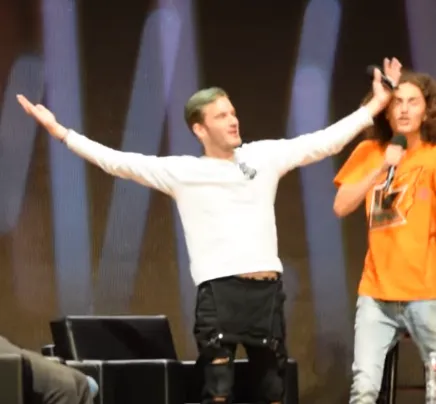
In late 2018, the Indian music and film company T-Series started chasing down PewDiePie’s subscriber count. Social tracking sites turned the sub gap into a live spectator sport. What started as an internet joke mutated into a sprawling cultural campaign branded “Subscribe to PewDiePie.” The internet treated it as a fight between solo creators and corporate media algorithms.
Creators across every continent stepped into the fray. Jimmy Donaldson paid for regional radio campaigns and outdoor signs across North Carolina, driving the initial surge that built MrBeast’s digital media empire. In India, the cultural contest catalyzed massive creator reactions, heavily influencing CarryMinati’s rise in gaming commentary through high-voltage diss tracks. Felix fired back with his own parody music tracks, “Bitch Lasagna” and “Congratulations.”
The campaign spiraled out of control in March 2019 when the shooter in the Christchurch terrorist attack yelled “Subscribe to PewDiePie” during his livestream. Felix was sickened. He released a direct video demanding that the meme stop immediately and permanently. Five months later, on August 25, 2019, his channel crossed 100 million subscribers, making him the first individual creator to reach that mark.
Personal Life: Marzia, Settling in Japan, and Fatherhood
Throughout the madness of his channel’s rise, Kjellberg stayed tethered to Italian creator Marzia Bisognin. They met online in 2011 after Marzia’s friend sent her one of his early gaming videos. They bounced between Sweden and Italy before buying a house in Brighton, England, where they lived for nearly ten years. On August 19, 2019, they married inside the Temperate House glasshouse at London’s Royal Botanic Gardens, Kew.
Japan had been their dream destination for years. Felix bought a home in Tokyo back in 2019, but pandemic travel bans froze foreign entries for over two years. In May 2022, they chartered a private aircraft so their older pugs, Edgar and Maya, could fly in the cabin without cargo stress. Once in Tokyo, Felix stepped into semi-retirement.
On July 11, 2023, Marzia gave birth to their first child, Björn. Kjellberg’s vlogs shifted entirely to domestic life. Instead of screaming at horror games, he films trips to neighborhood hardware stores, morning stroller walks through quiet residential streets, and sessions in his garage gym.
PewDiePie Social Media Presence & Verified Accounts
The table below provides direct, verified links to Felix Kjellberg’s official public accounts:
| Platform | Official Account / Link | Verification Note |
|---|---|---|
| YouTube | @pewdiepie | Official Channel (111M+ Subscribers) |
| @pewdiepie | Verified Official Profile | |
| X (Twitter) | @pewdiepie | Official Account |
| facebook.com/PewDiePie | Verified Official Page | |
| Official Store | pewdiepie.store | Official Apparel & Merchandise |
Frequently Asked Questions About PewDiePie
Question: How tall is PewDiePie?
Answer: Felix Kjellberg stands 5 feet 9 ¼ inches tall, which is approximately 176 cm. For years, fans and Felix himself joked on Twitter that he was 180 cm tall (about 5 ft 11 in), but in-person comparisons and video measurements confirm his real height is right around 176 cm.
Question: How old is PewDiePie in 2026?
Answer: He is 37 years old. He was born on October 24, 1989, in Gothenburg, Sweden.
Question: Where does PewDiePie live today?
Answer: He lives in Tokyo, Japan. He and Marzia purchased a home there in 2019 and officially relocated in May 2022.
Question: What is PewDiePie’s real net worth?
Answer: His actual net worth has never been made public. Online celebrity finance websites regularly toss out numbers between $20 million and $50 million, but those figures are unverified guesses rather than audited disclosures.
Question: Does PewDiePie have any children?
Answer: Yes. Felix and Marzia have one son, Björn Kjellberg, born on July 11, 2023.