Manoj Bajpayee Biography: Age, Height, Wife, Movies, Awards & The Family Man
Comprehensive biography of Manoj Bajpayee covering his rural roots in Belwa, theatre training in Delhi, breakthrough as Bhiku Mhatre in Satya, 4 National Film Awards, The Family Man, height, wife Shabana Raza, and verified social media links.

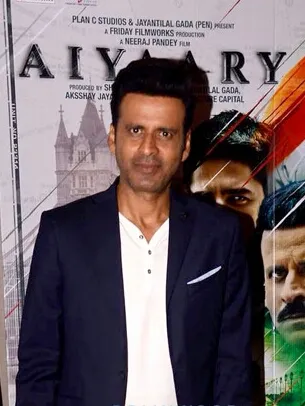
Photo: Bollywood Hungama / Wikimedia Commons (CC BY 3.0)
Stand on the jagged sea rocks of Bandra at dusk, and you can almost hear the roar that broke Hindi cinema wide open in 1998.
“Mumbai ka king kaun? Bhiku Mhatre!”
Until that moment, Bollywood leading men belonged to two rigid castes: velvet-voiced romantics serenading heroines in Swiss meadows, or indestructible action stars who never bled or flinched. Manoj Bajpayee wrecked that fantasy. Wearing cheap floral shirts, teeth stained, eyes bloodshot with manic loyalty and sudden terror, he dragged Hindi cinema down to the gutter and made it art. In an industry built on dynasties and glossy perfection, he proved that dirt, dialect, and devastating vulnerability were far more compelling.
Almost three decades later, he is still doing it.
As intelligence analyst Srikant Tiwari in Amazon Prime Video’s The Family Man, he has reached global living rooms by doing the opposite of James Bond: arguing over grocery bills, getting chewed out by school principals, and tracking terror cells from a battered Maruti. At 57 years old as of November 2026, with four National Film Awards and the Padma Shri under his belt, Bajpayee remains the gold standard for Indian character realism.
Manoj Bajpayee Quick Biography Facts
| Full Legal Name | Manoj Bajpayee (also historically credited as Manoj Bajpai) |
|---|---|
| Date of Birth | 23 April 1969 |
| Current Age | 57 years old (as of November 2026) |
| Birthplace | Belwa village, near Bettiah, West Champaran district, Bihar, India |
| Height | 5 ft 9 in (175 cm / 1.75 m) |
| Father | Radhakant Bajpayee (farmer) |
| Spouse | Shabana Raza (screen name Neha, married 2006) |
| Children | Ava Nayla (daughter) |
| Education & Training | Ramjas College, University of Delhi (BA History); Barry John Acting Studio |
| National Civilian Honor | Padma Shri (conferred in 2019 for contributions to Indian Arts) |
| National Film Awards | 4 wins: Satya (1998), Pinjar (2003), Bhonsle (2019), Gulmohar (2023) |
| Signature Projects | Satya, Shool, Pinjar, Gangs of Wasseypur, Aligarh, Bhonsle, The Family Man |
| Personal Wealth Disclosure | Not publicly disclosed; speculative tabloid estimates are unsupported |
From Belwa to Delhi: Rejection, Despair, and the Barry John Crucible
Belwa is a dot on the map of West Champaran, surrounded by cane fields and river floodplains. Manoj was the second of six children born to a modest farmer. His father named him after Manoj Kumar, hoping some cinematic luck might brush off on the boy. Early life was mud, tractors, and village schools in Bettiah. But whenever a touring film projection tent arrived in the district, young Manoj was in the front row, mesmerized by Amitabh Bachchan.
His family envisioned a sensible path: civil services, an administrative post, a quiet government salary.
Bajpayee had other ideas.
At 17, he boarded a sleeper train for Delhi. He enrolled at Satyawati College before transferring to Ramjas College in Delhi University’s North Campus to study history. Delhi’s street theatre became his true classroom. He performed street plays, slept on bare floor mats, and lived on tea and parathas. Then came his obsession: the National School of Drama.
He auditioned for NSD. Rejected.
He auditioned a second time. Rejected again.
A third time. Another rejection.
When the fourth rejection letter arrived, his world collapsed completely. In later interviews, Bajpayee recounted how his friends kept round-the-clock suicide watches over him, taking turns staying in his room because the despair had grown suffocating. The prestigious drama school had shut its doors on him four times in a row.
He refused to quit.
He walked into theatre director Barry John’s workshop. John saw something in the gangly, intense Bihari youth that the formal academy missed: an unvarnished emotional ferocity. John trained him, honed his physical voice, and eventually hired him as an assistant instructor. Decades later, the National School of Drama invited Bajpayee back to its Mandi House campus—this time not as a nervous hopeful, but as a revered master delivering guest lectures to its graduating class.
The Satya Earthquake: How Bhiku Mhatre Rewrote Bollywood Rules
Mumbai in the mid-1990s was brutal for an outsider with unconventional looks. Bajpayee took background bits in Govind Nihalani’s Drohkaal (1994) and Shekhar Kapur’s Bandit Queen (1994), where he played the dacoit Maan Singh. Kapur’s assistant director on that set happened to mention Bajpayee’s intensity to Ram Gopal Varma.
Varma called him in. He offered him a role in Daud (1997) and made a quiet promise: “Wait for my next film. I will give you a part nobody will forget.”
That part was Bhiku Mhatre.
When Satya hit cinemas in July 1998, Indian cinema changed overnight. Gangsters in Hindi films had always been caricatures—snarling sociopaths in den dens smoking cigars. Bhiku Mhatre was different. He loved his wife, laughed hysterically with his crew over cheap liquor, danced in the rain at Ganesh Chaturthi, and executed rivals without a heartbeat of hesitation. It was a terrifying, deeply human portrait.
The film swept the awards circuit, and Bajpayee walked away with his first National Film Award for Best Supporting Actor. Producers lined up at his door with suitcases of cash, offering him identical rowdy villain roles in commercial formulas.
He turned almost all of them down.
The Uncompromising Rebel: Shool, Pinjar, and Gangs of Wasseypur
Walking away from commercial formula money required nerves of steel. Instead of playing cartoonish henchmen, Bajpayee joined writer Anurag Kashyap and director Eshwar Nivas for Shool (1999). As Inspector Samar Pratap Singh, an honest police officer stationed in Motihari who refuses to bow to local criminal politicians, Bajpayee gave a masterclass in psychological disintegration. The film’s final act—where grief and betrayal push him over the edge—remains one of the rawest climaxes in Indian cinema history, bagging him his second Filmfare Critics Award.
Four years later, he starred as Rashid in Chandra Prakash Dwivedi’s Pinjar (2003), adapted from Amrita Pritam’s Partition novel. His portrayal of a man torn between generational communal hatred and genuine remorse won him a Special Jury National Film Award.
Then came 2012.
Anurag Kashyap offered him Sardar Khan in Gangs of Wasseypur – Part 1. The film detonated at Cannes and sent shockwaves across India. Bajpayee played Sardar Khan with lethal swagger, unhinged sexuality, and mordant humor. Sharing screen space with formidable craft contemporaries like Pankaj Tripathi, Bajpayee anchored an epic that gave modern Hindi cinema its vernacular voice. Just as modern performers like Vijay Varma and Vikrant Massey have built reputations on psychological specificity, Bajpayee showed an entire generation that an actor does not need six-pack abs or synthetic diction to command the silver screen.
The Quiet Tragedies: Aligarh, Bhonsle, and the Art of Stillness
If Satya and Wasseypur proved how loudly Bajpayee could roar, his mid-career independent work showed how deafening his silence could be.
In Hansal Mehta’s Aligarh (2015), he stepped into the skin of Dr. Shrinivas Ramchandra Siras, a Marathi professor at Aligarh Muslim University who was hounded, secretly filmed, and suspended for his private consensual homosexuality. There were no melodramatic courtroom speeches in Bajpayee’s performance. Instead, he let viewers watch Siras sip whiskey in a tiny room, gently humming along to a vintage Lata Mangeshkar melody on the radio, his trembling hands holding a glass against unbearable institutional cruelty.

Three years later, he produced and starred in Devashish Makhija’s Bhonsle (2018). Playing a retired, terminally ill Mumbai police constable navigating the venom of regional identity politics in a crowded chawl, Bajpayee barely spoke fifty words throughout the entire runtime. He acted with his spine, his wheezing cough, and his exhausted eyes. The performance won him his third National Film Award—this time for Best Actor.
In 2023, he shared the screen with Sharmila Tagore in Rahul V. Chittella’s Gulmohar, picking up yet another National Award Special Mention. That same year, in Sirf Ek Bandaa Kaafi Hai, he carried an entire courtroom drama on his shoulders as lawyer P.C. Solanki, fighting a powerful godman without raising his voice beyond forensic reason.
Srikant Tiwari and the Global Streaming Explosion
When Raj & DK pitched The Family Man in 2018, streaming platforms in India were largely mimicking foreign formats. Bajpayee signed on with one condition: Srikant Tiwari could not be a slick undercover operative.
The result was pure gold.
Srikant is a world-class counter-terrorism operative for TASC, but he cannot negotiate a loan waiver from his suburban bank manager. He saves Mumbai from nerve gas attacks in the afternoon, but gets reprimanded by his wife Suchitra (Priyamani) in the evening for forgetting to buy milk. That hilarious, agonizing middle-class domestic friction turned the show into an international juggernaut across two seasons, earning Bajpayee consecutive Filmfare OTT Awards for Best Actor in a Drama Series.
Much like the second-wind renaissance witnessed by veteran Bollywood actors such as Bobby Deol in the digital era, Bajpayee used OTT platforms to demonstrate that long-form narrative arcs belong to seasoned character actors who know how to pace human contradictions across ten hours of storytelling.
Personal Life, Marriage to Shabana Raza, and the Net Worth Myth
Off-screen, Bajpayee lives one of the quietest lives in Mumbai. He avoids Bollywood nightclubs, PR spectacles, and industry factions. In 2006, he married Shabana Raza, who gained nationwide fame under her screen moniker Neha in Vidhu Vinod Chopra’s 1998 romance Kareeb. They met shortly after the release of Satya, bonded over literature and simple living, and wed in a quiet ceremony. Together, they have a daughter, Ava Nayla.
Search Bajpayee online, and gossip portals routinely throw around claims of a ₹100 crore to ₹250 crore net worth. These numbers are pure fiction manufactured by algorithm-driven ad farms.
Bajpayee has addressed this directly in interviews: character actors in independent cinema do not command the astronomical salaries of commercial studio superstars. His financial reality consists of a comfortable Mumbai apartment, disciplined savings, and selective brand partnerships. His true equity is artistic freedom—the ability to turn down high-paying garbage in favor of scripts that actually matter.
Manoj Bajpayee Social Media Presence & Verified Accounts
Bajpayee frequently admits that he finds social media exhausting and prefers reading books or spending time in the mountains of Uttarakhand. However, he maintains verified official accounts to communicate directly with filmgoers, announce new releases, and support independent cinematic projects:
| Platform | Handle / Account | Verified Direct Link |
|---|---|---|
| X (formerly Twitter) | @BajpayeeManoj | Visit Official Profile |
| @bajpayee.manoj | Visit Official Profile | |
| Manoj Bajpayee Official | Visit Official Profile | |
| IMDb Database | Manoj Bajpayee (nm0047997) | View Filmography on IMDb |
Frequently Asked Questions About Manoj Bajpayee
Question: What is Manoj Bajpayee’s verified height?
Answer: Manoj Bajpayee stands at approximately 5 feet 9 inches (175 cm or 1.75 metres tall), a natural, grounded physical frame that has allowed him to blend invisibly into everyday civilian roles.
Question: How old is Manoj Bajpayee?
Answer: Born on April 23, 1969, in Belwa village, Bihar, Manoj Bajpayee is 57 years old as of November 2026.
Question: How many National Film Awards has Manoj Bajpayee won?
Answer: Manoj Bajpayee has won four National Film Awards: Best Supporting Actor for Satya (1998), Special Jury Award for Pinjar (2003), Best Actor for Bhonsle (2019), and Special Mention for Gulmohar (2023).
Question: Who is Manoj Bajpayee’s wife?
Answer: He is married to former actress Shabana Raza (known earlier by her screen name Neha), who debuted in Vidhu Vinod Chopra’s 1998 romantic drama Kareeb. They married in 2006 and share a daughter named Ava Nayla.
Question: What was Manoj Bajpayee’s breakthrough role?
Answer: His watershed performance was gangster Bhiku Mhatre in Ram Gopal Varma’s 1998 crime classic Satya, which transformed the treatment of crime, slang, and anti-heroes in Indian cinema.
Question: Was Manoj Bajpayee rejected by the National School of Drama?
Answer: Yes. He was rejected four consecutive times by the National School of Drama (NSD) before receiving mentorship from Barry John. Years later, NSD invited him back to conduct guest masterclasses for its students.
Question: What is Manoj Bajpayee’s actual net worth?
Answer: His exact personal net worth is not publicly disclosed or statutorily recorded. Online claims alleging hundreds of crores are baseless guesses; Bajpayee works predominantly in independent and performance-driven projects rather than commercial studio blockbusters.