Mohit Chauhan Biography: Age, Height, Wife, Silk Route, Songs & Career
Discover the life, career, and musical journey of Mohit Chauhan, from his geology days in Dharamshala and Silk Route’s ‘Dooba Dooba’ to his iconic songs in Rockstar.

Photo: Profvyas007 / Wikimedia Commons
Before Bollywood music directors had his number on speed dial, Mohit Chauhan was studying rocks in Himachal Pradesh. He holds an M.Sc. in Geology from Dharamshala Government College. Most twenty-somethings aiming for playback careers spend their days networking in Andheri studios; Chauhan spent his walking the ridges of the Dhauladhar range with a second-hand acoustic guitar and an open ear. The mountains stayed in his voice. When he eventually recorded for commercial films, he sounded nothing like the polished, classically groomed playback singers dominating Mumbai airwaves. His delivery was breathy, conversational, and stripped of theatrical excess.
India first took notice in 1998.
Chauhan was fronting the New Delhi band Silk Route when their debut album Boondein hit music stores. The lead single “Dooba Dooba” became an obsession across campuses, powered by a strange, hypnotic video directed by Ravi Udyawar featuring the musicians half-submerged in water next to a yellow Ambassador car. Then the Indipop craze collapsed under an avalanche of cheap remix tracks. Rather than rushing into formulaic commercial work, Chauhan waited. In 2011, director Imtiaz Ali and A. R. Rahman gave him all nine songs for the film Rockstar, turning his voice into the emotional spine of Ranbir Kapoor’s Jordan. That performance earned Chauhan his second Filmfare Award and redefined what mainstream Hindi playback could sound like.
| Detail | Information |
|---|---|
| Full Name | Mohit Chauhan |
| Date of Birth | 11 March 1966 |
| Age | 60 years (as of 2026) |
| Birthplace | Nahan, Sirmaur district, Himachal Pradesh, India |
| Height | 175 cm (5 feet 9 inches) |
| Spouse | Prarthna Gehlot (married 29 June 2012) |
| Education | M.Sc. in Geology, Dharamshala Government College (Himachal Pradesh University) |
| Instruments | Acoustic Guitar, Harmonica, Flute |
| Bands & Charities | Silk Route (1996–2008), Animals Are People Too (Trust) |
| Major Accolades | 2 Filmfare Awards, 3 Zee Cine Awards, IIFA Award |
Early Years in Himachal and the Road to Music
Chauhan grew up on the move. His father, Krishan Kumar Rana, worked for the state government, meaning frequent transfers between mountain towns. Mohit attended Our Lady of Snows in Kullu and later St. Luke’s in Solan. Classical music drifted through the household thanks to his grandfather, who played harmonium, but Chauhan wasn’t enrolled in rigorous gharana training. Instead, he absorbed Kishore Kumar records off the radio and sang informally with his brother.
Music was not the original game plan. Acting was.
While finishing his geology master’s at Dharamshala, Chauhan hung out in the hippie-friendly lanes of Dharamkot and Bhagsunag. He jammed with travelers, played with a local outfit named the Hijackers, and attended drama workshops held by National School of Drama instructors. That brief brush with theater gave him an instinct for character work. He didn’t approach songs as a technician displaying range; he approached them as an actor speaking through melody.
The Silk Route Era and the Breakthrough of “Dooba Dooba”
In 1996, Chauhan moved to Delhi and linked up with Kem Trivedi on keyboards, Atul Mittal on lead guitar, and Kenny Puri on drums. They called themselves Silk Route. The timing was tricky. Mid-nineties Indian pop was overrun with pounding synths and westernized disco beats. Silk Route went the exact opposite direction: gentle acoustic strumming, evocative Hindi lyrics, and Chauhan’s earthy, vulnerable phrasing.
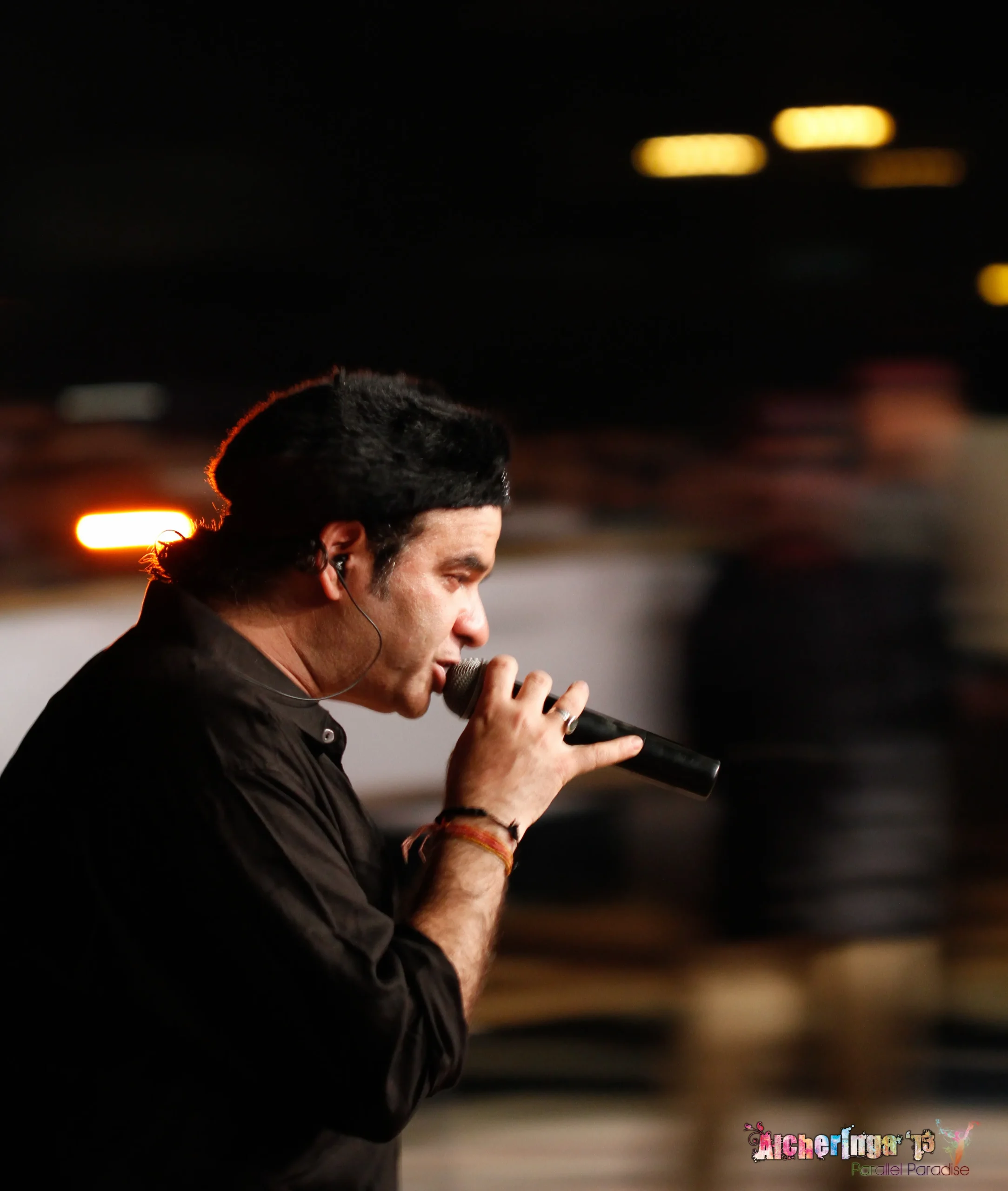
Their 1998 debut album Boondein caught fire. “Dooba Dooba” became an inescapable radio anthem, while its aquatic video stayed in heavy rotation on MTV India and Channel V. The record sold hundreds of thousands of cassettes and swept pop award categories. Silk Route released a follow-up album, Pehchan, in 2000. But band dynamics rarely survive the shifting music industry landscape. The group disbanded in 2008, though Chauhan retained his independent creative drive, releasing his solo record Fitoor a year later.
Bollywood Breakthrough: From “Guncha Koi” to “Tum Se Hi”
Playback success did not arrive overnight. Chauhan had a minor brush with Bollywood in 2002, singing “Pehli Nazar Mein Dari Thi” on Ram Gopal Varma’s Road. It made barely a ripple.
His real breakthrough came in 2005. Director Rajat Kapoor featured Chauhan’s self-composed acoustic piece “Guncha Koi” in Main, Meri Patni Aur Woh. The song stood out immediately because it lacked commercial bombast. It was just a man, an acoustic guitar, and pure melancholy. Music directors noticed.
In 2006, A. R. Rahman tapped him for “Khoon Chala” in Rang De Basanti. Chauhan’s quiet, cracking vocal delivery gave the protest scene its devastating gut punch. A year later, composer Pritam brought him on board for “Tum Se Hi” in Imtiaz Ali’s Jab We Met (2007). The song exploded across India. It played in autorickshaws, college dorms, and wedding playlists. Just as listeners witnessed in Arijit Singh’s musical journey, Chauhan proved that quiet emotional sincerity often cuts through noise far better than loud theatrical belts.
The A. R. Rahman Collaboration and the Phenomenon of “Rockstar”
Over the next few years, Chauhan became an essential piece of Hindi cinema’s soundtrack renaissance. In 2009, Rahman brought him in to sing the breezy “Masakali” for Delhi-6. Chauhan walked away with his first Filmfare Award for Best Male Playback Singer. That same year came “Yeh Dooriyan” for Love Aaj Kal, followed by the Sufi ballad “Pee Loon” for Once Upon a Time in Mumbaai in 2010.
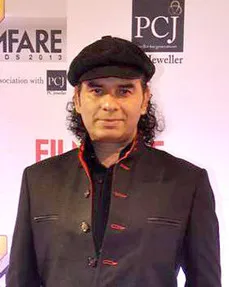
Then came 2011. Imtiaz Ali was making Rockstar with A. R. Rahman. Usually, a Bollywood soundtrack splits vocal duties among half a dozen artists to cover different situational demands. Ali and Rahman decided to do something radical: give every single song of the lead character Jordan to one singer. Mohit Chauhan.
Nine tracks in total. The range was dizzying. He went from the transcendental quiet of “Kun Faya Kun” to the ragged scream of “Saadda Haq”, through the broken grief of “Nadaan Parinde” and the hushed intimacy of “Tum Ho”. His performance on “Jo Bhi Main” and the broader album swept the awards circuit, netting him the IIFA Award and his second Filmfare trophy. Much like fellow Himalayan vocalist documented in Jubin Nautiyal’s rise in playback music, Chauhan demonstrated how small-town roots can transform urban pop culture.
He continued recording landmark tracks over the following decade, including “Ala Barfi” for Barfi! (2012) and the energetic “Matargashti” for Tamasha (2015). When singing duets, his grounded style paired naturally with leading female voices, echoing the benchmarks seen across Shreya Ghoshal’s vocal legacy and matching the versatile adaptability explored in Sunidhi Chauhan’s versatile career.
Personal Life and Social Welfare Work
Chauhan lives quietly. He avoids film parties, industry factions, and PR-driven public appearances. On 29 June 2012, he married journalist and writer Prarthna Gehlot in Barog, a small hill station in Himachal Pradesh. The ceremony was intentionally discreet, attended only by immediate family members with no media cameras invited. Prarthna remains his creative confidante, regularly helping him work through lyric ideas when he writes independent music.
His off-stage focus belongs to street animals. When the COVID-19 pandemic brought Delhi to a sudden halt in 2020, stray dogs that relied on market waste and restaurant scraps faced starvation. Chauhan took his car out every single night, driving through deserted streets to feed more than 250 stray dogs. What started as direct personal aid turned into Animals Are People Too, a registered charity providing medical treatment, vaccinations, and daily food distribution. He also works alongside the National Skill Development Corporation (NSDC) to promote vocational trade education for underprivileged youth.
Mohit Chauhan Social Media Presence & Verified Accounts
To follow Mohit Chauhan’s live performances, independent music releases, and animal welfare efforts, use his official verified channels:
| Platform | Account Handle / URL | Verification Status |
|---|---|---|
| X (formerly Twitter) | @_MohitChauhan | Official Verified Handle |
| @mohitchauhanofficial | Official Verified Profile | |
| Mohit Chauhan Official | Official Verified Page | |
| YouTube | Mohit Chauhan Official Channel | Official Artist Channel |
| Official Website | mohitchauhan.in | Official Web Portal |
Frequently Asked Questions About Mohit Chauhan
Question: What is Mohit Chauhan’s height?
Answer: Mohit Chauhan stands approximately 175 cm tall, which translates to 5 feet 9 inches.
Question: How old is Mohit Chauhan in 2026?
Answer: Born on 11 March 1966 in Nahan, Himachal Pradesh, Mohit Chauhan is 60 years old as of 2026.
Question: What did Mohit Chauhan study in college?
Answer: He completed a Master of Science (M.Sc.) degree in Geology from Dharamshala Government College, affiliated with Himachal Pradesh University.
Question: Who is Mohit Chauhan’s wife?
Answer: Mohit Chauhan married writer and journalist Prarthna Gehlot on 29 June 2012 in Barog, Himachal Pradesh.
Question: Which band launched Mohit Chauhan’s music career?
Answer: He rose to nationwide fame as the lead singer of Silk Route, whose 1998 debut album Boondein featured the blockbuster hit “Dooba Dooba”.
Question: How many Filmfare Awards has Mohit Chauhan won?
Answer: He has won two Filmfare Awards for Best Male Playback Singer: for “Masakali” (Delhi-6) in 2010, and for “Jo Bhi Main” (Rockstar) in 2012.