Swami Chidanand Saraswati Biography: Age, Parmarth Niketan, Ganga Action Parivar & Spiritual Journey
Discover the biography of Swami Chidanand Saraswati (Pujya Swamiji), Spiritual Head of Parmarth Niketan, founder of Ganga Action Parivar, his early sadhana, age, and humanitarian legacy.
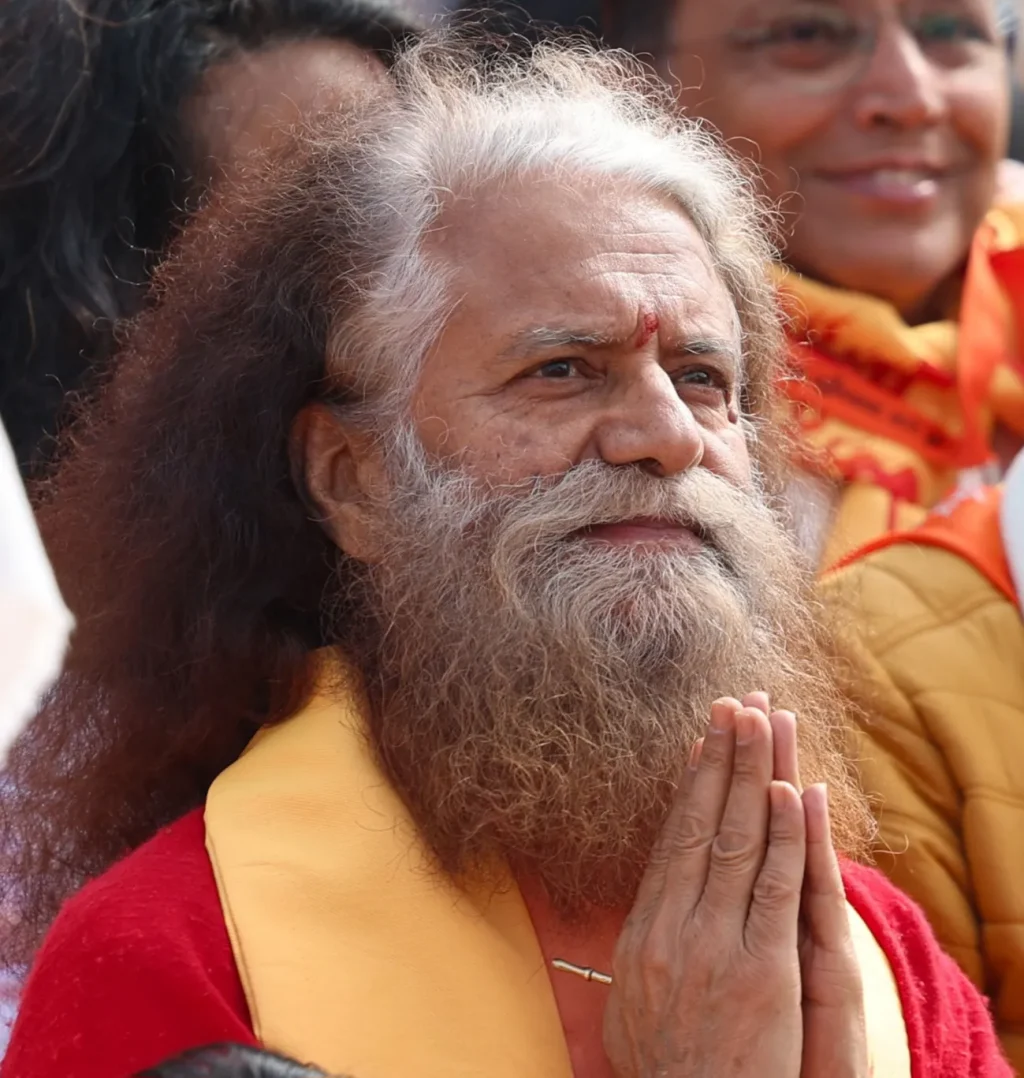
Photo: Prime Minister's Office (India) / Wikimedia Commons (GODL-India)
At dusk on the stone steps of Parmarth Niketan in Rishikesh, the evening breeze cuts down from the Garhwal ridges. Hundreds of pilgrims sit shoulder to shoulder. Heavy brass lamps flare over the water. Mantras ring through iron megaphones across the river gorge. Standing quietly at the center of the crowd is Swami Chidanand Saraswati, known across northern India and abroad simply as Pujya Swamiji.
For forty years, he has governed Parmarth Niketan. He turned an aging monastic sanctuary into one of the country’s busiest centers for Vedic study, river advocacy, and international diplomacy. Today, at 74 years old, Swamiji sits comfortably at the junction of ancient sanyas and modern environmental policy.
His day begins long before dawn. It often ends on international conference stages alongside United Nations officials, scientists, and state ministers. Yet his monastic roots began in extreme seclusion. Much like fellow Indian spiritual leader Sadhguru, who leveraged personal influence to build sweeping river restoration campaigns, Swamiji built institutions that treat public ecology as a core spiritual obligation.
Quick Facts: Swami Chidanand Saraswati
| Monastic Name | Swami Chidanand Saraswati (Pujya Swamiji) |
|---|---|
| Date of Birth | June 3, 1952 |
| Current Age | 74 years (as of 2026) |
| Birthplace | Piproli, Uttar Pradesh, India |
| Spiritual Tradition | Advaita Vedanta (Dashanami Monastic Order) |
| Primary Office | President & Spiritual Head, Parmarth Niketan Ashram, Rishikesh (since 1986) |
| Major Organizations | Ganga Action Parivar, Global Interfaith WASH Alliance (GIWA), India Heritage Research Foundation (IHRF) |
| Major Publication | Encyclopedia of Hinduism (11 Volumes) |
| Academic Credentials | Master’s degrees in Sanskrit and Philosophy |
| Height | Not publicly disclosed (traditional ascetic modesty) |
| Personal Wealth | Not applicable (ascetic sanyasi holding no private wealth; oversees public charitable trusts) |
Early Renunciation and Nine Years of Forest Tapasya
He walked away from his family at eight years old.
Born into a devout Brahmin home in the agricultural village of Piproli, Uttar Pradesh, the boy felt an overwhelming detachment from domestic routines. He took no money. He carried no clothes beyond what he wore. Moving north toward the upper reaches of the Himalayas, he placed himself under the care of solitary ascetics along the upper Ganga.
For the next nine years, he stayed in the high forests. Life was stark. He practiced silence (*mauna*), subsisted on wild roots and herbs, and spent long hours in meditation through winter snow and torrential monsoon rains. Under forest gurus, he memorized Sanskrit grammar, the Upanishads, and classical Advaita commentaries.
Then came an unexpected turn. When he reached seventeen, his guru ordered him to return to civilization. The hermit life was over; he was told that spiritual insight had to be backed by formal scholarship to serve a changing India. Swamiji enrolled in academic programs, sat for university examinations, and earned Master’s degrees in both Sanskrit and Philosophy. That combination of wilderness tapasya and rigorous philological training gave him rare authority among both traditional pandits and modern bureaucrats.
Transforming Parmarth Niketan and the Sunset Aarti
In 1986, following the death of his preceptor, Pujya Swami Shukdevanandji Maharaj, Swamiji took over Parmarth Niketan as its president and spiritual head. The ashram sat on prime riverfront at Muni Ki Reti in Rishikesh, but its facilities were modest.
Swamiji rebuilt the campus from the ground up. Over the next two decades, the compound expanded to over 1,000 guest rooms, free medical clinics, and a gurukul where hundreds of underprivileged boys study computer science alongside Paninian Sanskrit grammar. Just downstream in Haridwar, figures like Swami Ramdev established sprawling modern yoga universities, while Swamiji deliberately anchored Parmarth Niketan as an open sanctuary for quiet contemplation and devotional practice.
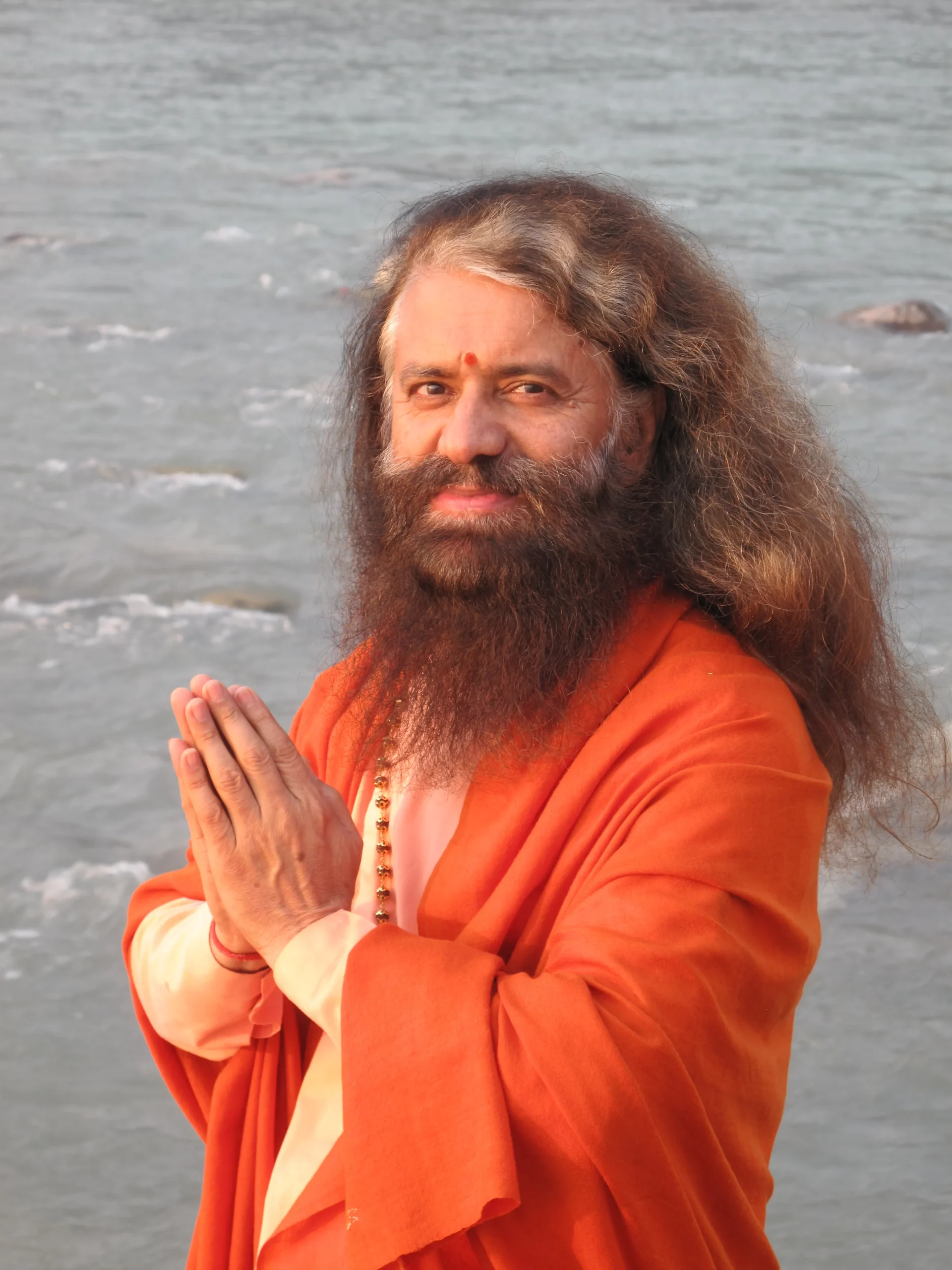
Every evening at sunset, the Parmarth ghat fills for the Ganga Aarti. What was once a small localized rite has become a global spiritual gathering. Swamiji sits on the stone platform as young gurukul students blow conch shells and swing tiered brass lamps. The ritual draws heads of state, Hollywood filmmakers, and backpackers alike. Admission is free, and the ceremonies deliberately welcome people of any religious tradition.
Ganga Action Parivar and the Battle for Clean Water
Swamiji’s core teaching is blunt: “Polluting the river while worshiping it is hypocrisy.”
In 2010, frustrated by decades of stalled government plans and untreated industrial effluents pouring into the Ganga, he established Ganga Action Parivar (GAP). The initiative operates across five river states: Uttarakhand, Uttar Pradesh, Bihar, Jharkhand, and West Bengal.
GAP does not limit itself to symbolic cleanups. Swamiji brought hydrologists, environmental lawyers, and industrial engineers together to draft policy blueprints for decentralized sewage interception. During the massive Kumbh Mela gatherings in Haridwar and Prayagraj, where tens of millions gather to bathe, Swamiji set up mass awareness camps. He had religious figures across sects take public pledges to stop dumping synthetic cloth, plastic bags, and chemical dyes into the water.
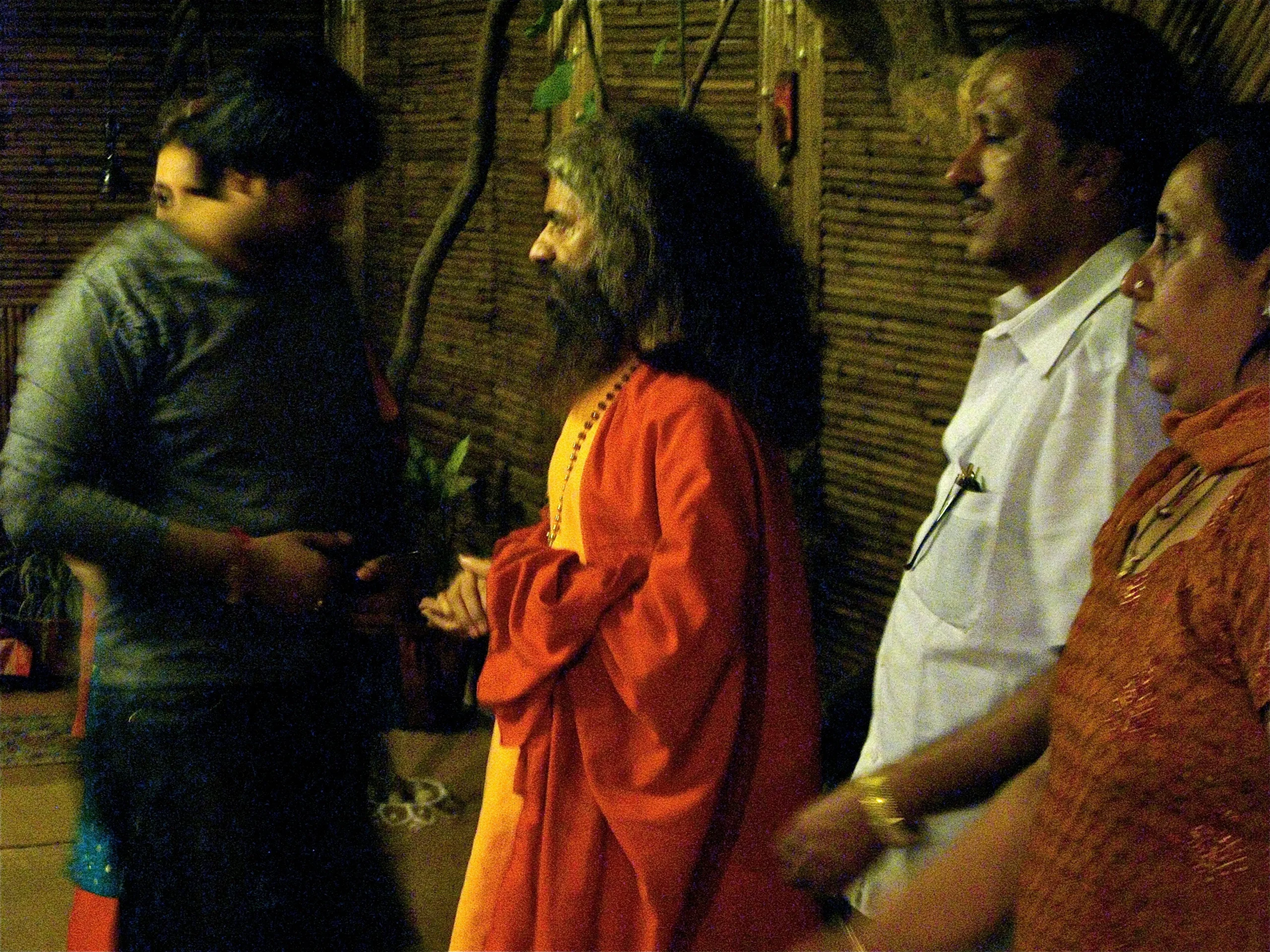
He pushed the environmental crusade even further on the international stage. At UNICEF headquarters in New York, Swamiji co-founded the Global Interfaith WASH Alliance (GIWA). The organization tackled an urgent reality: preventable diarrheal illnesses killing hundreds of Indian children every day due to lack of toilets and contaminated groundwater. GIWA persuaded Hindu priests, Muslim imams, Christian pastors, and Sikh granthis to speak about handwashing and sanitation from their pulpits. The network went on to construct thousands of biotoilets across remote villages and schools in the Himalayan belt.
The 25-Year Feat: 11-Volume Encyclopedia of Hinduism
In the late 1980s, Swamiji noticed that while major world religions had comprehensive multi-volume encyclopedias, Hinduism’s vast intellectual heritage remained scattered in unindexed manuscripts and oral traditions. He established the India Heritage Research Foundation (IHRF) to fix that deficit.
The project became an academic marathon. Over 25 years, Swamiji coordinated more than 1,000 international scholars led by chief editor Dr. K. L. Seshagiri Rao. The finished Encyclopedia of Hinduism spans 11 dense volumes, containing roughly 7,000 entries covering Vedic epistemology, temple architecture, classical music, mathematics, astronomy, and tribal traditions. The work was formally launched before international leaders at venues ranging from New Delhi to London and Washington, giving global researchers an authoritative, uncompromised reference text.
This fusion of scholastic preservation and practical humanitarian outreach parallels the work of modern Indian teachers like Gaur Gopal Das and Sri Sri Ravi Shankar, whose programs similarly mobilize spiritual ethics to tackle structural social challenges.
Swami Chidanand Saraswati Social Media Presence & Verified Accounts
Swamiji’s daily satsangs, river conservation broadcasts, and announcements for the annual International Yoga Festival are streamed through his official verified digital accounts:
| Platform | Official Account Name | Direct Verified URL |
|---|---|---|
| X (Twitter) | @PujyaSwamiji | x.com/PujyaSwamiji |
| @pujyaswamiji | instagram.com/pujyaswamiji | |
| Pujya Swami Chidanand Saraswatiji | facebook.com/PujyaSwamiji | |
| YouTube | Parmarth Niketan Official | youtube.com/user/ParmarthNiketan |
| Ashram Website | Parmarth Niketan Ashram Portal | parmarth.org |
| Personal Website | Pujya Swamiji Official Portal | pujyaswamiji.org |
Frequently Asked Questions
Question: Who is Swami Chidanand Saraswati?
Answer: Swami Chidanand Saraswati, known as Pujya Swamiji, is an Indian spiritual leader, author, and environmentalist. He has served as President and Spiritual Head of Parmarth Niketan Ashram in Rishikesh since 1986, and is the founder of Ganga Action Parivar and co-founder of the Global Interfaith WASH Alliance.
Question: How old is Swami Chidanand Saraswati?
Answer: Born on June 3, 1952, Swami Chidanand Saraswati is 74 years old as of 2026.
Question: What is Swami Chidanand Saraswati’s height?
Answer: Swami Chidanand Saraswati’s exact physical height is not publicly disclosed in canonical monastic records. In traditional Hindu sanyas conventions, bodily dimensions are considered irrelevant to spiritual life and are not officially cataloged.
Question: What is Swami Chidanand Saraswati’s net worth?
Answer: Swami Chidanand Saraswati has no personal net worth. As a consecrated Hindu monk (*sanyasi*), he has taken vows of renunciation and owns no private property, bank investments, or corporate shares. The institutions he leads operate as registered non-profit charitable trusts.
Question: What is the Encyclopedia of Hinduism?
Answer: The Encyclopedia of Hinduism is an 11-volume academic reference work initiated by Swami Chidanand Saraswati through the India Heritage Research Foundation. Researched over 25 years by more than 1,000 scholars, it documents Hindu philosophy, history, art, architecture, and scientific traditions.
Question: Where is Parmarth Niketan located?
Answer: Parmarth Niketan Ashram is located along the bank of the sacred River Ganga at Muni Ki Reti in Rishikesh, Uttarakhand, India. It is internationally celebrated for its daily sunset Ganga Aarti and its annual International Yoga Festival.