Dalai Lama Biography: Age, Height, Early Life, Teachings & Legacy
Comprehensive biography of His Holiness the 14th Dalai Lama (Tenzin Gyatso): age 91, height 5’7″, monastic education, Dharamshala exile, Nobel Peace Prize, and verified accounts.
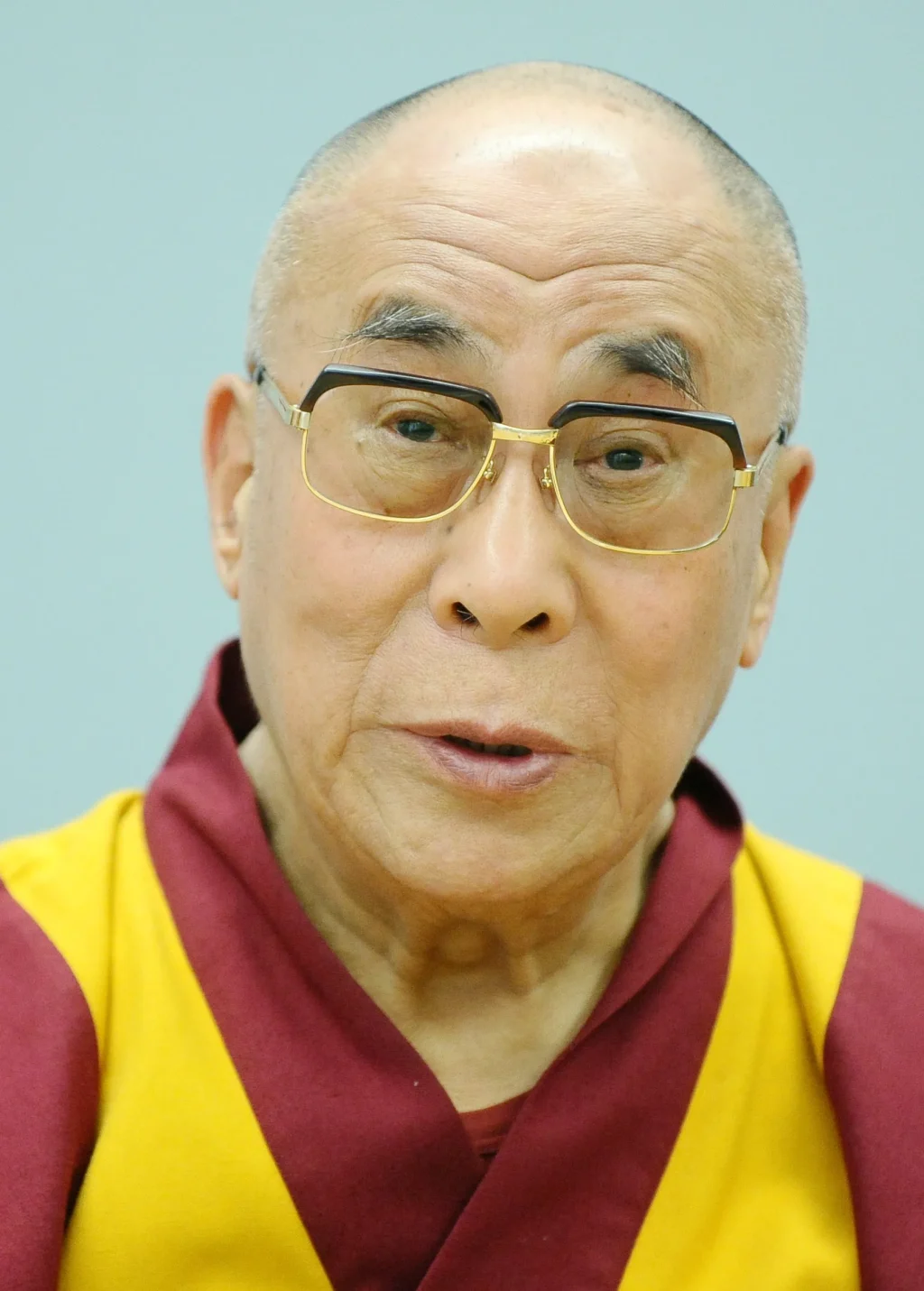
Photo: Niccolò Caranti / Wikimedia Commons (CC BY-SA 3.0)
He describes himself simply: a Buddhist monk. Nothing grander. Yet for more than eight decades, Tenzin Gyatso, the 14th Dalai Lama, has navigated political upheavals, cold war diplomacy, and global celebrity without ever carrying cash in his robes.
His path did not start in golden halls. It began in a drafty stone house on a Tibetan ridge. At two years old, he was recognized as the reincarnation of the 13th Dalai Lama. By fifteen, Chinese artillery was shelling the eastern marches of Tibet, and the teenage monk was handed full temporal command of a country under siege.
In March 1959, he slipped out of Lhasa under cover of night, disguised as an ordinary soldier with a rifle slung over his shoulder. He crossed the frozen Himalayas on foot and horseback, finding refuge in India. Dharamshala became his home.
Now 91, he has systematically dismantled the very political power his predecessors held for centuries. In May 2011, he handed full executive authority of the Tibetan government-in-exile over to an elected secular leadership. What remains is the monk, his daily dawn meditation, and an unyielding commitment to human compassion.
14th Dalai Lama Quick Biography Facts
| Spiritual Title | 14th Dalai Lama of Tibet |
|---|---|
| Religious Name | Jetsun Jamphel Ngawang Lobsang Yeshe Tenzin Gyatso |
| Birth Name | Lhamo Thondup (also spelled Lhamo Dhondup) |
| Date of Birth | July 6, 1935 |
| Current Age | 91 years old (as of 2026) |
| Birthplace | Taktser, Amdo, Northeastern Tibet (present-day Qinghai) |
| Height | 170 cm (approximately 5 ft 7 in) |
| Parents | Choekyong Tsering (Father) and Diki Tsering (Mother) |
| Monastic Tradition | Gelug School of Tibetan Buddhism (Nalanda lineage) |
| Formal Degree | Geshe Lharampa (Highest Doctorate in Buddhist Philosophy, 1959) |
| Enthronement | February 22, 1940 (Lhasa, Tibet) |
| Permanent Residence | Thekchen Chöling Tsuglakhang Complex, McLeod Ganj, Dharamshala, Himachal Pradesh, India |
| Major Honors | Nobel Peace Prize (1989), US Congressional Gold Medal (2006), Templeton Prize (2012) |
| Marital Status | Celibate Buddhist Monk (strictly upholds Vinaya monastic vows) |
Early Life in Taktser and the Search for a Reincarnation
Taktser was tiny. Just twenty or thirty homes clinging to a high ridge in Amdo. Lhamo Thondup was born there on July 6, 1935, the fifth surviving child of Choekyong Tsering and Diki Tsering. His family farmed barley and buckwheat, milked dzos, and tended horses. It was hard, manual mountain life.
When the 13th Dalai Lama died in Lhasa in December 1933, the regency sought his successor. Visions surfaced in the sacred waters of Lhamo La-tso. Monks noted that the embalmed face of the 13th Dalai Lama had mysteriously turned northeastward. A search party headed by Kewtsang Rinpoche set out, traveling disguised in rough sheepskins.
They reached Taktser in 1937. Kewtsang Rinpoche posed as a servant, sitting quietly in the kitchen while lower-ranking officials acted as dignitaries. The two-year-old toddler crawled straight toward Rinpoche. He recognized him instantly. He spoke in the refined Lhasa dialect, climbed into the disguised lama’s lap, and pulled at a rosary around his neck that had belonged to the 13th Dalai Lama.
Next came testing. They set out pairs of walking sticks, drums, and rosaries—one genuine relic of the previous Dalai Lama, one an identical duplicate. The boy picked only the real items. “It’s mine,” he insisted. By 1939, he was traveling in a ceremonial caravan across the high plateau to Lhasa. On February 22, 1940, officials formally enthroned him as the 14th Dalai Lama.
Monastic Education and the Geshe Lharampa Trials
Monastic life inside the Potala was relentless. Beginning at six, his days belonged to classical debate, memorization, and philosophy. Senior tutors Ling Rinpoche and Trijang Rinpoche pushed him through the rigorous Nalanda curriculum.
He studied five primary subjects: Pramana (epistemology and logic), fine arts, Sanskrit grammar, medicine, and Buddhist philosophy. Philosophy alone required mastering five dense core systems: Prajnaparamita, Madhyamika, Vinaya, Abhidharma, and Pramana. He also studied poetry, astrology, and metrics.
Study was not passive reading. Monks debated standing up, slapping their hands together rhythmically to drive home logical proofs. In the winter of 1959, during the Monlam Chenmo festival at Lhasa’s Jokhang Temple, the 23-year-old faced his final trials. In front of twenty thousand monks and examiners, he sat on the stone flags and debated Tibet’s most formidable dialecticians. He cleared every hurdle with honors, receiving the Geshe Lharampa degree, the tradition’s highest doctorate.
1959 Flight Across the Himalayas and Dharamshala Sanctuary
Peace did not last. Chinese troops moved into eastern Tibet in 1950. On November 17, 1950, at just fifteen, the assembly thrust temporal rule into his hands. In 1954, he traveled to Beijing to sit across from Mao Zedong and Zhou Enlai. He pushed for Tibetan autonomy within the Seventeen Point Agreement. Mao smiled, took notes, and famously whispered at their final meeting that religion was poison.
By March 1959, Lhasa was an armed camp. Artillery shells began landing near the Norbulingka palace. Rumors swirled that Chinese commanders planned to abduct the young leader. On the dark night of March 17, 1959, he made his decision.
He stripped off his maroon monastic robes. He dressed in the dark trousers and tunic of an ordinary Tibetan soldier, slung an old rifle over his back, and slipped out an unlit side gate past sentries. A small group of bodyguards escorted him through the freezing mountain passes of the Himalayas. They moved mostly by night on horses and on foot.
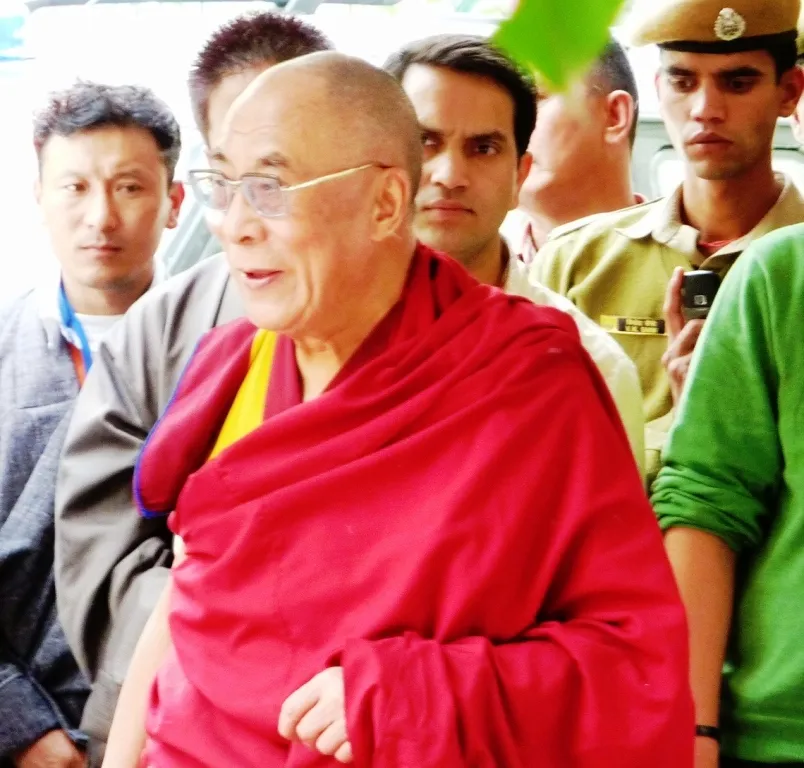
Two exhausting weeks later, on March 31, 1959, he crossed into India at Khenzimane in Arunachal Pradesh. Prime Minister Jawaharlal Nehru welcomed him and granted political asylum. After an initial stay in Mussoorie, the Dalai Lama moved his permanent headquarters in May 1960 to McLeod Ganj, perched above Dharamshala in the Himalayan foothills of Himachal Pradesh. The quiet hill town quickly became known across the globe as “Little Lhasa.”
Secular Ethics and the Mind & Life Dialogues
In exile, his audience expanded far beyond Tibet. Rather than preaching dogma, he began framing human ethics in terms accessible to anyone, religious or secular. He called it “secular ethics”—values rooted in empathy, reason, and shared biological vulnerability rather than scriptural mandates.
He became fascinated by modern science. In 1987, he helped launch the Mind and Life Institute, bringing world-class neuroscientists, cognitive psychologists, and quantum physicists to Dharamshala. He allowed researchers to place EEG caps on meditating monks, eager to see what brain imaging revealed about prolonged compassion practice. “If scientific analysis were conclusively to demonstrate certain claims in Buddhism to be false,” he famously wrote, “then we must accept the findings of science and abandon those claims.”
His message connects naturally with broader Indian spiritual traditions, whether examining the ecological consciousness explored in Sadhguru’s spiritual journey and global initiatives, the monastic discipline detailed in Gaur Gopal Das’s monastic discipline and life wisdom, the conflict-resolution initiatives analyzed in Sri Sri Ravi Shankar’s biography and humanitarian peace work, or the heart-centered meditation practiced in Kamlesh D. Patel (Daaji)’s spiritual leadership and Heartfulness philosophy.
The 1989 Nobel Peace Prize and Historic Transfer of Power
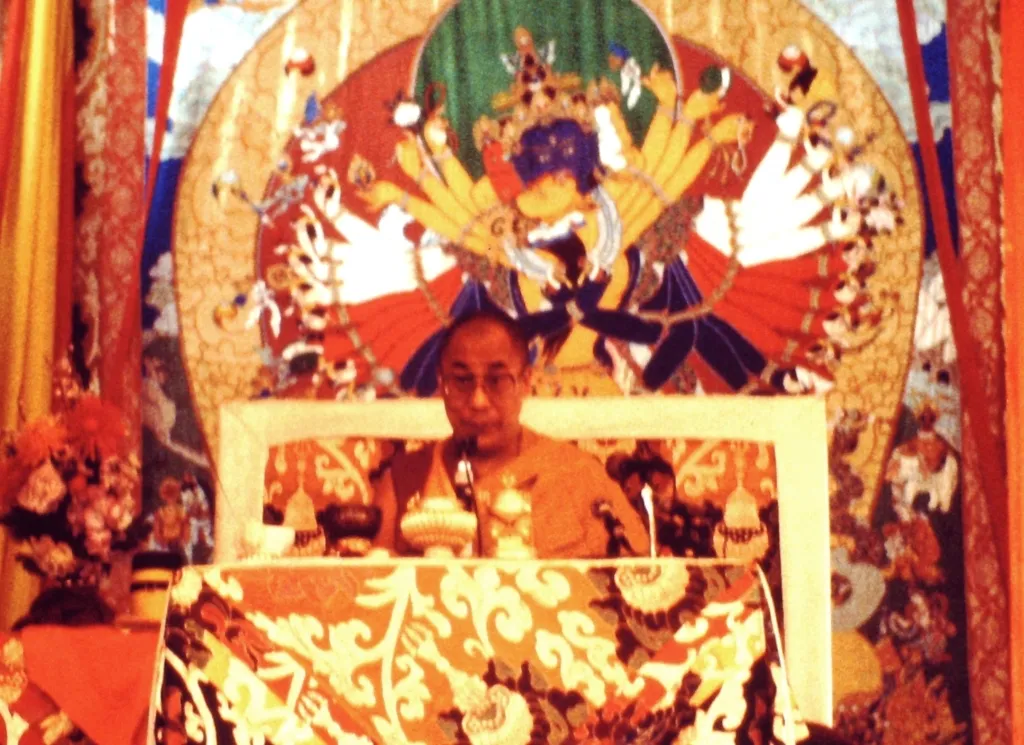
On December 10, 1989, the Norwegian Nobel Committee awarded the 14th Dalai Lama the Nobel Peace Prize. The committee recognized his unwavering refusal to resort to violence, his 1987 Five-Point Peace Plan, and his vision of Tibet as a demilitarized ecological sanctuary between Asian powers.
Yet his most striking political act came decades later. In May 2011, he voluntarily and permanently surrendered all political power. He amended the Charter of Tibetans in Exile, transferring full executive authority over the Central Tibetan Administration to the democratically elected Sikyong. It ended 368 years of combined spiritual and political rule by Dalai Lamas dating back to 1642. He made the change deliberately, ensuring the diaspora moved forward as a secular democracy.
Financial Reality: Celibate Monasticism vs. Net Worth Rumors
Search engines frequently serve auto-generated pages speculating on the Dalai Lama’s “net worth,” tossing around estimates in the millions. These figures are fiction. They completely ignore the realities of Vinaya monastic vows.
The Dalai Lama owns no private properties, stocks, business stakes, or personal investment portfolios. When he was awarded the $455,000 Nobel Peace Prize in 1989, he gave the entire sum to peace education, Tibetan refugee relief, and humanitarian charities. In 2012, upon winning the £1.1 million Templeton Prize, he directed $1.5 million to Save the Children in India to combat child malnutrition and directed the remainder toward Tibetan science education.
His day-to-day upkeep in McLeod Ganj—simple cotton robes, modest vegetarian food, a bedroom, and healthcare—is funded through registered non-profit trusts, principally The Dalai Lama Trust. Book royalties and speaker honoraria are routed directly into charitable funds, not private pockets.
14th Dalai Lama Social Media Presence & Verified Accounts
His Holiness communicates directly with millions of people across continents through authenticated digital platforms, broadcasting live webcasts, morning discourses, and daily reflections:
| Platform | Verified Handle / Profile | Official Link |
|---|---|---|
| Official Website | Office of His Holiness The Dalai Lama | dalailama.com |
| X (Twitter) | @DalaiLama (19M+ followers) | x.com/DalaiLama |
| @dalailama (2M+ followers) | instagram.com/dalailama | |
| Dalai Lama (Official Page) | facebook.com/DalaiLama | |
| YouTube | DalaiLama (Official Channel) | youtube.com/@DalaiLama |
Frequently Asked Questions About the 14th Dalai Lama
Question: How tall is the 14th Dalai Lama?
Answer: His Holiness stands approximately 170 cm tall, which converts to roughly 5 feet 7 inches. He maintains this posture through disciplined daily walking around his residential compound in McLeod Ganj.
Question: How old is the Dalai Lama in 2026?
Answer: Born on July 6, 1935, the 14th Dalai Lama is 91 years old in 2026. He continues to give public audiences and spiritual discourses.
Question: What was the Dalai Lama’s original birth name?
Answer: He was named Lhamo Thondup at birth (often transcribed as Lhamo Dhondup), meaning “Fulfiller of Desires.” He was given the religious name Jetsun Jamphel Ngawang Lobsang Yeshe Tenzin Gyatso when enthroned as a monk.
Question: What is the Dalai Lama’s actual net worth?
Answer: He has no personal net worth. As a fully ordained Buddhist monk under Vinaya vows, he owns no personal investments, business assets, or personal real estate. All cash prizes, book royalties, and donations are transferred directly into registered charitable trusts, primarily The Dalai Lama Trust.
Question: Where does the Dalai Lama live?
Answer: Since May 1960, he has lived in McLeod Ganj in the Kangra district of Himachal Pradesh, India, overlooking the Kangra Valley and adjacent to the Tsuglakhang Temple complex.
Question: Does the Dalai Lama hold political power today?
Answer: No. In May 2011, he formally devolved all political and administrative authority over the Central Tibetan Administration to the democratically elected Sikyong and the Tibetan Parliament-in-Exile, choosing to focus solely on spiritual teaching.
Question: What is the Dalai Lama’s daily schedule?
Answer: His routine starts at 3:30 AM with morning meditation, prayers, and walking. After breakfast, he spends the morning reading Buddhist texts and receiving official visitors or students from 9:00 AM to noon. He works on administrative matters or interviews in the afternoon and retires around 7:00 PM after evening meditation.