Ronnie Screwvala Biography: Age, Height, Wife, UTV, upGrad & Net Worth
Inside Indian entrepreneur Ronnie Screwvala’s journey: from laying cable TV lines in 1981 to selling UTV to Disney for $450M+, building edtech unicorn upGrad, and rural impact with Swades Foundation.
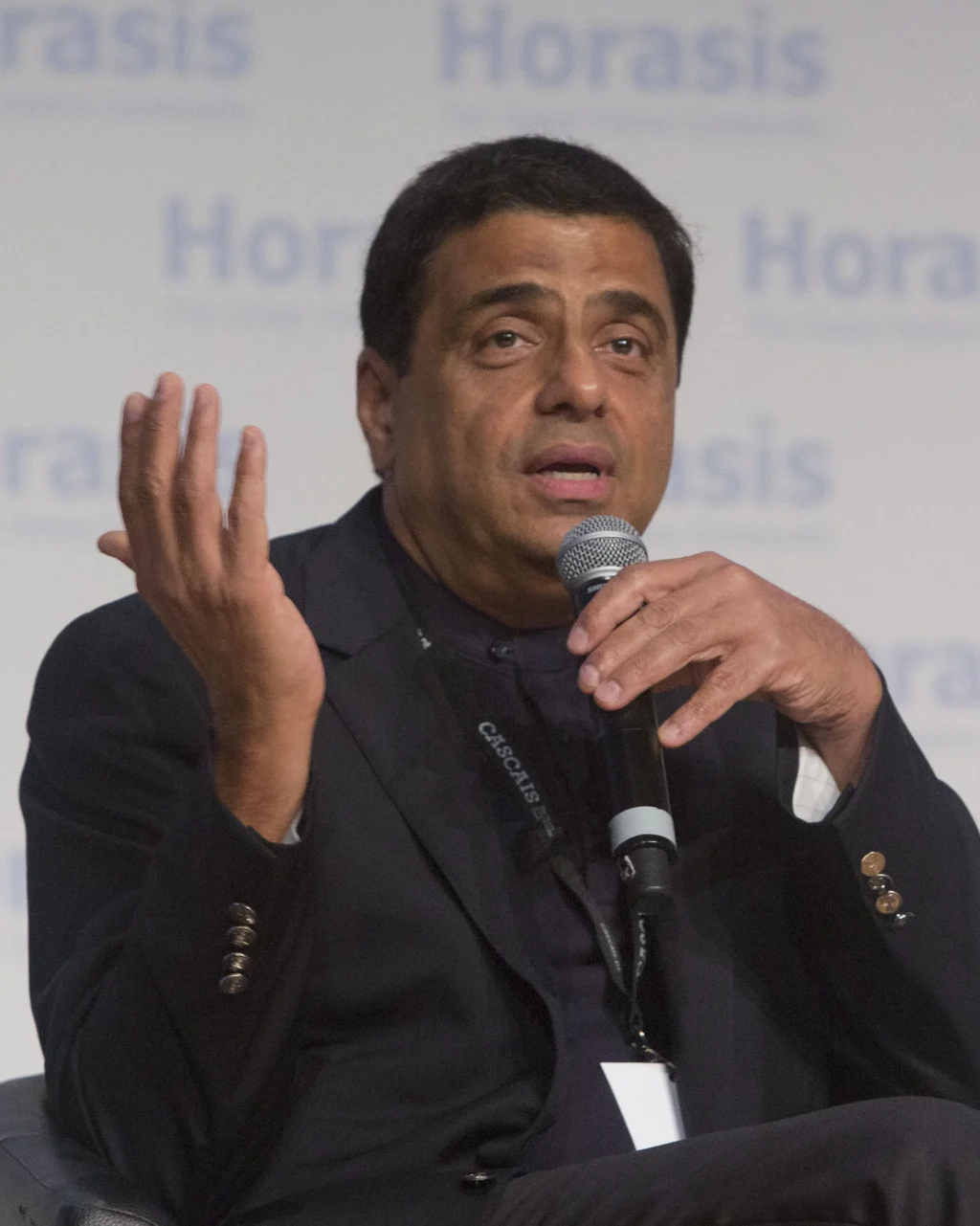
Photo: Richter Frank-Jurgen / Wikimedia Commons (CC BY-SA 2.0)
Most founders get one big hit if they get lucky at all. Ronnie Screwvala pulled off four in a row, each in an industry that had nothing to do with the last.
Back in 1981, he walked through South Mumbai apartment blocks dragging coaxial cables up stairwells himself. No venture capital. No pitch decks. Just a straightforward hunch that families in Cuffe Parade were sick of having only Doordarshan on their TV sets. That scrappy cable setup eventually mushroomed into UTV Software Communications, an entertainment conglomerate Disney bought out in 2012 at an enterprise valuation of $1.4 billion.
A lot of executives take a nine-figure check and vanish to a golf course in Spain. Screwvala didn’t. Instead, he teamed up with Mayank Kumar and Phalgun Kompalli in 2015 to start upGrad, founded RSVP Movies, and poured hundreds of crores into rural Maharashtra via the Swades Foundation alongside his wife, Zarina Mehta. Now 70, he still talks to early-stage founders with zero patience for vanity metrics. His core message hasn’t shifted in forty years: raised capital isn’t an asset on your scorecard; it’s an immediate liability.
Quick Facts: Ronnie Screwvala Biography
| Full Legal Name | Rohinton Soli Screwvala |
|---|---|
| Date of Birth | September 8, 1956 |
| Current Age | 70 years old (as of November 2026) |
| Birthplace | Mumbai (then Bombay), Maharashtra, India |
| Height | 180 cm (5 feet 11 inches) |
| Education | The Cathedral and John Connon School; B.Com from Sydenham College of Commerce and Economics, Mumbai |
| Spouse | Zarina Mehta (married 1998; co-founder of UTV & Swades Foundation); Manjula Nanavati (former spouse, divorced) |
| Children & Extended Family | Daughter: Trishya Screwvala (Founder, The Lighthouse Project); Son-in-law: Suhail Chandhok |
| Flagship Ventures | UTV Software Communications (acquired by Disney), upGrad, RSVP Movies, Unilazer Ventures, Swades Foundation, U Mumba (U Sports) |
| Estimated Net Worth | $1.7 Billion (Forbes Real-Time Billionaires 2026) |
| Major Honors | Time 100 (2009), Esquire 75 Most Influential, Multiple National Film Awards & Filmfare Best Film Awards |
Early Days, South Mumbai Theatre, and the Toothbrush Factory
Screwvala grew up in a Parsi household in Bombay. His father worked as an executive at British consumer firm J. L. Morrison and Smith & Nephew, giving the boy an early glimpse of how multinational balance sheets operated. But his teenage heart belonged to English theatre.
He studied at Cathedral and John Connon School, spending his evenings rehearsing dialogue in drafty halls. He landed serious stage roles—playing in Shakespeare’s Othello and Arthur Miller’s Death of a Salesman with Bombay theatre groups. It was unpaid, grueling amateur work, but it gave him an intuitive feel for dramatic timing and human psychology that standard MBA programs never teach.
His first business while studying commerce at Sydenham College was entirely unglamorous: making toothbrushes on leased injection-molding machines. Raw plastic pellets, recalcitrant machinery, razor-thin trade margins, and uncooperative wholesalers taught him where profit really leaks in a company. That manufacturing venture barely broke even, but the operating scars stuck.
How Cable TV and UTV Disrupted the National Airwaves
In 1981, Indian homes had one television option: Doordarshan. Black-and-white government broadcasts dominated weekday evenings.
Screwvala realized middle-class families wanted Hollywood films and Hindi hits on their own schedule. He founded Network. He negotiated rights, climbed rooftops, ran wires across alleys, and broadcast video cassettes directly to private flats for a recurring monthly fee. When luxury hotels realized foreign guests wanted identical service in their rooms, the operation scaled rapidly across urban India.
By 1990, he incorporated United Television (UTV) with Zarina Mehta and Deven Khote. They started producing original programming just as satellite broadcasters like Star TV and Zee arrived in India. UTV delivered India’s very first daily television soap opera, Shanti, turning Mandira Bedi into a household name, and launched gameshow staples like Saanp Seedhi. Later, in 2004, Screwvala launched Hungama TV, challenging global animation giants on Indian soil before selling the channel to Disney for over $30 million.
Rewriting Bollywood Economics and the Landmark Disney Exit
Before UTV Motion Pictures entered Hindi cinema, film financing was notoriously opaque. Budgets existed on loose scraps of paper, shooting dates slipped for months, and underworld money often lurked behind production slates. Screwvala ran film production like an institutional manufacturing business.
He enforced legally binding cast agreements, locked shooting drafts before principal photography started, and built an organized global distribution pipeline. More importantly, he backed bold scripts when traditional distributors flinched.
Look at the filmography: Swades (2004), Rang De Basanti (2006), Jodhaa Akbar (2008), A Wednesday! (2008), Dev.D (2009), Paan Singh Tomar (2012), and Barfi! (2012). These films swept National Film Awards and Filmfare trophies while generating huge box office returns. They proved that commercial viability didn’t require formulaic song-and-dance filler.
The Walt Disney Company tracked UTV’s rise for years. After taking minority stakes starting in 2006, Disney bought out the entire company in 2012 for a total enterprise valuation of $1.4 billion. Screwvala pocketed more than $450 million for his personal equity and agreed to serve as Managing Director of Walt Disney India until 2014, ensuring operational stability before handing over the reins.
The Second Act: upGrad and Higher Education
Sitting on hundreds of millions in liquid capital, Screwvala noticed an uncomfortable paradox in the Indian job market: millions of young adults graduated with engineering and arts degrees every June, yet technology firms couldn’t find qualified people to hire. Degree certificates had decoupled from actual workplace competence.
In 2015, alongside Mayank Kumar and Phalgun Kompalli, he co-founded upGrad. While competitors went after school children with high-pressure sales calls and tablet bundles, upGrad focused squarely on working adults who needed real career upgrades: data science diplomas, software architecture degrees, and specialized executive MBAs.
They bypassed makeshift video tutorials to broker direct partnerships with premier universities—Wharton, Cambridge, Liverpool, and IIT Madras. Course completion rates stayed above 80%, an anomaly in the massive open online course world. upGrad crossed a unicorn valuation and cemented Screwvala’s reputation as someone capable of building multi-billion-dollar companies across totally unrelated sectors.
His fiscal discipline set him apart during the edtech crash that wiped out reckless competitors. Just like peer entrepreneurs Peyush Bansal of Lenskart and Vineeta Singh of SUGAR Cosmetics, Screwvala consistently told founders that burning equity to buy top-line growth is a trap.
RSVP Movies, Startup Investing, and Kabaddi
Retirement didn’t hold. Once his non-compete clause with Disney lapsed, Screwvala launched RSVP Movies in 2017 to produce content on his own terms. His theatrical instincts remained intact. RSVP backed Uri: The Surgical Strike (2019), turning a tight budget into a ₹350+ crore box office sensation, followed by acclaimed releases like Kedarnath, Karwaan, Lust Stories, and Sam Bahadur (2023).
Through his private investment firm, Unilazer Ventures, he backed early-stage founders who prioritized sustainable gross margins over splashy marketing campaigns. Unilazer became an early backer of eyewear company Lenskart, wellness brands, and artificial intelligence startups. When he joined the panel of investors on Shark Tank India Season 3, his calm probing into cost of customer acquisition recalled the level-headed scrutiny popularized by seasoned investors like Anupam Mittal.
Then came professional sports. Screwvala bought the Mumbai franchise (U Mumba) in the Pro Kabaddi League through U Sports. While skeptics questioned whether a rural Indian contact sport could hold prime-time television audiences, U Mumba won the championship in Season 2 and developed a loyal metropolitan following, proving that indigenous sports could run on profitable commercial models.
The Swades Foundation: Engineering Rural Self-Sufficiency
If you ask Screwvala today what occupies most of his mental bandwidth, he won’t point to studio box office numbers or edtech balance sheets. He’ll talk about Raigad.
Run full-time by his wife Zarina Mehta, the Swades Foundation operates with a single objective: lift one million rural Indians out of poverty every five to seven years through an integrated, self-sustaining model. They avoided the charity trap of writing random checks to build standalone borewells that break after six months.
Instead, Swades treats rural poverty as a systems problem across five pillars: community leadership, clean water, sanitation, health, education, and livelihood generation. They run gravity-fed potable water pipes straight into village kitchens, train thousands of local healthcare workers called Swades Mitras, and help marginal farmers shift from monsoon paddy crops into high-yield dairy and cashew orchards. To date, Swades has impacted over 670,000 rural citizens across thousands of hamlets in Maharashtra.
That structured, metric-driven philanthropy mirrors the institutional approach taken by veteran founders like Kiran Mazumdar-Shaw, who treat social work with the same operational rigor as commercial corporate enterprises.
Ronnie Screwvala Social Media Presence & Verified Accounts
To follow Ronnie Screwvala’s corporate commentary, startup insights, and philanthropic initiatives, use these official verified platforms:
| Platform | Account Handle / Channel | Verified Direct Link |
|---|---|---|
| X (formerly Twitter) | @RonnieScrewvala | Visit Official X Profile |
| @ronnie.screwvala | Visit Official Instagram | |
| Philanthropic Foundation | Swades Foundation Portal | Visit Swades Foundation |
| Higher Education Enterprise | upGrad Official Website | Visit upGrad Portal |
Frequently Asked Questions About Ronnie Screwvala
Question: What is Ronnie Screwvala’s real name and age?
Answer: His full name is Rohinton Soli Screwvala. Born on September 8, 1956, in Mumbai, he is 70 years old as of November 2026.
Question: How tall is Ronnie Screwvala?
Answer: Ronnie Screwvala stands 180 cm tall (approximately 5 feet 11 inches), maintaining an athletic and upright frame across all public appearances.
Question: Who is Ronnie Screwvala’s wife?
Answer: He is married to Zarina Mehta, who co-founded UTV Software Communications and currently serves as Managing Trustee of the Swades Foundation. He was earlier married to Manjula Nanavati, with whom he has a daughter, Trishya Screwvala.
Question: What is Ronnie Screwvala’s net worth in 2026?
Answer: Forbes Real-Time Billionaires pegs Ronnie Screwvala’s net worth at approximately $1.7 billion (roughly ₹14,000 crore). His wealth comes from his equity in upGrad, historic cash proceeds from the $450 million+ Disney buyout of UTV, early investments through Unilazer Ventures in companies like Lenskart, and RSVP Movies production assets.
Question: How much did Disney pay to buy UTV?
Answer: In 2012, The Walt Disney Company completed a full buyout of UTV Software Communications at an enterprise valuation of $1.4 billion. Screwvala sold his personal equity stake for over $450 million and led Disney’s Indian operations as Managing Director until 2014.
Question: What book did Ronnie Screwvala write?
Answer: He wrote the best-selling book Dream With Your Feet On The Ground (Penguin Random House), detailing street-level lessons from his early manufacturing and media failures, the creation of UTV, and advice for ambitious Indian entrepreneurs.