Nirmala Sitharaman Biography: Age, Height, Education, Husband, Career, and Net Worth Facts
Detailed biography of Nirmala Sitharaman, India’s Union Minister of Finance and Corporate Affairs. Explore her education, career milestones, budget records, family life, and verified public disclosures.
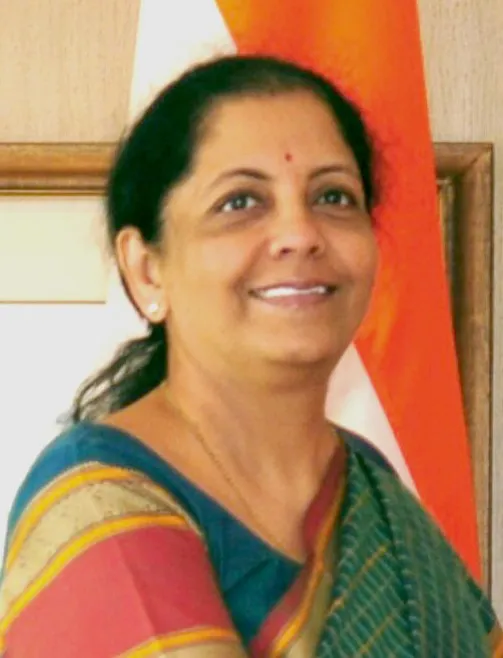
Photo: Photo Division, Government of India / Wikimedia Commons
On a hot morning in July 2024, Nirmala Sitharaman stepped out onto the red-carpeted stairs of Parliament carrying an embroidered crimson ledger. Minutes later, she stood before the Lok Sabha to present her seventh consecutive Union Budget. The moment made history. She had just broken the six-budget record held for decades by former Prime Minister Morarji Desai.
Most finance ministers do not survive that long. The job is a political pressure cooker. Budgets invite fierce scrutiny from state governments, business lobbies, and opposition benches alike.
Sitharaman’s path to North Block followed an unusual route. She never fought student union elections. She was not born into political royalty. Her early working life was spent holding regular private-sector jobs in London, selling home decor and researching agricultural markets. Today, she steers the treasury of the world’s fifth-largest economy.
Her career broke several historical ceilings in Indian administration. Before taking over the finance ministry in 2019, she served as India’s first full-time woman Defence Minister, handling military procurement and border infrastructure. The story behind her rise reveals how quiet administrative discipline can outlast political noise.
Nirmala Sitharaman Quick Biography Facts
| Full Name | Nirmala Sitharaman |
|---|---|
| Date of Birth | 18 August 1959 |
| Current Age | 67 years (as of 2026) |
| Birthplace | Madurai, Tamil Nadu, India |
| Height | 163 cm (5 ft 4 in) (approximate directory listing) |
| Alma Mater | Seethalakshmi Ramaswami College (BA); Jawaharlal Nehru University (MA, M.Phil) |
| Current Office | Union Minister of Finance and Corporate Affairs (2019–present) |
| Parliamentary Seat | Member of Parliament, Rajya Sabha (representing Karnataka) |
| Spouse | Dr. Parakala Prabhakar (married 1986) |
| Children | One daughter (Vangmayi Parakala) |
| Previous Key Portfolios | Minister of Defence (2017–2019); MoS Commerce and Industry (2014–2017) |
Early Roots and Academic Training in Economics
Sitharaman was born in Madurai into a middle-class Tamil family. Her father, Narayanan Sitharaman, worked for the Indian Railways. Her mother, K. Savitri, managed the home and kept a large personal collection of books. Because her father was transferred regularly, the family moved across several towns in Tamil Nadu, including Villupuram and Chennai. She finished high school in Tiruchirappalli.
She studied economics at Seethalakshmi Ramaswami College in Tiruchirappalli, graduating in 1980. She wanted deeper training in international trade theory. That goal took her to New Delhi.
At Jawaharlal Nehru University (JNU), she joined the Centre for Economic Studies and Planning. She completed an MA in Economics in 1984, followed by an M.Phil thesis examining Indo-European textile trade. JNU in the 1980s was heavily left-leaning. Sitharaman pushed back against campus consensus, gravitating instead toward free-market economics and institutional governance. During those university years, she met Parakala Prabhakar, a fellow student working toward his doctorate. The two married in 1986.
London Corporate Work and the Return to Policy
The newly married couple moved straight to the United Kingdom, where Prabhakar enrolled for doctoral research at the London School of Economics. In London, Sitharaman took jobs across very different fields. She worked as a sales associate at the Regent Street home furnishings store Habitat. She assisted an agricultural economist at the Agricultural Engineers Association. She also spent time working with the BBC World Service’s Tamil division, before eventually joining Price Waterhouse as a senior research manager.
It was practical corporate exposure. She learned how British regulatory bodies analyzed markets and handled balance sheets.
In 1991, they moved back to India with their young daughter, choosing Hyderabad as their home base. Sitharaman turned her energy toward education reform. She helped set up the Pranava School in Hyderabad and served as deputy director of the Centre for Public Policy Studies.
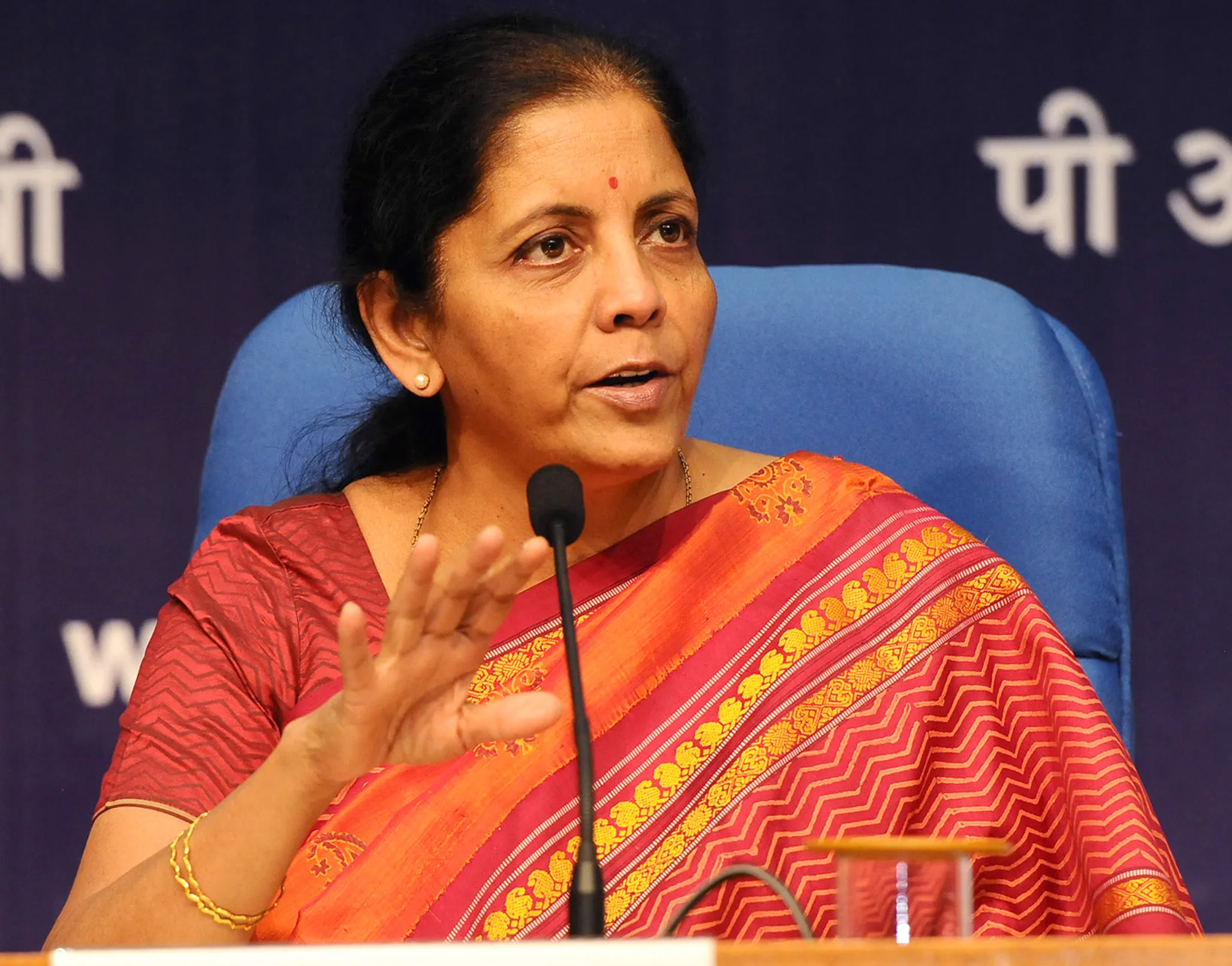
Her analytical work caught attention in New Delhi. In 2003, Prime Minister Atal Bihari Vajpayee’s administration appointed her to the National Commission for Women (NCW). She stayed until 2005. During those two years, she traveled across rural India, studying tribal women’s legal rights and evaluating local welfare initiatives.
Spokesperson to Cabinet: Entry into National Politics
She joined the Bharatiya Janata Party (BJP) in 2008. By 2010, the party’s central leadership recognized her sharp grasp of economic numbers and steady television composure. They made her a national spokesperson.
Night after night, she sat in television studios under hot lights, facing aggressive anchors. She rarely raised her voice. Instead, she laid out trade statistics and policy documents methodically. That low-drama, fact-first approach earned respect across party lines.
When Narendra Modi won the general election in May 2014, Sitharaman joined the Council of Ministers as Minister of State (Independent Charge) for Commerce and Industry. To fulfill constitutional requirements, she entered the Rajya Sabha from Andhra Pradesh, later moving to Karnataka in 2016. In the Commerce Ministry, she negotiated complex regional trade treaties, ran the initial Start-Up India framework, and simplified industrial licensing rules.
In September 2017, Modi promoted her to Union Minister of Defence. She was the first woman to hold that post full-time. Indira Gandhi had held the portfolio only concurrently while serving as Prime Minister. In South Block, Sitharaman inherited stalled defense procurement files and tricky border logistics. She flew to high-altitude outposts in eastern Ladakh, visited forward bases in Arunachal Pradesh, and reviewed naval facilities in the Andaman and Nicobar Command. She also pushed hard for permanent commissions for women in the armed forces.
Steering the Economy and Breaking Budget Records
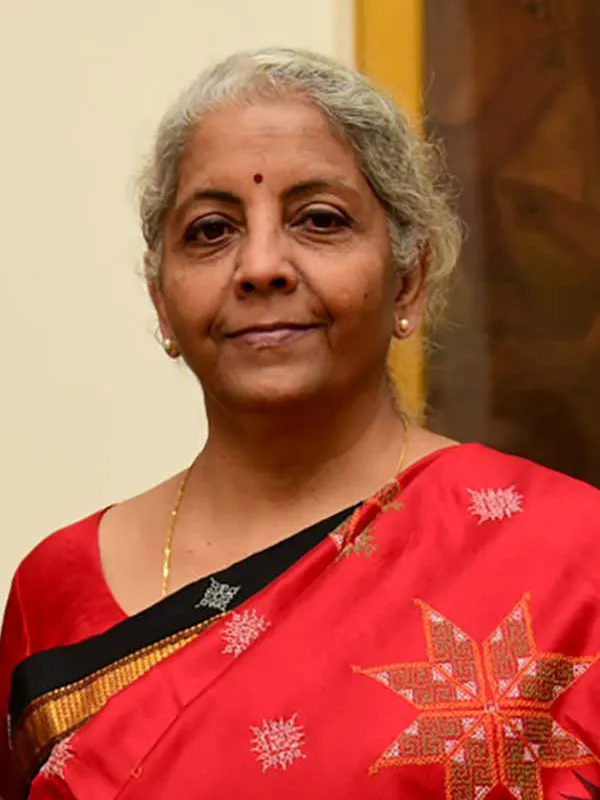
After the 2019 general election, Modi handed her the Ministry of Finance and Ministry of Corporate Affairs. She signaled a break from colonial rituals on day one. She abandoned the traditional British-style leather briefcase and carried her budget papers inside a red cloth binder, known as a bahi-khata. By 2021, she swapped the paper ledger for an Indian-made digital tablet.
Her first real test came fast. In September 2019, seeing slow factory investment, she cut base corporate tax rates from 30% to 22% for existing companies and 15% for new manufacturing plants. It was the deepest tax cut in thirty years.
Six months later, the pandemic hit. Factory floors shut down overnight. Global supply chains snapped. Many economists urged the government to print money and hand out unconditional cash transfers. Sitharaman resisted. She bet that cash drops would fuel runaway inflation once supply bottlenecks tightened. Instead, she designed the targeted Atmanirbhar Bharat stimulus package. It focused on collateral-free loans for small businesses, emergency grain rations, and massive capital expenditure.
The numbers shifted dramatically. Capital expenditure rose from roughly ₹4.12 lakh crore in FY21 to more than ₹11 lakh crore by FY25. The money went directly into cement, steel, expressways, and railway tracks. She worked side-by-side with cabinet colleagues like Nitin Gadkari on road networks and Piyush Goyal on industrial supply lines. During India’s G20 presidency, she collaborated with External Affairs Minister S. Jaishankar, pressing multilateral development banks to restructure debts for developing countries.
Every year on budget morning, she visits Rashtrapati Bhavan to present the budget copy to President Droupadi Murmu before heading to Parliament. Her seventh budget in July 2024 cemented her place as the longest continuous-serving finance minister in independent India’s history.
Personal Life, Family, and Public Asset Filings
Outside of official corridors, her routine is quiet and disciplined. She reads classical literature and economic history. She rarely misses concerts during Chennai’s December Carnatic music season. During budget presentations, she regularly wears traditional handloom sarees crafted by local weavers from Odisha, West Bengal, Andhra Pradesh, and Karnataka.
Her family lives by a clear rule: keep public duty separate from private life. Her husband, Dr. Parakala Prabhakar, is a well-known economic commentator who has written columns criticizing the central government’s financial policies. Neither of them tries to hide those differences; both describe them as normal intellectual honesty. Their daughter, Vangmayi Parakala, works as a feature journalist and author, avoiding political platforms entirely.
Under parliamentary rules, Sitharaman files mandatory asset disclosures with the Rajya Sabha Secretariat and Election Commission. Internet blogs frequently guess wild celebrity wealth figures, but her official filings tell a very different story. Her declared assets consist of an undivided residential home in Hyderabad shared with her spouse, basic bank savings accounts, and family jewelry, with zero corporate equity or overseas accounts.
Frequently Asked Questions About Nirmala Sitharaman
Question: How tall is Nirmala Sitharaman?
Answer: Nirmala Sitharaman is roughly 163 cm tall, which equals 5 feet 4 inches. Official parliamentary records do not document height, but standard biographical listings record this figure.
Question: What is Nirmala Sitharaman’s current age?
Answer: Born on 18 August 1959, she is 67 years old as of 2026.
Question: Who is Nirmala Sitharaman’s husband?
Answer: Her husband is Dr. Parakala Prabhakar, an economist, political commentator, and former communications advisor to the Andhra Pradesh government. They met while studying at JNU and married in September 1986.
Question: What are Nirmala Sitharaman’s educational qualifications?
Answer: She earned a BA in Economics from Seethalakshmi Ramaswami College in Tiruchirappalli, followed by an MA and M.Phil in Economics from Jawaharlal Nehru University in New Delhi.
Question: How many Union Budgets has Nirmala Sitharaman presented?
Answer: As of 2024, she had presented seven consecutive Union Budgets, surpassing Morarji Desai’s record of six consecutive presentations.
Question: Which house of Parliament does Nirmala Sitharaman represent?
Answer: She is an elected Member of Parliament in the Rajya Sabha, representing Karnataka. She previously represented Andhra Pradesh from 2014 to 2016.
Nirmala Sitharaman Social Media Presence & Verified Accounts
| Platform | Account / Handle | Verified Profile Link |
|---|---|---|
| X (Twitter) | @nsitharaman | Visit Official X Account |
| @n.sitharaman | Visit Official Instagram | |
| Nirmala Sitharaman Official | Visit Official Facebook Page | |
| YouTube | @NirmalaSitharaman | Visit Official YouTube Channel |
| Official Website | nirmalasitharaman.in | Visit Official Web Portal |