Derek Muller Biography: Veritasium Creator, Education, Career, and Verified Details
Comprehensive verified biography of Derek Muller, the physicist and creator behind Veritasium. Explores his Queen’s University and University of Sydney Ph.D. education, television documentaries, inventions like Snatoms, and career milestones.
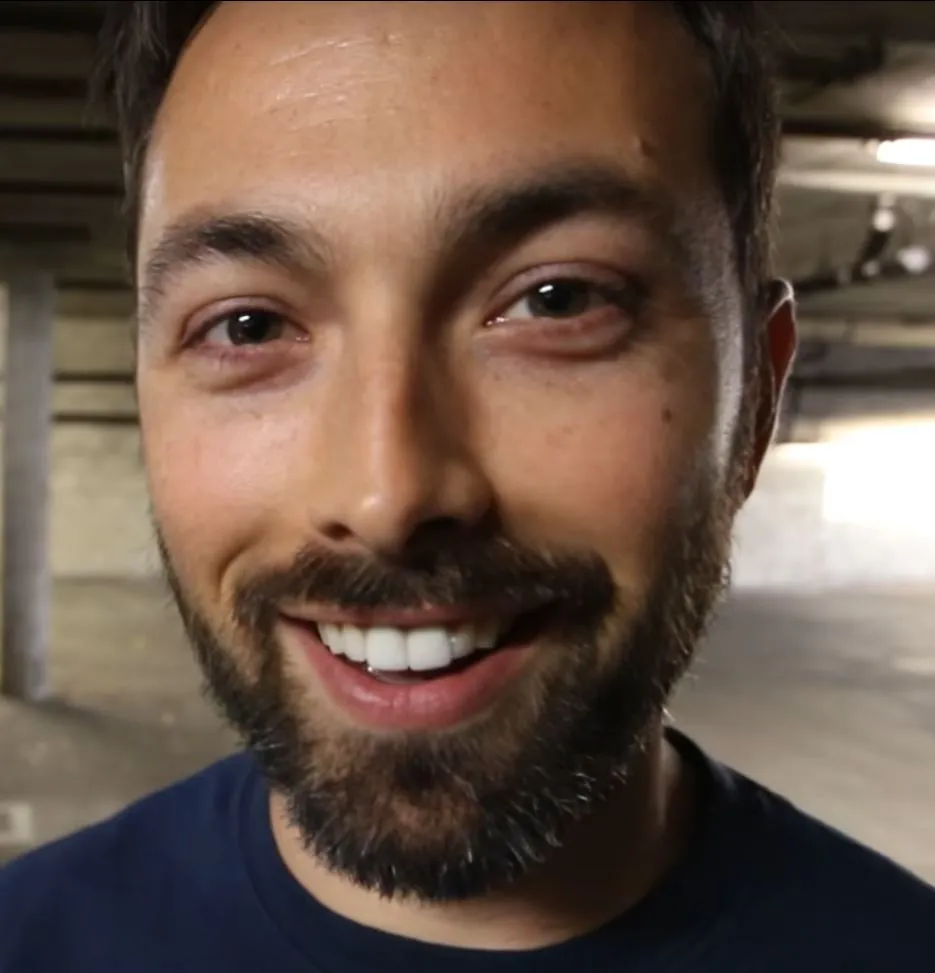
Photo: Hank Green / Wikimedia Commons (CC BY 3.0)
Most science graduates finish a doctorate and look for a faculty desk. Derek Muller bought a microphone, walked onto the paved plazas of Sydney, and started asking strangers questions they were almost guaranteed to get wrong.
That gamble became Veritasium. Launched in 2010, the channel now commands over twenty million subscribers and more than 3.8 billion views. Muller didn’t build that audience by making science cuddly or dumbing down calculus. He did it by leaning hard into cognitive dissonance. When people watch an expert explain a concept smoothly, they nod along, assume they understand it, and walk away retaining almost nothing. Muller proved this mathematically in his doctoral research. True learning requires a collision. You have to watch your intuition break before the real physics can settle in.
| Full Name | Derek Alexander Muller |
|---|---|
| Date of Birth | November 9, 1982 |
| Current Age | 44 years old (as of November 2026) |
| Place of Birth | Traralgon, Victoria, Australia |
| Citizenship | Australian and Canadian dual citizenship |
| Height | Not publicly documented |
| Undergraduate Degree | B.Sc. in Engineering Physics, Queen’s University (2004) |
| Doctoral Degree | Ph.D. in Physics Education Research, University of Sydney (2008) |
| Primary Enterprise | Veritasium (YouTube channel and media production) |
| Spouse | Dr. Raquel Nuno (Planetary Scientist) |
| Major Academic Honor | AAPT Richtmyer Memorial Lecture Award (2016) |
From Traralgon to Queen’s: Academic Roots
Derek Alexander Muller entered the world on November 9, 1982, in the regional Victorian town of Traralgon, Australia. His parents were South African. When he was two, the family packed up and moved across the Pacific to Vancouver, British Columbia. That gave Muller dual citizenship and a childhood spent along Canadian coastlines.
He was a split personality in school. He loved differential equations, but he also threw himself into amateur theater and musical productions at West Vancouver Secondary School. In 2000, he graduated at the absolute top of his class of 425 students, picking up the Governor General’s Bronze Medal and an International Baccalaureate diploma on his way out the door.
Queen’s University came next. Muller picked Engineering Physics—widely considered one of the most grueling undergraduate tracks on any Canadian campus. He held a continuous Chancellor’s scholarship throughout his four years, walked out in 2004 with a 90 percent cumulative average, and ranked in the top fifteen of six hundred engineering graduates. Corporate engineering firms were hiring. He chose graduate school instead, buying a one-way ticket back to Australia.
The University of Sydney Ph.D. and the Mechanics of Confusion
Between 2004 and 2008, supported by an Australian Postgraduate Award, Muller lived in Sydney studying how human beings process physics instruction on screen. His dissertation bore an unassuming title: Designing Effective Multimedia for Physics Education.
The findings shook standard classroom assumptions. Muller produced controlled instructional videos and ran tests with student cohorts. When students watched a crystal-clear, step-by-step lecture explaining a physical law, they reported feeling confident. They rated the video highly. But their test scores barely budged. Why? Because the clean presentation confirmed what they thought they already knew. Their pre-existing misconceptions remained completely untouched beneath the surface.
Muller then tested an alternative. He showed videos where a student voiced common misconceptions first, hit a logical wall, and worked through the confusion alongside an instructor. Viewers found these videos harder to watch. They rated themselves less confident. Yet their actual test scores nearly doubled. Confusion wasn’t a defect in the learning process; it was the engine.
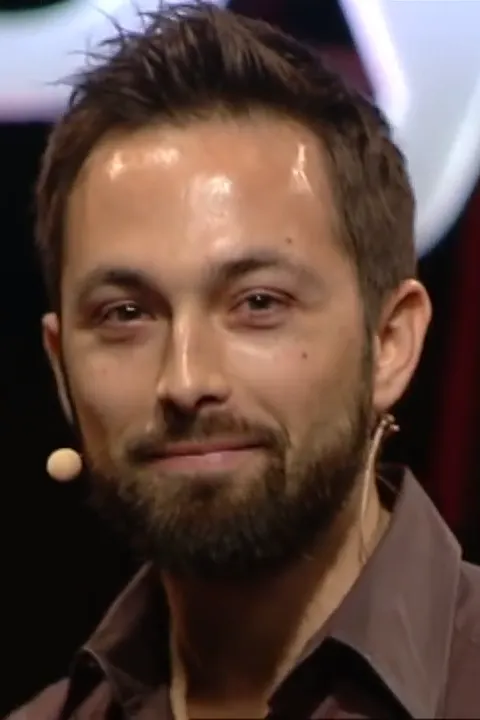
Veritasium: Street Experiments and High-Stakes Physics
In July 2010, Muller registered Veritasium on YouTube. The name spliced the Latin noun veritas (truth) with the chemical periodic suffix -ium—an element of truth. Early uploads had zero budget. Muller stood in busy public parks holding a clip mic, asking ordinary commuters whether heavy objects fall faster than light ones or why trees have leaves. When people stumbled, he produced scale models or vacuum tubes right on the pavement.
The channel caught fire because it respected the viewer’s intelligence. Muller didn’t rely on jump cuts or screaming thumbnails. He tackled knotty, abstract concepts: single-atom shadow imaging, quantum entanglement, chaotic logistic equations, and the physics of the world’s roundest silicon sphere. The growing maturity of the platform saw him interact with creators across genres, from engineering heavyweight Mark Rober to video essay pioneer Casey Neistat.
Then came the 2021 Blackbird controversy. A physical craft powered solely by wind claimed to travel directly downwind faster than the tailwind pushing it. Commentators online revolted, insisting the claim violated conservation of energy. Alexander Kusenko, a respected physics professor at UCLA, publicly declared the claim impossible. Muller built a craft, hired an airfield, gathered live telemetry, and put ten thousand dollars on the line in a signed wager. When the data verified that the propeller functioned as a fan driving against the ground rather than a passive sail, Kusenko reviewed the data and conceded. Muller collected the cash on camera, cementing Veritasium’s reputation for taking scientific skepticism to its logical conclusion.
Television Documentaries and Institutional Recognition
Network television producers eventually recognized that Muller’s visual storytelling worked on bigger screens. In 2015, he hosted Uranium: Twisting the Dragon’s Tail, an international two-part documentary produced by Genepool Productions for PBS in the United States and SBS in Australia. Muller traveled from ancient mineral deposits in Australia to the ruins of Chernobyl and Fukushima, winning widespread broadcast awards.
Other television productions followed in rapid succession. In 2018, he fronted Vitamania: The Sense and Nonsense of Vitamins, interrogating the global supplement industry. He hosted the digital security documentary Digits, worked as a roving field correspondent for Netflix’s Bill Nye Saves the World, and contributed regular visual segments to ABC Australia’s legendary science program Catalyst.
The academic establishment took notice. In 2016, the American Association of Physics Teachers awarded Muller the Richtmyer Memorial Lecture Award—joining historical recipients like Enrico Fermi and Richard Feynman. Muller took the stage at the national conference and delivered a keynote directly summarizing his career’s central thesis: “Why Some Confusion is Good – Evidence for How to Make Learners Think.”
Building Snatoms and Physical Learning Tools
Muller’s work isn’t confined to digital pixels. In 2015, frustrated by rigid wooden and plastic chemistry ball-and-stick sets that fail to capture molecular geometry or bonding dynamics, he invented Snatoms. The kits utilize smooth plastic spheres containing embedded neodymium magnets that rotate freely, snapping together at true bond angles and breaking apart with realistic magnetic resistance.
He launched the idea on Kickstarter. It funded within sixty minutes, selling thousands of kits to university classrooms, research labs, and science enthusiasts globally. He followed with tabletop projects like Elements of Truth. While entertainment giants like MrBeast chase massive algorithmic spectacles, Muller’s business operates on pedagogical endurance and intellectual trust.
Personal Life, Marriage, and Public Measurements
Muller makes his home in Los Angeles, California, alongside his wife, Dr. Raquel Nuno. Nuno is an active planetary scientist with a Ph.D. in Earth, Planetary, and Space Sciences from UCLA. She studies lunar impact craters, surface age dating, and planetary geology. She also frequently works behind the camera on Veritasium shoots, contributing research notes and production assistance. The couple raises their children quietly, keeping their family life outside the YouTube spotlight.
Online search engines frequently see queries about Derek Muller’s height. Informal discussions and forum threads throw around numbers between 5 feet 7 inches and 6 feet, but Muller has never made an official disclosure of his height, and reputable biographical profiles leave the metric unverified. His net worth is subject to the same internet speculation. Third-party sites spit out automated dollar estimates based on view counts, but audited personal financial statements have never been publicly released.
Derek Muller Social Media Presence & Verified Accounts
For official video releases, project announcements, and verified public updates, consult these verified platforms:
| Platform | Account / Handle | Direct Verified URL |
|---|---|---|
| YouTube | @veritasium | Visit Veritasium on YouTube |
| X (formerly Twitter) | @veritasium | Follow @veritasium on X |
| @veritasium | Follow @veritasium on Instagram | |
| veritasium | Visit Veritasium on Facebook | |
| Official Website | Veritasium.com | Visit Veritasium Official Website |
Frequently Asked Questions
Question: What degrees did Derek Muller earn?
Answer: Muller earned a B.Sc. in Engineering Physics from Queen’s University in 2004 and a Ph.D. in Physics Education Research from the University of Sydney in 2008.
Question: How tall is Derek Muller?
Answer: Derek Muller’s exact height is not publicly documented in official records or biographical profiles. While unverified online discussions guess between 5 feet 7 inches and 6 feet, no authoritative measurement is publicly available.
Question: Who is Derek Muller married to?
Answer: Derek Muller is married to Dr. Raquel Nuno, a planetary scientist who earned her Ph.D. at UCLA and specializes in lunar surface geology and impact cratering.
Question: What was the main discovery of Derek Muller’s Ph.D. research?
Answer: His research demonstrated that clear expository science presentations often give students an illusion of competence without correcting false beliefs. Forcing students to confront misconceptions directly before offering the solution dramatically increases conceptual retention.
Question: What is Snatoms?
Answer: Snatoms is a magnetic molecular modeling kit invented by Derek Muller in 2015. It replaces rigid plastic sticks with magnetic spheres that connect and detach with tactile feedback, illustrating real chemical bonding dynamics.
Question: Where was Derek Muller born and raised?
Answer: He was born in Traralgon, Victoria, Australia, on November 9, 1982, and was raised in Vancouver, British Columbia, Canada.
Related Creator Biographies
Readers exploring influential digital creators and online communicators can browse our detailed profiles of former NASA engineer Mark Rober, video pioneer Casey Neistat, digital creator MrBeast, and digital sketch artist Ashish Chanchlani.