Mark Rober Biography: Age, Height, NASA Career, CrunchLabs & Socials
Inside the career of NASA engineer turned science communicator Mark Rober: from seven years building the Curiosity Mars rover and secret Apple patents to viral glitter bombs and CrunchLabs.
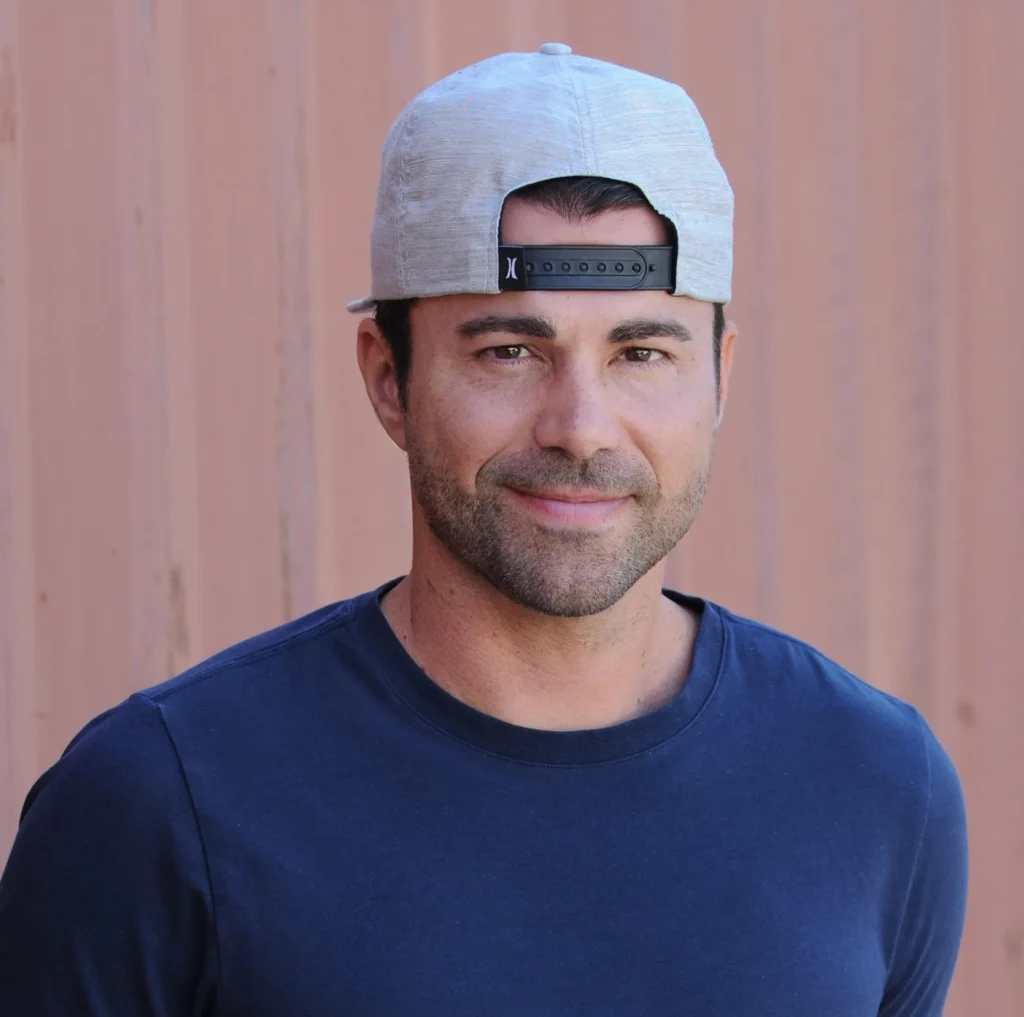
Photo: LKP2024 / Wikimedia Commons (CC BY 4.0)
Before Mark Rober ever dumped two million cubic centimeters of foaming elephant toothpaste into a backyard pool or weaponized fine glitter against doorstep thieves, he spent nine years building machines that left Earth behind. At NASA’s Jet Propulsion Laboratory in Pasadena, his day job was keeping a one-ton titanium rover from smashing into bits on the red dust of Mars.
That aerospace background shows up in every single build.
Where most internet creators grab a camera and shout at the lens, Rober opens CAD software. He runs finite-element stress analysis. He calculates fluid dynamics, logs component failure rates, and explains Newtonian physics to thirty million people without stripping away the actual science.
| Full Name | Mark Braxton Rober |
|---|---|
| Date of Birth | March 11, 1980 |
| Current Age | 46 years old (as of November 2026) |
| Birthplace | Brea, Orange County, California, United States |
| Height | 6 ft 0 in (183 cm) |
| Profession | Mechanical Engineer, Inventor, Science Communicator, Entrepreneur |
| Education | B.S. in Mechanical Engineering (Brigham Young University, 2004); M.S. in Mechanical Engineering (University of Southern California, 2014) |
| Key Past Employers | NASA Jet Propulsion Laboratory (2004–2013); Apple Inc. Special Projects Group (2015–2020) |
| Companies Founded | Digital Dudz (founded 2012, acquired 2013); CrunchLabs (founded 2022) |
| Notable Projects | Curiosity Mars Rover hardware, Glitter Bomb 1.0–5.0, #TeamTrees, #TeamSeas, CrunchLabs Build Box |
| Key Honors | IET STEM Personality of the Year (2021); MIT Commencement Keynote Speaker (2023); FIRST Robotics Founder’s Award (2024) |
Brea Roots and Mechanical Engineering Discipline
Rober grew up in Brea, an oil and citrus town in northern Orange County. He was the youngest of three kids.
The habit of engineering his way around small daily irritations showed up early. When chopping onions left his eyes burning, the eight-year-old rigged a pair of tight swimming goggles with makeshift seals to keep sulfur compounds away from his corneas. That DIY instinct survived high school. He graduated from Brea Olinda High School in 1998, packed his gear, and drove out to Provo to study mechanical engineering at Brigham Young University.
BYU meant long nights buried in thermodynamics textbooks, differential equations, and machine shop lathes. In 2004, he walked across the stage with his Bachelor of Science in mechanical engineering and was tapped for Tau Beta Pi, the national engineering honor society. He did not drop the books once he entered the defense and space industry. While clocking full workweeks at NASA, he took evening graduate courses across town, earning a Master of Science in mechanical engineering from the University of Southern California in 2014.
Nine Years at NASA JPL: The Curiosity Rover and Flight Hardware
NASA hired Rober straight out of college in 2004. He walked through the gates of the Jet Propulsion Laboratory in Pasadena and stayed for nine years.
During that run, he built hardware across multiple deep-space programs, including AMT, GRAIL, and SMAP. But seven of those nine years belonged entirely to one mission: the Mars Science Laboratory.
Rober was one of the hardware engineers responsible for designing, testing, and bolting together parts of the Curiosity rover. Landing Curiosity was widely billed inside aerospace circles as “seven minutes of terror”—a sequence where a heat shield, supersonic parachute, rocket thrusters, and a tethered sky crane had to fire autonomously without a single line of software glitching. On August 6, 2012, when radio signals crawled across 150 million miles of void confirming the rover’s wheels were firmly down on Gale Crater, Rober and his colleagues erupted. He later summed it up: seven years of sweat and differential equations justified in seven minutes of real-world physics.
He did not just cut metal at JPL. He co-created “JPL Wired,” an internal engineering wiki built to make sure institutional design knowledge did not vanish when senior rocket scientists retired.
From Apple Special Projects to Digital Dudz
The transition to public entertainment started as an accidental October side project in 2011.
Rober bought two iPads, cut matching holes in the front and back of a black shirt, and set up a live FaceTime video stream between them. Looking at his chest gave the impression of a hollow, see-through torso. He threw a 20-second clip onto YouTube to show friends. It hit 1.5 million views in twenty-four hours.
He did not ignore the numbers.
By Halloween 2012, he had patented the concept, invested his savings, and founded Digital Dudz. The app-driven clothing line pulled $250,000 in revenue in its first twenty-one days. Within twelve months, Party City was stocking his shirts across thousands of retail shelves, leading to national morning show features and an outright acquisition by UK costume maker Morphsuits in 2013.
Silicon Valley came calling shortly after. Between 2015 and early 2020, Rober worked quietly inside Apple’s secretive Special Projects Group in Cupertino. As a product designer, he drafted patents around virtual reality entertainment systems for autonomous vehicles—an engineering field deeply intertwined with tech platforms shaped by executives like Sundar Pichai.
The Viral Engineering Playbook: Glitter Bombs and Backyard Mazes
In 2018, someone walked up to Rober’s front porch in California and stole a parcel. When local police told him they did not have the manpower to follow up, Rober turned the crime into an engineering grudge match.
He spent six months in his garage prototyping a bait package disguised as an Apple HomePod. Inside was an intricate mechanical payload: a custom four-sided camera rig with four LTE phones recording the thief, an internal motorized turntable that flung half a pound of ultra-fine holographic glitter into the air the moment the box opened, and a pressurized spray mechanism releasing skunk scent on a timer.
The first glitter bomb clip racked up 25 million views in a day. What started as personal payback grew into an annual engineering production. By version three and four, Rober was coordinating with cybersecurity sleuths Jim Browning and Scammer Payback, turning modified bait packages against international scam rings to help law enforcement shut down fraudulent call centers.
The channel did not stop at trap boxes. During pandemic lockdowns, he spent months outsmarting the squirrels raiding his birdfeeders, constructing multi-story obstacle courses fitted with rope bridges, maze corridors, and spring-loaded catapults. The original squirrel maze pulled over 114 million views. Later, he set Guinness World Records for the largest elephant’s toothpaste foam explosion alongside creator Jimmy Donaldson (MrBeast).
His engineering narrative style caught on far beyond American borders, mirrored in the digital storytelling methods of global video leaders like CarryMinati and Indian comedy creators like Ashish Chanchlani.
CrunchLabs, Philanthropy, and the MIT Commencement Keynote
In 2022, Rober rolled everything he learned about mechanical prototypes and video engagement into a company called CrunchLabs. Headquartered in Mountain View, the company builds monthly subscription boxes that teach kids how to wire motors, assemble gearboxes, and grasp physical levers under the mantra “Think like an engineer.” In 2026, he widened the mission with Class CrunchLabs, supplying free hands-on STEM curriculum packages to thousands of public elementary and middle schools.
Environmental action followed a similar playbook. In October 2019, Rober and MrBeast co-launched #TeamTrees with the Arbor Day Foundation, raising more than $25 million to plant 25 million trees around the world. In 2021, they followed up with #TeamSeas, raising $30 million to pull ocean plastics with The Ocean Cleanup and Ocean Conservancy. On a personal level, as a father whose son is on the autism spectrum, Rober teamed up with Jimmy Kimmel in 2021 for a live charity broadcast that raised over $3 million for NEXT for AUTISM.
On June 1, 2023, Rober stood before thousands of graduating students at MIT’s OneMIT Commencement ceremony in Cambridge. He told the Class of 2023 to protect their naive optimism, treat failure like respawning in a video game, and build real human friendships. Then came the stunt. He unlatched his traditional graduation mortarboard, locked it onto a motorized drone he had smuggled into the ceremony, and flew the cap straight over the top of MIT’s Great Dome to a standing ovation.
Mark Rober Social Media Presence & Verified Accounts
Mark Rober communicates directly with tens of millions of fans, students, and educators through verified social accounts, sharing project breakdowns, behind-the-scenes build videos, and educational STEM announcements.
| Platform | Handle / Profile | Verified Link |
|---|---|---|
| YouTube | @MarkRober | youtube.com/@MarkRober |
| X (Twitter) | @MarkRober | x.com/MarkRober |
| @markrober | instagram.com/markrober | |
| MarkRoberYouTube | facebook.com/MarkRoberYouTube | |
| Official Website | CrunchLabs | crunchlabs.com |
Frequently Asked Questions
Question: How tall is Mark Rober?
Answer: Mark Rober stands approximately 6 feet 0 inches tall (183 centimeters), though some informal media profiles report his height between 5 ft 10 in and 6 ft 1 in.
Question: How old is Mark Rober?
Answer: Mark Rober was born on March 11, 1980, making him 46 years old as of November 2026.
Question: What did Mark Rober do at NASA?
Answer: Rober spent nine years as a mechanical engineer at NASA’s Jet Propulsion Laboratory (JPL) from 2004 to 2013. He spent seven of those years working on flight hardware for the Curiosity Mars rover and co-developed the JPL Wired knowledge management system.
Question: What degrees does Mark Rober hold?
Answer: Rober earned a Bachelor of Science in mechanical engineering from Brigham Young University in 2004 and a Master of Science in mechanical engineering from the University of Southern California in 2014.
Question: What is Mark Rober’s net worth?
Answer: Mark Rober’s personal net worth is not publicly disclosed in statutory filings. Tabloid estimates range wildly online, but his verified commercial ventures include the 2013 acquisition of Digital Dudz by Morphsuits, his educational company CrunchLabs, corporate engineering patents, and YouTube ad revenue.