Manu Bhaker Biography, Age, Height, Olympic Medals, Family, Career, Net Worth and more 2026
Inside Manu Bhaker’s historic Olympic journey: Haryana roots, Tokyo heartbreak, dual Paris 2024 bronze medals, Khel Ratna, height, family, and verified career facts.
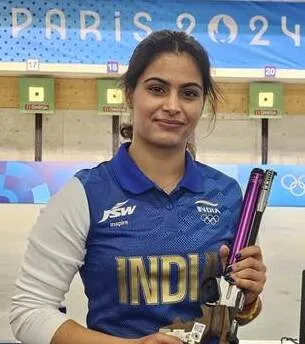
Photo: Ministry of Youth Affairs and Sports / PIB (GODL-India)
Seventeen minutes. That was how long Manu Bhaker sat frozen in Tokyo while an armory technician tried to fix a snapped cocking lever on her air pistol. Her Olympic debut disintegrated right there on the firing line. She left the range in tears, caught in a swirl of blame, online vitriol, and an ugly split with her coach.
Three years later in Châteauroux, everything changed.
On July 28, 2024, Bhaker stepped up to the eight-woman final of the 10-metre air pistol at the Paris Olympics. She took slow, deliberate breaths. Her trigger squeeze was crisp. With 221.7 points, she took the bronze medal behind South Korea’s Oh Ye-jin and Kim Ye-ji. That bronze was India’s first medal of the Paris Games. More importantly, it made her the first female shooter in Indian history to reach an Olympic podium.
She was not finished.
Two days later, Bhaker paired with Sarabjot Singh in the mixed team 10m event. They dismantled South Korea 16–10. With that second bronze around her neck, Bhaker became the first athlete from independent India to win two medals at the same Olympic Games. She almost made it three, placing fourth in the 25m pistol after a sudden-death shoot-off.
Now 24, Bhaker sits at the very center of Indian Olympic sport. Her rise from a dusty school range in Jhajjar to the podium in France reveals what happens when natural hand-eye coordination meets intense technical discipline and stubborn resilience.
Quick Facts: Manu Bhaker Biography
| Full Name | Manu Ramkishan Bhaker |
|---|---|
| Date of Birth | 18 February 2002 |
| Age (as of 2026) | 24 years old |
| Birthplace | Goria village, Jhajjar district, Haryana, India |
| Height | 168 cm (5 ft 6 in) |
| Discipline | Shooting (10m Air Pistol, 25m Sports Pistol, Mixed Team) |
| Parents | Ram Kishan Bhaker & Sumedha Bhaker |
| Personal Coach | Jaspal Rana |
| Education | BA (Hons) Political Science, Lady Shri Ram College; MPA, DAV College Chandigarh |
| Olympic Medals | 2x Bronze (Paris 2024: 10m Air Pistol & 10m Air Pistol Mixed) |
| National Honours | Major Dhyan Chand Khel Ratna (2024), Arjuna Award (2020) |
| Marital Status | Unmarried |
Childhood in Goria and the Shift to Shooting
Goria is a quiet farming village in Haryana. Most kids there gravitate toward kabaddi, wrestling, or joining the military. Bhaker’s upbringing was different. Her father, Ram Kishan Bhaker, worked as a chief engineer in the Merchant Navy. He spent months abroad on container ships, but whenever he returned home, he pushed his daughter into sports.
She tried everything. Boxing, tennis, skating, and Thang-Ta, a Manipuri martial art where she won medals at national school games. She had quick reflexes and an aggressive streak.
Then came April 2016. The Rio Olympics were approaching. Her school, Universal Senior Secondary School in Goria, had just opened a modest 10-metre shooting range. Bhaker wandered inside, picked up an air gun, and took a shot. The bullseye lit up. Unlike combat sports where she burned energy fast, shooting demanded total stillness. She was hooked. Her father backed her instinct immediately, spending several lakhs of rupees on imported match pistols and specialized pellets. Within two seasons, the 14-year-old was outscoring senior national shooters in open trials.
Explosive Teenage Debut and the Tokyo Trauma (2018–2021)
Bhaker broke onto the international stage like a storm. In March 2018, she arrived at the ISSF World Cup in Guadalajara, Mexico. She was only 16. In the final, she went head-to-head with local two-time Olympian Alejandra Zavala. Bhaker stayed cool under the strobe lights, landing consecutive 10s to snatch gold. It made her the youngest Indian shooter ever to win a World Cup title.
Weeks later at the Commonwealth Games in Gold Coast, Australia, she shattered the qualifying and finals records to bag gold. By year’s end, she carried the Indian flag at the Youth Olympics in Buenos Aires and walked away with another gold medal. Suddenly, the national spotlight was blinding. Alongside fellow Haryana prodigy Neeraj Chopra, she was billed as the future of Indian Olympic sports.
Then came the disaster in Tokyo.
During the qualifying round of the 10m air pistol at the Tokyo 2020 Games, her gun malfunctioned after just 16 shots. The cocking lever jammed solid. For 17 agonizing minutes, she stood helplessly on lane four while officials fiddled with tools. By the time a backup circuit was assembled, her rhythm was shattered. She came back, fired off shots in a frantic rush, and finished on 575—barely two points short of the final cut. The blowback back home was merciless. Critics called her mentally fragile. Hurt and exhausted, she broke ties with coach Jaspal Rana.
The Paris Redemption: Two Medals in 72 Hours
Most athletes crumble after a public meltdown like Tokyo. Bhaker chose a different route. She went back to basics.
Ahead of the Paris 2024 Olympic cycle, she patched things up with Jaspal Rana. The Ministry of Youth Affairs and Sports backed the reunion through the Target Olympic Podium Scheme (TOPS). They shipped her to training camps in Luxembourg, ran barrel-testing diagnostics in European labs, and matched match-grade pellets to microscopic tolerances.
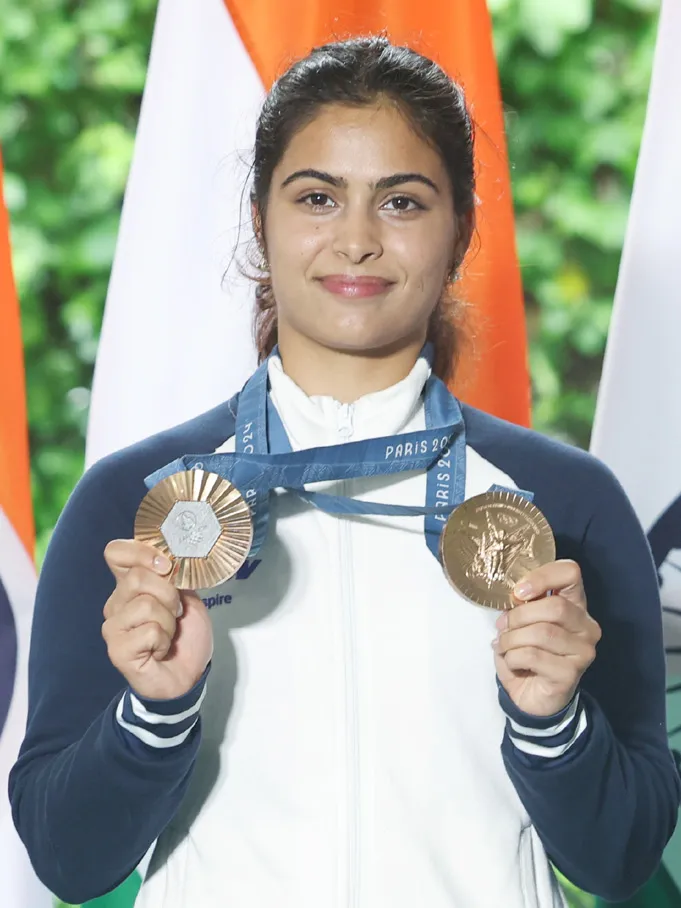
On July 28, 2024, at Châteauroux, the investment paid off. In the individual 10m air pistol final, Bhaker held off a stacked field. She locked in a final score of 221.7 points, capturing bronze behind South Korea’s Oh Ye-jin and Kim Ye-ji. The medal ended India’s 12-year Olympic shooting drought.
Two mornings later, she returned to the range with Sarabjot Singh. Their chemistry in the mixed team 10m bronze match was electric. They took down South Korea 16–10. Bhaker walked away as the first Indian athlete since 1900 to take two medals at a single Olympic Games. She came within a whisker of a third medal in the 25m pistol, finishing fourth after a heart-stopping shoot-off against Hungary’s Veronika Major.
The Khel Ratna and National Recognition
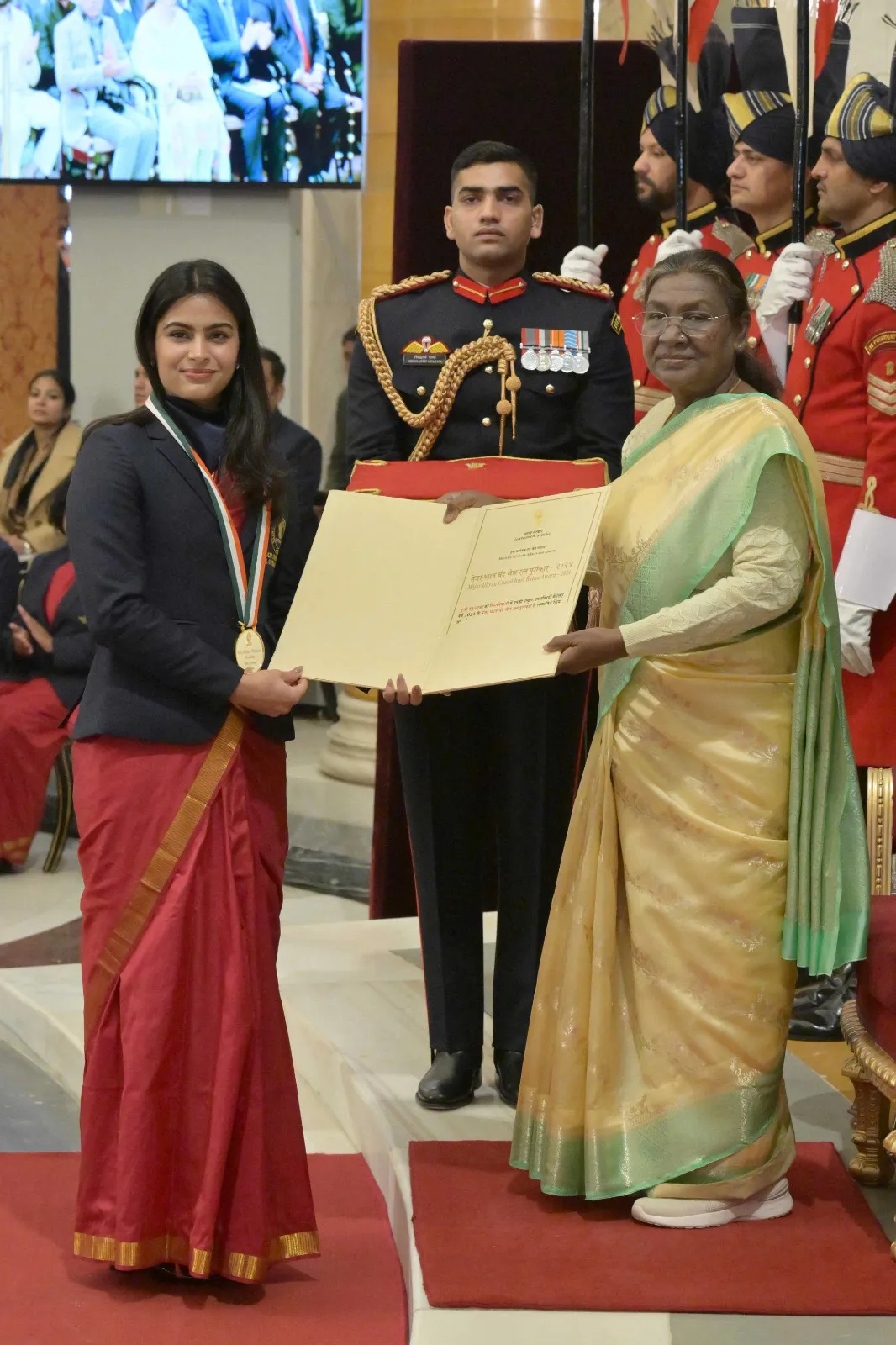
The accolades followed quickly. In January 2025, President Droupadi Murmu conferred the Major Dhyan Chand Khel Ratna Award—India’s highest sports honour—on Bhaker at Rashtrapati Bhavan. She had already received the Arjuna Award back in 2020.
During the Paris closing ceremony, she carried India’s tricolor flag alongside hockey veteran PR Sreejesh. Praise came in from every corner of the country. Union Minister Chirag Paswan spoke publicly about her grit, calling her an example of self-belief for Indian youth. Her work ethic mirrors the focus seen across modern sports leaders like cricket captain Rohit Sharma and young batting star Yashasvi Jaiswal.
Finances and Brand Deals: Fact vs. Speculation
Success at the Olympics changes financial realities fast. Within months of returning from Paris, Bhaker signed commercial endorsements with national brands, including Performax Activewear and KFC India. Industry insiders report her endorsement fees surged past ₹1 Crore per deal annually.
State cash awards piled on too. Under Haryana’s elite athlete policy, Olympic medal winners receive multi-crore cash rewards and government job offers. Yet celebrity net worth aggregators often invent wild figures, claiming fortunes between ₹15 Crore and ₹30 Crore. The reality is simpler: Manu Bhaker does not disclose personal balance sheets, and no audited public filing exists. Her wealth comes directly from verified prize purses, government sports funding, and corporate sponsorships.
Frequently Asked Questions About Manu Bhaker
Question: How tall is Manu Bhaker?
Answer: Manu Bhaker is 168 cm tall, which converts to approximately 5 feet 6 inches.
Question: How old is Manu Bhaker in 2026?
Answer: Born on February 18, 2002, she is 24 years old in 2026.
Question: How many Olympic medals has Manu Bhaker won?
Answer: She has won two Olympic bronze medals, both at the Paris 2024 Games in the 10m air pistol individual and mixed team events.
Question: Who coaches Manu Bhaker?
Answer: She is trained by former Asian Games gold medalist and renowned coach Jaspal Rana.
Question: What did Manu Bhaker study?
Answer: She completed a BA (Honours) in Political Science from Lady Shri Ram College for Women, University of Delhi, and pursued a Master’s in Public Administration from DAV College in Chandigarh.
Question: Is Manu Bhaker married?
Answer: No, Manu Bhaker is unmarried and single.
Question: Which village is Manu Bhaker from?
Answer: She is from Goria village in the Jhajjar district of Haryana, India.
Question: What is Manu Bhaker’s verified net worth?
Answer: Her exact net worth is not publicly disclosed. While she earns through commercial endorsements and government prize awards, private financial filings are not public.