Premanand Maharaj Biography: Age, Height, Radha Keli Kunj, Health & Spiritual Legacy
Grounded biography of Premanand Maharaj examining his early life in Kanpur, ascetic training in Varanasi, Radha Vallabh initiation in Vrindavan, and ashram operations.
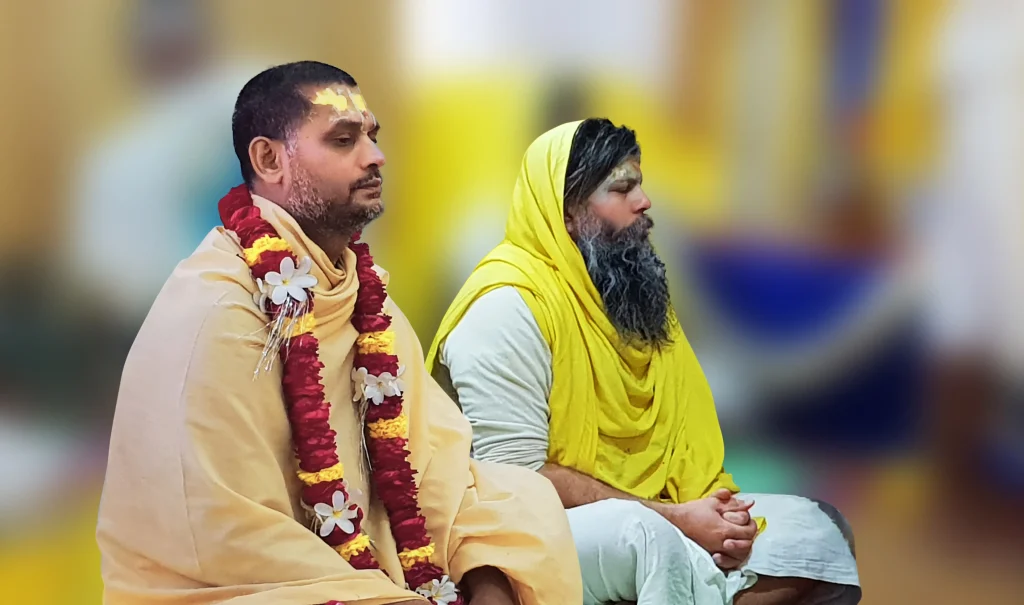
Photo: Wikimedia Commons / CC0
Vrindavan: In the stillness of an intimate sabha, a handwritten question made its way to Premanand Maharaj — one that could stump even a high-stakes quiz contestant: “How do you spot a true saint?” It was written by Poonam Ahuja, a follower seated quietly in the crowd. Reading it aloud, Maharaj smiled, looked straight at the people sitting in the room, and then answered without hesitation: “You can’t. We don’t have the gyan netra. Anyone can dress like a saint and do terrible things. Some may see me as a fraud, some as an ordinary man, some as a decent soul — it all depends on you. There’s no fixed way to know.” This Premanand Maharaj biography documents his life, teachings, and spiritual journey in Vrindavan.
This kind of self-awareness is rare in India’s glut of babas, gurus, and godmen with huge empires, cult followings, and often questionable advice. The crowd sat mantra-mugdh after hearing Premanand Maharaj’s answer — it appeared real, logical, and refreshingly free from religious jargon or scriptures. In an age of filters and fake gurus, Premanand feels real. He doesn’t sell miracles, he tells you to sit with your pain — and chant.
Quick Biography: Premanand Maharaj Life & Monastic Profile
| Specification | Verified Monastic Detail |
|---|---|
| Monastic Name | Shri Hit Premanand Govind Sharan Maharaj |
| Birth Name | Aniruddh Kumar Pandey |
| Date of Birth | 30 March 1971 |
| Current Age | 55 years (as of 2026) |
| Place of Birth | Akhri village, Sarsaul block, Kanpur district, Uttar Pradesh, India |
| Reported Height | Not measured in monastic records (approximately 1.65 m / 5 ft 5 in) |
| Spiritual Tradition | Radha Vallabh Sampradaya (Vaishnavism) |
| Primary Ashram | Shri Hit Radha Keli Kunj Ashram, Varaha Ghat, Parikrama Marg, Vrindavan |
| Spiritual Preceptor (Guru) | Shri Hit Gaurangi Sharan Ji Maharaj |
| Parents | Shambhu Pandey (Father, later took sannyasa) and Rama Devi (Mother) |
| Primary Focus | Radha Bhakti, Naam Japa, Brahmacharya, Moral Self-Discipline |
| Financial Assets & Net Worth | Ascetic Renunciant (No personal wealth, property, or private bank holdings) |
Premanand Maharaj Biography: Early Life in Kanpur and Youthful Renunciation
Before becoming Premanand Maharaj, he was Aniruddh Kumar Pandey from a Brahmin family in Akhri village, Sarsaul block in Kanpur district, Uttar Pradesh. His father was Shambhu Pandey and his mother was Rama Devi. His grandfather had taken sannyasa, while his father was devoted to religious practices. His elder brother regularly recited verses from the Srimad Bhagavatam at home. He developed an interest in religious practice during childhood and began reciting prayers at a young age. While in the fifth grade, he began reading Shri Sukhsagar, a publication of Gita Press. At the age of 13, he left his family home and travelled to Varanasi, where he began a life of religious renunciation.
“I was born in a Brahmin family and did not have many facilities. I used to think that if my father and mother died, who would love me? Such questions kept coming to me. That is when I decided to leave home and spend my life as a sanyasi,” said Premanand, while speaking about his journey during an Ekantik Vartalaap. And while other children were playing cricket or spending time with friends, a young Aniruddh turned his attention to deeper questions. He started contemplating whether a parent’s love was everlasting — and if it wasn’t, why should someone attach themselves to happiness that is temporary. Eventually, he realised that only divine love is permanent, and everything else is temporary.
Ascetic Discipline and Sannyasa along the Varanasi Ghats
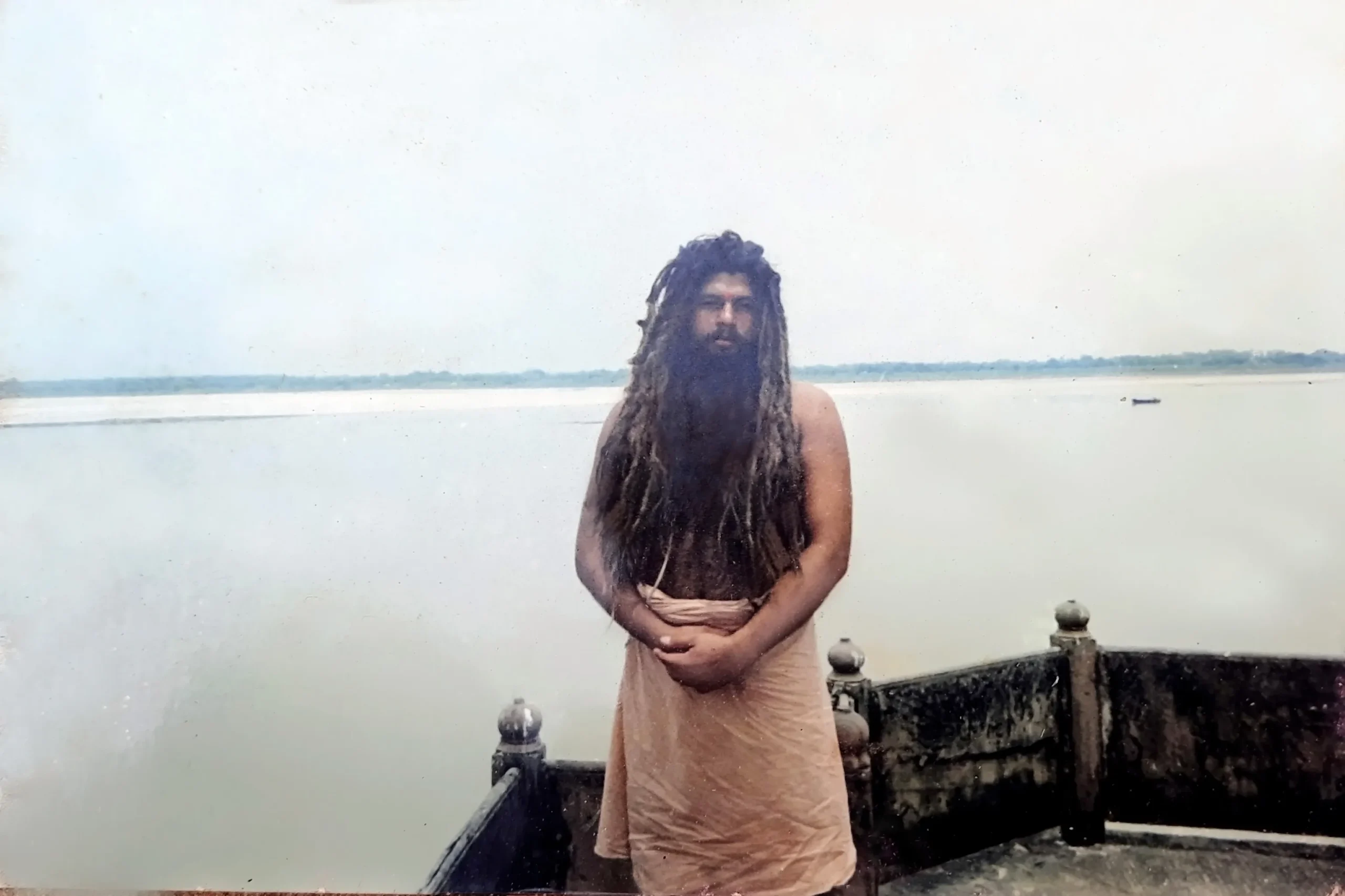
After leaving home, he spent his initial ascetic years in Varanasi along Assi Ghat. He was initiated into naisthika brahmacharya as Anandswaroop Brahmachari and later accepted sannyasa as Swami Anandashram, living under the vow of akashvritti without soliciting alms. He spent extended periods in silent contemplation on the riverbanks of the Ganges, enduring harsh northern winters and intense summer heat without shelter.
Relocation to Vrindavan and Initiation into the Radha Vallabh Sampradaya
While living in Varanasi, Maharaj encountered a saint who encouraged him to attend a Raas Leela performance. He attended the performances for about a month before travelling by train to Mathura and continuing to Vrindavan. He undertook the barefoot Vrindavan Parikrama and visited Bankey Bihari Temple before coming into contact with the Radha Vallabh Sampradaya. He received the Sharanagat Mantra from a lineage Goswami and subsequently received Nij Mantra diksha from Shri Hit Gaurangi Sharan Ji Maharaj, adopting the monastic name Shri Hit Premanand Govind Sharan.
The Radha Vallabha Sampradaya is a Vaishnava Hindu denomination founded in 1535 at Vrindavan by Hita Harivansh (1502–1552). Harivansh Ji’s views emphasise devotion to the goddess Radha as the Supreme Being. According to the scholar Guy L. Beck, the Radha Vallabha Sampradaya views Radha as the Supreme Being, while Krishna is described as her most intimate servant. The tradition declines to produce theological commentaries, preferring pure bhakti and divine love. It defines liberation as participation as a witnessing companion in the divine play of Radha and Krishna. In the Radha Vallabh Temple in Vrindavan, there is no idol of Shri Radha, but a Gādī Sevā is placed next to Krishna to signify her presence.
Daily Satsangs, Ekantik Vartalap, and Egalitarian Gatherings
His popularity stems not just from his soft-spoken sermons, but also from his positioning as a ‘progressive baba’ — one who gives logical, non-ritualistic advice and recommends only naam jaap as a solution. He denounces meat and alcohol, but stops short of prescribing poojas or offerings. “That is the beauty of Premanand Maharaj ji. He doesn’t advertise religion, he brings peace to people,” said Vikram Singh, who attended an Ekantik Vartalaap session at his ashram in Vrindavan.
Every decade in India sees the rise of a spiritual figure who reflects the mood of the nation. In today’s landscape of godmen, Premanand Maharaj has quietly emerged as the baba for the digital age — viral across Instagram reels, YouTube Shorts, and WhatsApp forwards. India has seen many babas — some who changed political equations, others who mobilised mass protests — but Premanand Maharaj stands out. His sabhas have no VIP enclosures. Everyone, from Virat Kohli and Anushka Sharma to Hema Malini and Ashutosh Rana, sits on the same floor in the same room.
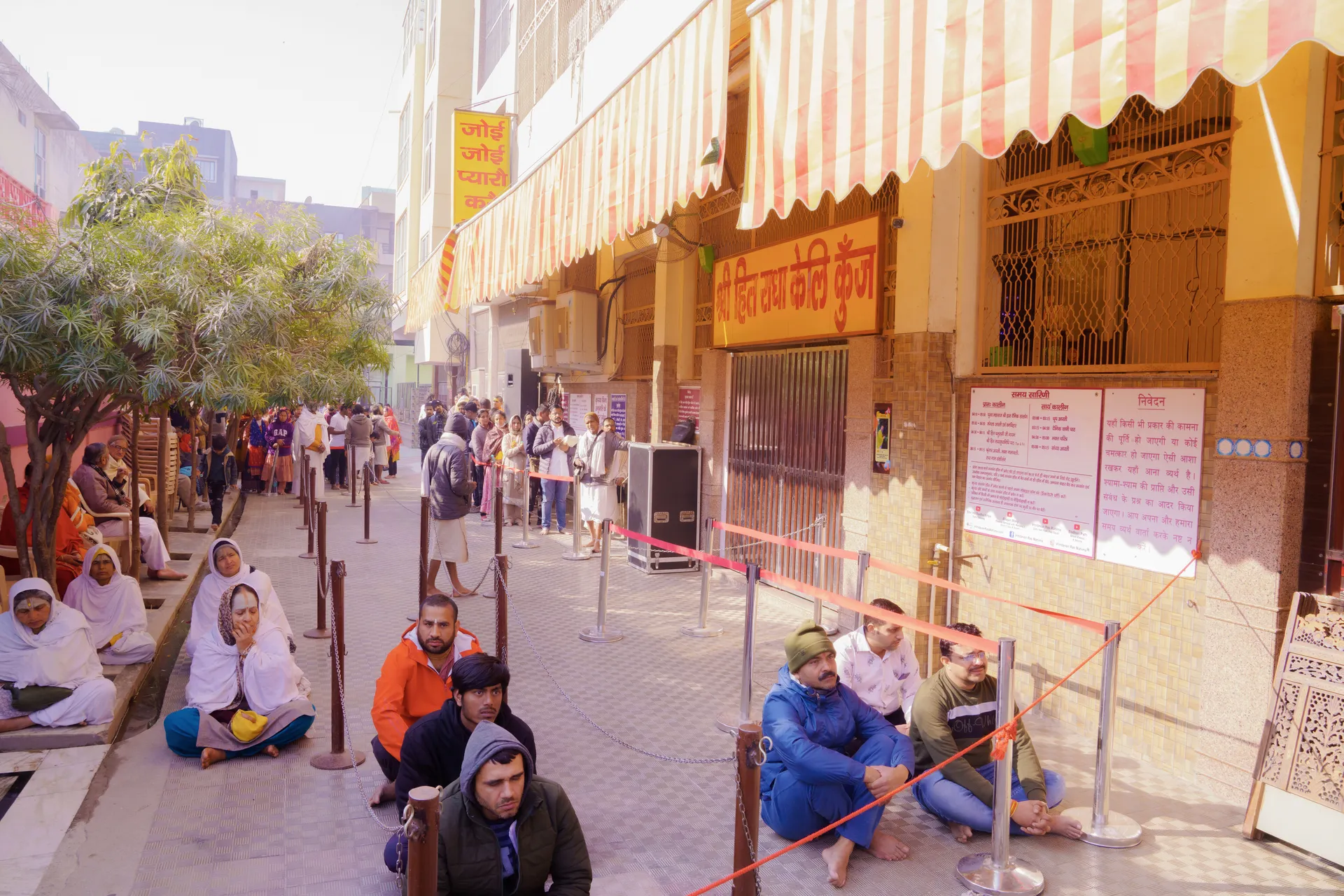
“He doesn’t talk about one particular religion, he talks about spirituality and sauhard,” said Rohit Kumar, a resident of Akola village in Agra. Just getting a token seemed like an impossible task for the 34-year-old who works at a gas agency earning Rs 25,000 a month. Kumar took time off from work and rode to Vrindavan on his bike where he waited for three hours before finally getting a token for the next day. Meeting Premanand works like a lottery system: devotees line up before dawn for free paper tokens. Guidelines are strict: no phones, no reels, and no private VIP lines.
Ashram Operations, Devotee Counseling, and the Radha Keli Kunj Inner Sanctum
From the open area, devotees are called in batches into the ashram building — where around 60 to 70 people are seated at a time. The final waiting zone is upstairs — about 50 chairs arranged just outside Maharaj’s room. As the door opened, everyone craned their necks to peek into the room. The space inside is a reimagined version of Krishna’s garden as seen in old miniature paintings — flower-adorned walls, intricately designed fountains, and floral rangolis on the floor. Masks are mandatory. The centre of attention is Premanand, sitting on a gaddi, a yellow chadar draped over his upper body. Chandan and Braj raj adorn his forehead. His long hair was tied into a bun at the crown of his head. Eyes closed, hands folded, he appeared deep in meditation. The sabha began with chants of “Radha Radha Radha” for two minutes. Questions submitted earlier were read aloud by a sevak.
Health Management and Autosomal Dominant Polycystic Kidney Disease
Maharaj has been reported to have autosomal dominant polycystic kidney disease, a genetic disorder affecting the kidneys. The condition has resulted in complete kidney failure, and he has undergone dialysis for nearly two decades. Several devotees have reportedly offered to donate a kidney to him. In August 2025, businessman Raj Kundra offered to donate one of his kidneys during a visit to the ashram. Premanand Maharaj declined the offer and told Kundra to remain healthy. He has declined offers of kidney donation, stating that he did not want another person to undergo physical suffering or discomfort for his benefit. He has also said that he accepts his health condition as part of God’s will.
Premanand Maharaj Social Media Presence & Verified Accounts
Premanand Maharaj does not maintain personal individual accounts on social media platforms. Official announcements and discourse videos are shared through verified channels for Bhajan Marg and the Shri Hit Radha Keli Kunj Trust.
| Platform / Organisation | Channel / Handle | Verified Official Link |
|---|---|---|
| Official Ashram Portal | Shri Hit Radha Keli Kunj | radhakelikunj.com |
| Lineage & Satsang Website | Vrindavan Ras Mahima | vrindavanrasmahima.com |
| YouTube Channel | @BhajanMargOfficial | youtube.com/@BhajanMargOfficial |
| Secondary YouTube Channel | @VrindavanRasMahima | youtube.com/@VrindavanRasMahima |
| Instagram Handle | @vrindavanrasmahima | instagram.com/vrindavanrasmahima |
| Facebook Page | Bhajan Marg Vrindavan | facebook.com/bhajanmarg |
Related Indian Spiritual Leaders & Biographies
Readers exploring Indian spiritual history can read about other figures on our website. Gaur Gopal Das is an author and monastic speaker with ISKCON. Sadhguru is the founder of the Isha Foundation in Coimbatore. Aniruddhacharya Maharaj delivers devotional discourses in Vrindavan, and Jaya Kishori gives spiritual talks and musical narrations across India.