Sam Altman: The Mind Behind OpenAI, Career, Early Life & Key Facts
Discover the full biography of OpenAI CEO Sam Altman: his Stanford years, Loopt, Y Combinator presidency, 2023 boardroom showdown, marriage to Oliver Mulherin, and key facts.
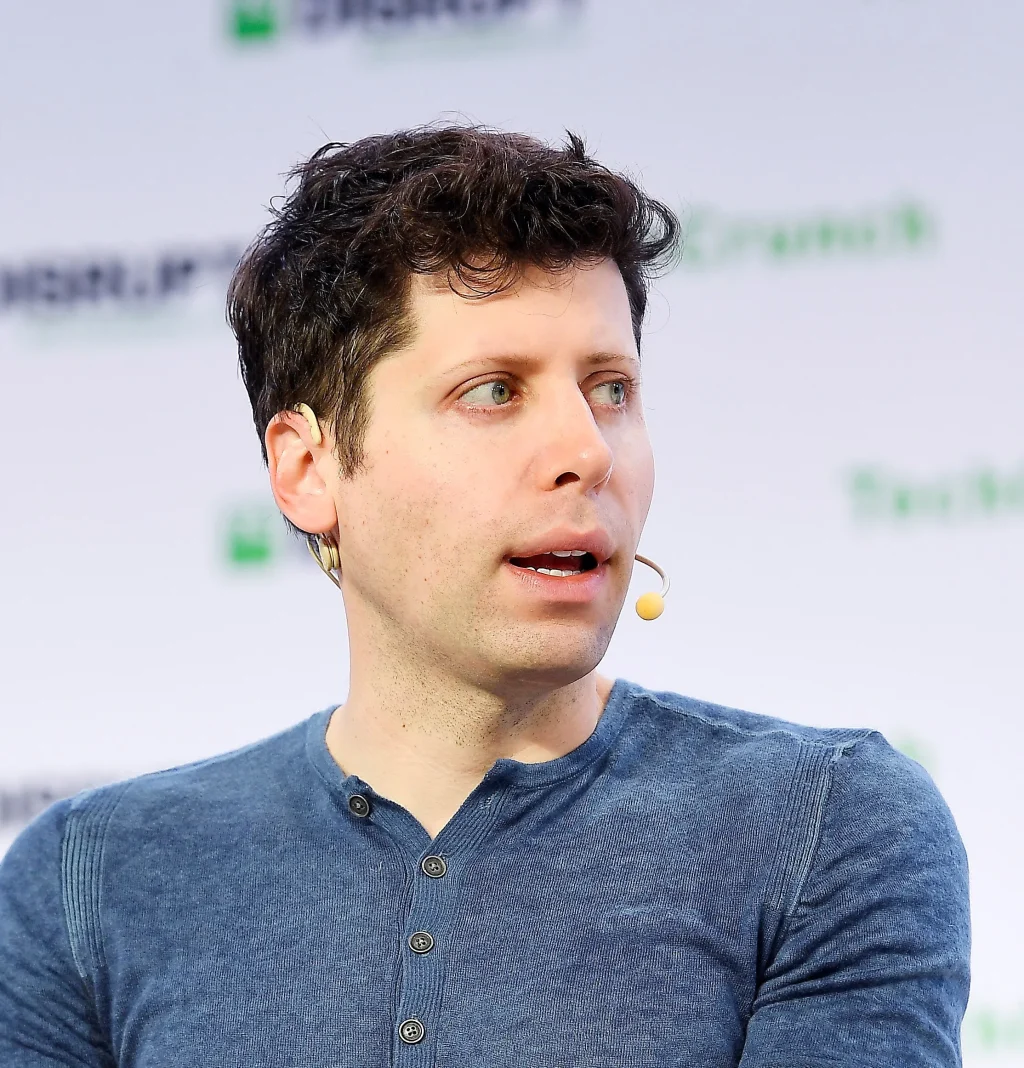
Photo: TechCrunch / Flickr (CC BY 2.0)
Sam Altman does not talk like a typical corporate executive. In crowded convention halls and congressional hearing rooms, he speaks quietly, almost in a murmur, his hands clasped, delivering monumental statements about the future of human labor with the casual detachment of someone checking the weather. Yet behind that deliberate, understated delivery lies the most aggressive operational mind in Silicon Valley.
As chief executive of OpenAI, Altman pushed generative artificial intelligence from theoretical research papers straight onto the home screens of hundreds of millions of people. ChatGPT didn’t just break software adoption records. It blew open a global geopolitical scramble for compute, energy, and algorithmic primacy.
Long before neural networks dominated headlines, Altman was already a legend among founders. He spent five years running Y Combinator, screening thousands of startup applications, dispensing cold operational advice, and backing radical outliers. His playbook has never changed: bet on exponential curves, ignore consensus skepticism, and move capital before anyone else understands why.
Sam Altman Quick Facts & Personal Profile
| Full Name | Samuel Harris Altman |
|---|---|
| Date of Birth | April 22, 1985 |
| Age | 41 years old (as of November 2026) |
| Birthplace | Chicago, Illinois, United States |
| Height | Estimated 5 ft 8 in (173 cm); no official medical measurement publicly disclosed |
| Education | Stanford University (Computer Science; 2003–2005, dropped out); John Burroughs School |
| Current Role | Chief Executive Officer, OpenAI; Chairman, Helion Energy |
| Key Past Roles | President, Y Combinator (2014–2019); Co-founder & CEO, Loopt (2005–2012) |
| Spouse | Oliver Mulherin (married January 2024) |
| Family | Connie Gibstine (mother); Jack Altman, Max Altman (brothers); Annie Altman (sister); 1 child |
| Net Worth | Privately held / Not publicly verified (holds no direct equity stake in OpenAI’s capped-profit arm; salary approx. $65,000) |
Midwest Roots and Stanford Coding Days
Altman was born in Chicago in the spring of 1985 and spent his childhood in suburban St. Louis. His mother, Connie Gibstine, worked long hours as a clinical dermatologist, creating a home atmosphere where analytical rigor was simply assumed. When he turned eight, his parents bought an Apple Macintosh LC II.
That beige box changed everything.
Altman tore into the machine, taking apart boards and writing basic code. More than just a hobby, the computer gave him a private sanctuary. Growing up gay in the American Midwest during the 1990s was isolating, but computing offered logic, clarity, and control. At John Burroughs School, a rigorous college preparatory school in Ladue, Missouri, he took a rare stand: he publicly addressed an assembly of students and faculty about his sexuality after a Christian group targeted a school diversity meeting. It was an early display of the stubborn resolve that would later define his boardroom battles.
In 2003, Altman entered Stanford University to study computer science. He gravitated immediately toward compiler engineering and early machine intelligence labs, working alongside students who would spend the next two decades populating Silicon Valley’s executive suites. Classroom theory, however, moved far too slowly for him. By the end of his sophomore year in 2005, Altman packed his bags and dropped out.
Loopt and the Inaugural Y Combinator Era
The gamble centered on Loopt. Along with classmates Nick Sivo and Alok Deshpande, Altman envisioned software that let mobile phone users broadcast their real-time geographical coordinates to circles of friends. It was 2005. The iPhone did not exist. App stores were years away. Cellular networks ran on sluggish 2G protocols.
That summer, Paul Graham and Jessica Livingston launched Y Combinator’s inaugural summer batch in Cambridge, Massachusetts. Loopt was accepted alongside seven other tiny teams, including Reddit. Graham quickly realized that Altman possessed an uncanny tenacity. While other programmers stayed buried in code, Altman pounded on the doors of telecom carriers like Sprint, Nextel, and Verizon, negotiating deals that normally took veteran enterprise sales teams years to secure.
Loopt raised over $30 million from top-tier venture firms. But user traction eventually stalled; social networking evolved around feeds and messaging rather than persistent background GPS tracking. In 2012, Altman orchestrated a clean exit, selling Loopt to financial services firm Green Dot Corporation for $43.4 million. Altman walked away with roughly $5 million, a battle-hardened network, and the respect of Silicon Valley’s most discerning patrons.
Leading Y Combinator: Scaling Global Venture Capital
In February 2014, Paul Graham shocked the startup world. At just 28 years old, Sam Altman was handed the keys to Y Combinator as its new president. Graham later explained that Altman was one of the most formidable founders he had ever met, famously writing that if you dropped Sam onto a cannibal island, you’d come back in five years and find him the king.
Altman immediately dismantled the old, intimate salon model of seed investing. He industrialized it. YC batch sizes exploded from 40 companies to hundreds per year. He established YC Continuity, a dedicated growth fund to back winners through late-stage rounds, preventing outside firms from capturing early gains. He created YC Research to fund non-commercial, moonshot scientific initiatives like universal basic income and clean energy.
Crucially, Altman pushed YC far beyond consumer mobile apps. He directed money into hard tech: nuclear fusion, advanced robotics, synthetic biology, and supersonic flight. During this period, venture pioneers like Vinod Khosla frequently backed overlapping frontiers, sharing Altman’s conviction that the only companies truly worth funding were those attempting technically audacious leaps.
Architecting OpenAI: From Non-Profit Research to Frontier Generative AI
In December 2015, a small group of technologists met for dinner at the Rosewood Sand Hill hotel in Menlo Park. Sam Altman, Elon Musk, Greg Brockman, and Ilya Sutskever sketched out a plan: create an open artificial intelligence research lab that would counter the growing corporate concentration of AI talent inside Google and Meta. They called it OpenAI, pledging $1 billion in non-profit commitments.
By 2019, the math was clear. Training massive neural networks required tens of millions of dollars in compute hardware per training run. Donor checks could not sustain that kind of scale. Altman stepped down as president of Y Combinator, took over OpenAI as full-time CEO, and engineered an unprecedented “capped-profit” corporate structure. The non-profit board retained control of the mission, but a commercial arm was established to raise institutional capital, capping investor returns to keep safety at the forefront.
Altman then executed his boldest financial stroke, securing an initial $1 billion commitment from Microsoft that quickly expanded into a multi-billion-dollar supercomputing alliance. On November 30, 2022, OpenAI quietly launched ChatGPT as a low-key research preview. Within five days, a million people were using it. Within two months, 100 million active users were having daily conversations with large language models. The release shook the tech industry to its core, forcing Google CEO Sundar Pichai to issue corporate code reds and accelerate Google’s entire Gemini model pipeline to keep pace.
The 2023 Boardroom Coup and Reinstatement
On the afternoon of Friday, November 17, 2023, OpenAI’s board detonated a corporate nuclear weapon. Without warning investors or partner executives, the board announced that Altman had been stripped of his CEO title and fired, claiming he had not been “consistently candid in his communications.”
Chaos erupted. Co-founder Greg Brockman quit on the spot. Microsoft shares took a sudden dip. Over the weekend, Microsoft CEO Satya Nadella moved aggressively, announcing that Altman and Brockman would lead a brand-new advanced AI division inside Microsoft with blank-check funding.
Then OpenAI’s employees spoke. In an extraordinary revolt, over 700 of the company’s 770 staff members signed an open letter stating they would quit and migrate to Microsoft unless the board resigned and Altman was brought back. By Wednesday, November 22, the board caved. Altman returned to OpenAI’s San Francisco headquarters as chief executive, accompanied by a reconstituted board chaired by former Salesforce co-CEO Bret Taylor and joined by former Treasury Secretary Larry Summers. Altman walked back into his office stronger than he had ever been.
Frontier AI, Clean Energy Bets, and Global Sovereign Compute
Altman does not believe software algorithms alone will build superintelligence. For him, the real game is physical: electricity, high-voltage substations, and silicon fab capacity.
He put hundreds of millions of dollars of his own money into Helion Energy, a private commercial fusion venture where he serves as board chairman, betting that direct magneto-inertial fusion can deliver cheap, carbon-free baseload power for server farms. He also funded Retro Biosciences, pouring $180 million into extending human healthspan by a decade.
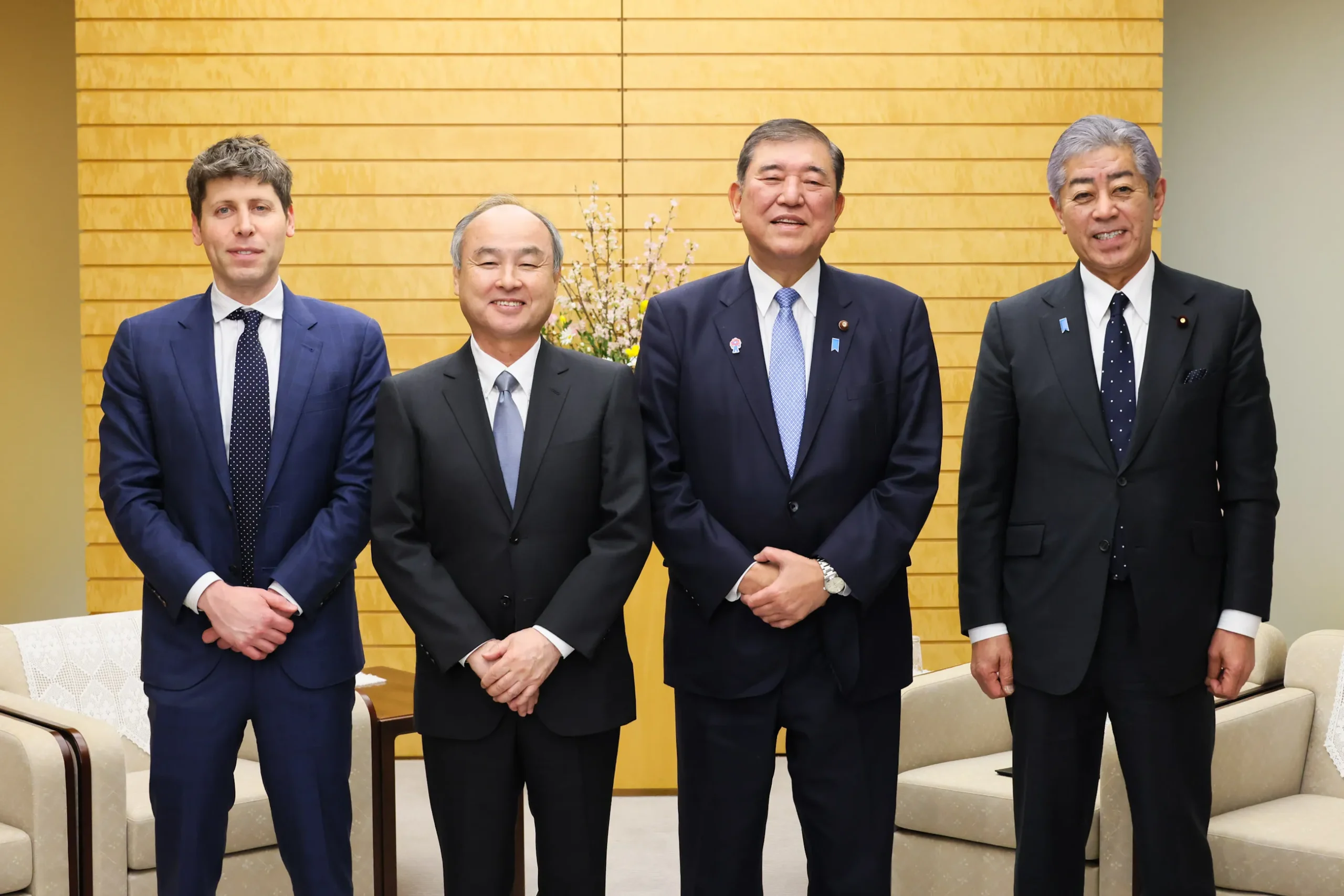
On the international stage, Altman travels relentlessly, meeting heads of state across Tokyo, London, Paris, and New Delhi to broker national compute partnerships. The concept of treating advanced computing as sovereign civic infrastructure echoes the digital public goods model pioneered by visionary builders like Nandan Nilekani. Meanwhile, modern venture leaders such as Nikhil Kamath have analyzed Altman’s pivot toward heavy physical assets, noting how global venture dynamics are moving away from light consumer software toward massive industrial compute projects.
Personal Life, Marriage, and Philanthropy
For all his public fame, Altman guards his domestic world carefully. In January 2024, photos surfaced of an intimate seaside wedding in Hawaii. Altman had married Oliver Mulherin, an Australian software engineer he had dated for years. The ceremony was small, attended by a handful of close friends and family, with Sam’s brother Jack Altman officiating under traditional Jewish canopy customs. The couple welcomed a child and split their time between a home in San Francisco’s Russian Hill and an active working ranch in Napa.
Altman is also a signatory of the Giving Pledge, promising to donate the bulk of his wealth to philanthropic initiatives. His financial setup at OpenAI remains one of the stranger quirks of modern tech capitalism: he holds no direct equity in OpenAI’s main commercial vehicle, drawing a modest annual salary of around $65,000. He has repeatedly explained that he made plenty of money from early venture investments in Reddit and Stripe, and that owning no equity prevents the toxic incentive of prioritizing personal payouts over AI safety.
Sam Altman Social Media Presence & Verified Accounts
| Platform | Handle / Profile | Verified Link |
|---|---|---|
| X (formerly Twitter) | @sama | Visit X Profile |
| Personal Blog & Essays | blog.samaltman.com | Read Official Blog |
| @sama | Visit Instagram Profile | |
| samhaltman | Visit Facebook Profile | |
| Sam Altman | Visit LinkedIn Profile |
Frequently Asked Questions
Question: How tall is Sam Altman?
Answer: Public visual comparisons place Sam Altman at approximately 5 ft 8 in (173 cm). He has never submitted an official medical measurement to any athletic or government registry, so this figure remains an estimate rather than an audited record.
Question: What is Sam Altman’s actual age and birthday?
Answer: Sam Altman was born on April 22, 1985, in Chicago, Illinois. As of November 2026, he is 41 years old.
Question: Who is Sam Altman married to?
Answer: Sam Altman is married to Oliver Mulherin, an Australian software engineer. The two held a private wedding in Hawaii in January 2024.
Question: Does Sam Altman own equity in OpenAI?
Answer: No. Altman holds no direct equity in OpenAI’s capped-profit operating business, taking an annual salary of approximately $65,000. He has stated that his financial independence came from early venture investments in companies like Stripe and Reddit.
Question: What was Sam Altman’s first successful startup?
Answer: Altman co-founded Loopt in 2005 as part of the first Y Combinator batch. It was acquired in 2012 by Green Dot Corporation for $43.4 million.
Question: What other deep-tech companies does Sam Altman back?
Answer: Altman is chairman of Helion Energy, a private commercial nuclear fusion company, and has invested $180 million into Retro Biosciences, a cellular reprogramming company working on human longevity.