Melanie Perkins Biography: Age, Height, Canva Empire, Husband & Verified Accounts
Melanie Perkins is the co-founder and CEO of Canva. Discover her complete biography, from building Fusion Books in Perth to scaling a $3B+ visual design empire, her 2026 restructuring, philanthropy, and verified social accounts.
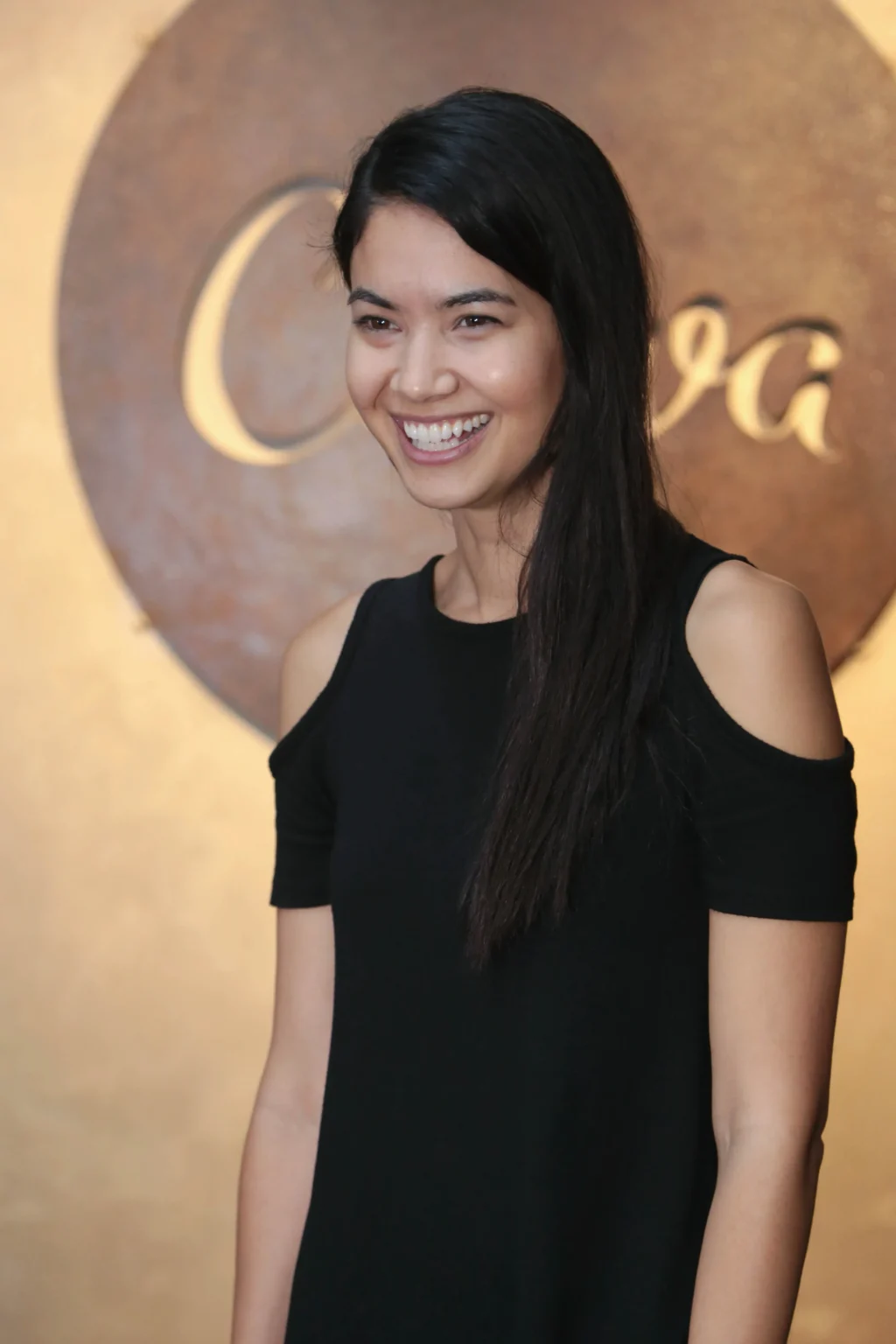
Photo: Melanie Perkins / Wikimedia Commons (CC BY-SA 4.0)
Most university students frustrated by clunky software complain to their friends and move on. Melanie Perkins quit school, moved into her mother’s living room, and started building an alternative.
She was nineteen.
That gamble in 2007 launched Fusion Books, an online yearbook publisher that quietly became Australia’s largest school yearbook business. Six years later, the underlying technology morphed into Canva. Today, Canva is a global visual communications empire with 230 million monthly active users, an annualized revenue run rate topping US$3 billion, and an expanding suite of generative artificial intelligence tools. Yet scale brings its own friction. In November 2026, Perkins faced the toughest organizational test of her career, announcing a sweeping corporate restructuring that affected 22% of Canva’s global workforce.
As co-founder and Chief Executive Officer, Perkins runs Canva on what she calls a “Two-Step Plan”: build one of the world’s most valuable companies, and then use that equity to do good. Alongside her husband and co-founder Cliff Obrecht, she has committed over 90% of their equity to philanthropic endeavors through the Giving Pledge and the Canva Foundation.
| Biographical Attribute | Verified Detail |
|---|---|
| Full Legal Name | Melanie Perkins |
| Date of Birth | May 13, 1987 |
| Current Age | 39 years old (as of November 2026) |
| Place of Birth | Perth, Western Australia |
| Nationality | Australian |
| Height | Not publicly disclosed / unverified in public records |
| Parents | Australian mother (teacher); Malaysian father (civil engineer with Filipino and Sri Lankan ancestry) |
| Spouse | Cliff Obrecht (co-founder of Canva; married January 2021) |
| Education | Sacred Heart College (Sorrento); University of Western Australia (withdrew at age 19) |
| Primary Roles | Co-founder & CEO of Canva; Co-founder of Fusion Books |
| Canva Co-Founders | Cliff Obrecht (Chief Operating Officer), Cameron Adams (Chief Product Officer) |
| Major Philanthropy | Signatory of The Giving Pledge; Canva Foundation; US$150M GiveDirectly commitment |
Early Life, 4:30 AM Skating and the Scarf Business
Perkins grew up along the coast in northern Perth. Her mother was an Australian schoolteacher who valued structure. Her father, an engineer from Malaysia with Filipino and Sri Lankan roots, approached everyday household problems with blueprint precision. She grew up watching things get built from the ground up.
High school at Sacred Heart College in Sorrento was intense. Perkins took up figure skating, dragging herself out of bed at 4:30 a.m. six days a week to skate empty ice rinks before homeroom. That routine instilled a discipline she never shed. At fourteen, she opened her first retail business: hand-knitted woollen scarves, sold at community craft markets and small suburban boutiques across Perth.
She entered the University of Western Australia in 2005, juggling coursework in communications, psychology, and commerce. To earn extra cash, she tutored graphic design students in software like Adobe InDesign and Photoshop. The hours spent in the computer lab were eye-opening. Students spent whole semesters wrestling with basic operations like clipping paths, raster masks, and uncooperative toolbars. The software felt needlessly hostile. Why did designing a clean restaurant menu or concert flyer demand years of specialized vocational training?
Perkins saw an opening. Instead of waiting around for graduation, she packed her bags, withdrew from university, and convinced her boyfriend Cliff Obrecht to build a startup.

Fusion Books: Building From Her Mother’s Living Room
Taking on Adobe head-on in 2007 would have crushed two nineteen-year-olds in Western Australia with zero outside backing. Perkins knew it. They picked a tightly bounded sandbox: school yearbooks.
Yearbooks were a seasonal nightmare for teachers and student committees. They collected photos on CDs, physically pasted paper proofs onto boards, and spent frantic weeks fixing typos before printing deadlines. Perkins and Obrecht founded Fusion Books in the front room of Perkins’ mother’s house in Perth. Her mother helped fold sample brochures and box orders. Obrecht hit the phones, cold-calling high school principals across the country. Perkins hired a freelance programmer to build a browser-based drag-and-drop editor where non-designers could slot in photos and collaborate on text.
It caught on. Over five years, Fusion Books expanded across Australia, into New Zealand, and eventually into France. It ran in the black from early on, funding its own expansion without venture debt. More importantly, it served as an operational laboratory. Perkins learned how regular people interacted with layout grids, typography, and image cropping directly in a web browser.
Pitching Silicon Valley: Kitesurfing, Bill Tai and 100 Rejections
By 2011, yearbooks felt too small. Perkins wanted a platform where anyone could design anything: business cards, pitch decks, restaurant menus, wedding invites, and digital ads. Silicon Valley venture capitalist Bill Tai visited Perth to judge a regional startup competition that year, and Perkins managed to corner him for a brief chat. Tai barely looked up from his BlackBerry during her deck, but as he was walking out, he told her that if she was ever in Silicon Valley, she should look him up.
She didn’t hesitate. Perkins flew to California and slept on the floor of her brother’s San Francisco apartment. Silicon Valley, however, was not waiting with open checkbooks. She pitched more than 100 venture capital firms and angel investors. Rejection letters followed almost daily.
American investors raised every possible objection:
They disliked that the company was based in Australia.
They were uncomfortable that the co-founders were dating.
Neither Perkins nor Obrecht had an engineering degree, and building a low-latency, canvas-based browser editor required rare technical chops.
Perkins adapted. When she discovered Bill Tai was an avid kitesurfer who hosted networking retreats called “MaiTai” on Maui, she learned how to kitesurf. She took lessons, bruised her shins, and swallowed plenty of saltwater to earn a spot in the lineup. It worked. Through Tai, she was introduced to Lars Rasmussen, the co-founder of Google Maps. Rasmussen became an early technical advisor and introduced Perkins to Cameron Adams, a respected Sydney-based user interface designer and former Googler known online as “The Man in Blue.” Adams met Perkins, reviewed her product wireframes, and joined Canva in 2012 as co-founder and Chief Product Officer.
With Adams anchoring technical product design, the pieces clicked. Rick Baker and Niki Scevak of Blackbird Ventures led Canva’s first seed round, supplemented by a matching grant from the Australian government’s Commercialisation Australia program. Perkins, Obrecht, and Adams moved into an office in Surry Hills, Sydney. In August 2013, Canva launched to the public. Much like Brian Chesky’s design-led founder journey at Airbnb, Perkins showed that obsessive attention to user intuition could topple entrenched corporate software monopolies.
Scaling the Machine: Cash Flow, Acquisitions and Generative AI
Canva hit hypergrowth right out of the gate. Fifty thousand users registered in the first month. Within a year, the user base topped 600,000. Perkins managed growth through strict sequencing. In 2016, she made internationalization the primary corporate goal, rolling out translations in six new languages. In 2017, Canva reached a milestone few high-flying tech unicorns ever achieve: sustained positive free cash flow.
As Canva expanded from a lightweight freemium tool into an enterprise workplace system, Perkins began encroaching directly on territory long dominated by Adobe and Microsoft. In 2024, Canva made two aggressive acquisitions: Serif, the British developer behind the professional Affinity creative suite (Affinity Designer, Photo, and Publisher), bringing millions of professional creative designers onto Canva’s roster; and Leonardo.Ai, a generative AI platform whose technology powers Canva’s proprietary visual model, Dream Lab. Much like Sam Altman’s perspective on AI scaling pushed OpenAI into rapid product releases, Perkins moved fast to embed AI across Canva, launching Canva Code and Canva Sheets in 2025.
Her focus on early profitability mirrors other self-made enterprise leaders, including Falguni Nayar’s self-made entrepreneurial playbook, proving that strong gross margins provide indispensable insulation when venture markets turn sour.
The November 2026 Restructuring: The Hardest Moment
Rapid growth inevitably creates organizational debt. On November 4, 2026, Perkins announced a major restructuring that cut or relocated over 1,200 roles, representing approximately 22% of Canva’s global headcount. In a memo sent to employees, Perkins called the announcement “without doubt the hardest moment in our thirteen-year history.”
The restructuring addressed the friction of a remote-heavy workforce that had grown too dispersed to iterate quickly. Perkins pushed the company back toward centralized collaboration hubs in Sydney, London, Austin, and Tokyo, consolidating management layers into compact, autonomous product squads designed to move fast against generative AI competitors. Laid-off staff received at least six months of severance pay, twelve months of continued health insurance in eligible countries, and their company laptops.
The Two-Step Plan: Giving Away the Canva Empire
Perkins and Obrecht have guided Canva with an explicit blueprint since day one:
Step one: build one of the world’s most valuable companies.
Step two: do the most good they can do.
In 2021, after a funding round pushed Canva’s valuation to US$40 billion, Perkins and Obrecht signed The Giving Pledge, committing more than 90% of their equity to philanthropic causes through the Canva Foundation. This philosophy parallels the impact-first approach seen in Kiran Mazumdar-Shaw’s pioneering enterprise building, where corporate wealth is channeled directly into public health and development.
The Canva Foundation bypasses bureaucratic endowments in favor of direct cash transfers. Partnering with the international non-profit GiveDirectly, the foundation launched direct, unconditional payments to families living in extreme poverty in Malawi. In October 2025, Perkins announced an additional US$100 million commitment, bringing total cash-transfer funding to US$150 million. In July 2026, the foundation launched the Global Goals Platform, polling communities internationally to direct future grants toward local priorities.
Personal Life, Marriage to Cliff Obrecht and Simple Living
Perkins and Cliff Obrecht have been partners since their student days at the University of Western Australia. Even as private wealth rankings pushed them onto global billionaire lists, the couple maintained an unflashy lifestyle, living for years in a standard Surry Hills apartment and flying commercial economy.
In 2019, while backpacking through Turkey’s Cappadocia region, Obrecht proposed to Perkins with an engagement ring that cost A$30. In January 2021, they held an intimate wedding on Rottnest Island off Fremantle, Western Australia, celebrating with family and close childhood friends. Outside work, Perkins remains an active figure skater, kitesurfer, and trail hiker.
Frequently Asked Questions About Melanie Perkins
Question: How old is Melanie Perkins?
Answer: Melanie Perkins is 39 years old. She was born on May 13, 1987, in Perth, Western Australia.
Question: What is Melanie Perkins’ height?
Answer: Melanie Perkins’ exact height is not publicly disclosed or verified in official records. SilentRend editorial guidelines strictly prohibit fabricating physical measurements.
Question: Who is Melanie Perkins married to?
Answer: She is married to Cliff Obrecht, her longtime partner and Canva co-founder. They married in January 2021 on Rottnest Island in Western Australia.
Question: What was Melanie Perkins’ first business before Canva?
Answer: Her first business was Fusion Books, a web-based school yearbook publishing company launched in 2007 from her mother’s living room in Perth. It grew into Australia’s largest yearbook publisher.
Question: How much of their wealth are Melanie Perkins and Cliff Obrecht donating?
Answer: As signatories of The Giving Pledge, Melanie Perkins and Cliff Obrecht have committed over 90% of their equity to charitable causes via the Canva Foundation.
Question: What happened in Canva’s November 2026 restructuring?
Answer: On November 4, 2026, Canva announced a restructure cutting or relocating over 1,200 jobs (22% of global headcount) to move back toward centralized hubs and smaller autonomous teams competing in generative AI.
Melanie Perkins Social Media Presence & Verified Accounts
Official verified profiles and direct channels for Melanie Perkins and Canva:
| Platform | Handle / Profile | Verified URL |
|---|---|---|
| X (Twitter) | @MelanieCanva | https://x.com/MelanieCanva |
| @melaniecanva | https://www.instagram.com/melaniecanva/ | |
| Melanie Perkins | https://www.linkedin.com/in/melanieperkins/ | |
| Official Website | Canva Official Site | https://www.canva.com |
| Giving Pledge | Melanie Perkins & Cliff Obrecht | https://givingpledge.org/pledger?pledgeId=448 |