Demis Hassabis Biography: Age, Height, DeepMind Leadership & Nobel Prize Story
Discover the biography of Sir Demis Hassabis: from teenage chess master and Theme Park programmer to co-founding Google DeepMind and winning the 2024 Nobel Prize in Chemistry.
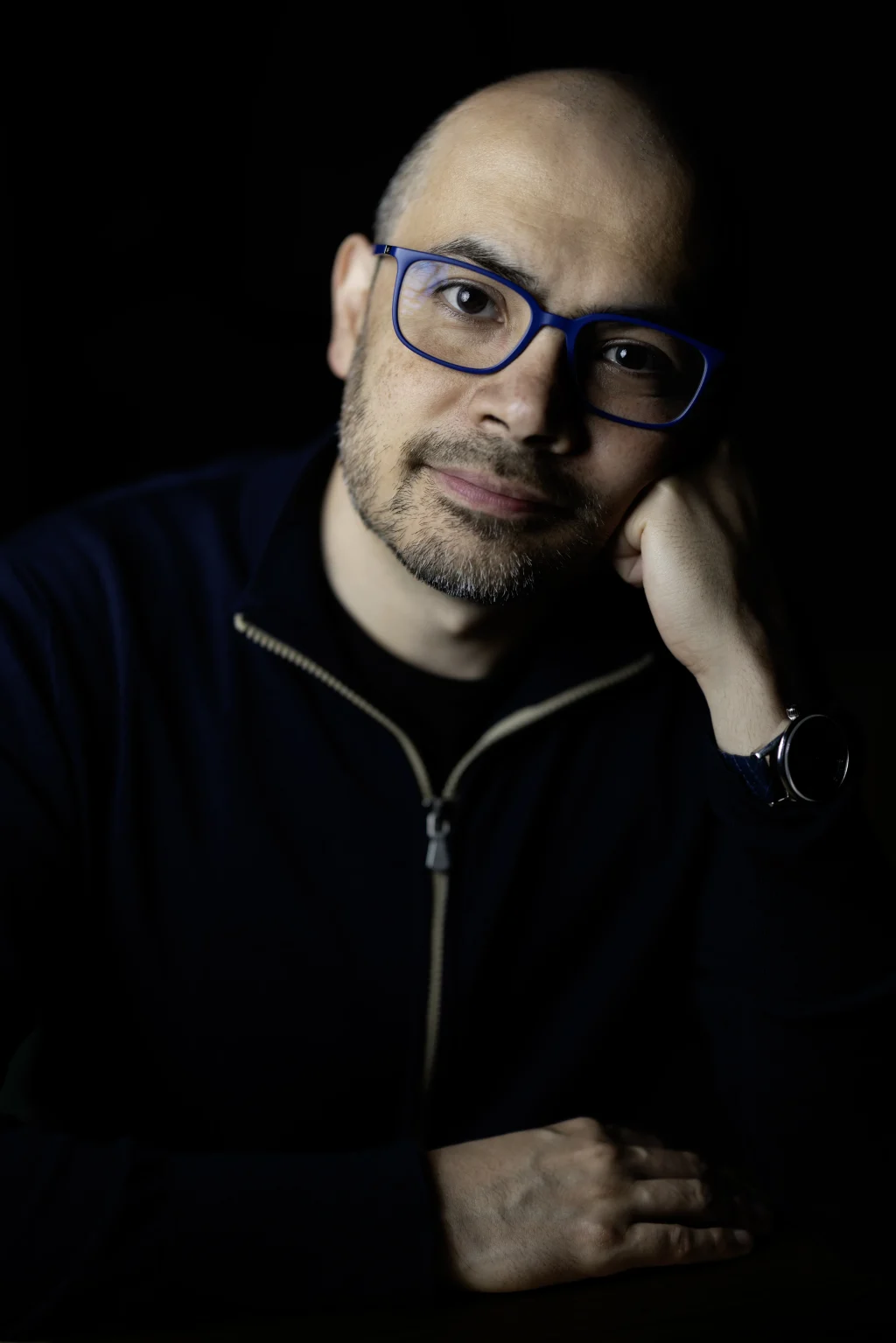
Photo: Christopher Michel / Wikimedia Commons (CC BY-SA 4.0)
Long before artificial intelligence dominated global headlines, Demis Hassabis was quietly mapping its foundations. He started on checkered wooden boards in North London, advanced through assembly code inside teenage bedrooms, and spent years mapping hippocampal memory circuits under brain scanners. As co-founder and chief executive officer of Google DeepMind, he turned an audacious theoretical ambition—solving artificial general intelligence—into concrete computational breakthroughs that fundamentally altered molecular biology.
In October 2024, the Royal Swedish Academy of Sciences awarded Hassabis the Nobel Prize in Chemistry alongside his DeepMind research partner Dr. John Jumper. Their system, AlphaFold, solved a structural biology challenge that had stumped human researchers for half a century: predicting the three-dimensional geometry of proteins directly from their linear chemical codes. King Charles III knighted him earlier that year for services to artificial intelligence. At fifty, he leads the combined Google DeepMind research organization while running Isomorphic Labs, taking machine learning from silicon into real-world drug design.
Demis Hassabis Quick Facts & Personal Profile
| Full Name | Sir Demis Hassabis CBE FRS FREng FRSA |
|---|---|
| Date of Birth | July 27, 1976 |
| Age | 50 years old (as of 2026) |
| Birthplace | London, England, United Kingdom |
| Nationality | British |
| Height | Not publicly disclosed (unverified) |
| Parents | Costas Hassapis (Greek Cypriot) and Angela Hassapis (Chinese Singaporean) |
| Spouse | Dr. Teresa Niccoli (Italian molecular biologist) |
| Children | Two sons |
| Education | Queens’ College, Cambridge (BA/MA in Computer Science, Double First); University College London (PhD in Cognitive Neuroscience) |
| Current Roles | CEO of Google DeepMind; CEO of Isomorphic Labs; Alphabet Chief Scientist |
| Major Honors | Nobel Prize in Chemistry (2024), Knight Bachelor (2024), Breakthrough Prize in Life Sciences (2023), Albert Lasker Award (2023), Fellow of the Royal Society (2018) |
| Estimated Net Worth | Not publicly verified (speculatively estimated at $200M–$500M) |
Early Prodigy: From Chess Boards to Coding Theme Park
He was four when chess caught his attention.
Watching his Greek Cypriot father and uncle square off over home games sparked an obsession with positional tactics and branching move trees. By age thirteen, Hassabis reached Candidate Master rank with an Elo rating of 2300, captaining junior English national teams. He trailed only Judit Polgár among global junior players.
Cash prizes from weekend chess tournaments bought his first machine in 1984: a Sinclair ZX Spectrum 48K. With no programming instructors nearby, he studied assembly manuals line by line. He wrote code late into the evening, teaching an Amiga computer how to play reversi against human players. At sixteen, he cleared his A-level exams at Finchley’s Christ’s College comprehensive two years early. Cambridge accepted him immediately, but told him to wait twelve months until he turned eighteen.
Hassabis spent that gap year at Bullfrog Productions under game designer Peter Molyneux. At seventeen, he worked as lead programmer and co-designer on Theme Park (1994). The simulation sold millions of copies worldwide. Players managed roller coasters, ticket prices, and concession stands while underlying algorithms simulated guest happiness, repair bottlenecks, and employee wage strikes.
Cambridge, Elixir Studios, and Neuroscience at UCL
In the autumn of 1994, Hassabis entered Queens’ College, Cambridge, to read computer science. He finished his degree in 1997 with a Double First. After a brief spell at Lionhead Studios, he raised venture funding from publishers like Eidos Interactive to establish his own game studio in London: Elixir Studios.
Elixir grew to sixty developers, shipping ambitious simulation games including Republic: The Revolution and Evil Genius. Republic attempted to model the sociopolitical interactions of an entire fictional republic. It ran up against the limits of late-1990s desktop silicon. Hand-written behavioral scripts grew too convoluted to maintain. They simulated intelligent agency, but could never truly adapt on their own.
Hassabis shut Elixir in 2005. He decided artificial intelligence would stall unless engineers understood how biological wetware actually functions. He enrolled at University College London to study cognitive neuroscience under Professor Eleanor Maguire.
His doctoral thesis explored episodic memory and hippocampal damage. He placed amnesia patients into functional MRI machines and asked them to describe imaginary seaside scenes or crowded markets. The patients could recall disconnected sensory fragments, but could not assemble them into novel scenes. In a 2007 paper published in Science, Hassabis established that human imagination and memory recall rely on identical neurobiological structures. The paper received international notice as one of the year’s top scientific breakthroughs, leading to post-doctoral research stays at UCL, MIT, and Harvard.
Founding DeepMind and the Landmark Google Acquisition
By 2010, Hassabis was ready to return to commercial software. He teamed up with Shane Legg, a machine learning researcher he met at UCL’s Gatsby Computational Neuroscience Unit, and childhood family friend Mustafa Suleyman. They set up shop in Bloomsbury, London, under the name DeepMind Technologies. Their founding manifesto was unsparingly brief: solve intelligence, then use intelligence to solve everything else.
DeepMind abandoned traditional hardcoded logic trees. Instead, they focused on deep reinforcement learning. Algorithms received nothing except raw video pixels and an internal score, learning to navigate game worlds through trial, error, and neural reward signals.
In December 2013, DeepMind revealed a system that mastered classic Atari 2600 games, including Breakout and Space Invaders, outplaying seasoned human gamers without reading a single page of rules. Google took notice. In January 2014, Google bought DeepMind for £400 million ($650 million). Under Alphabet CEO Sundar Pichai, Hassabis negotiated autonomy clauses that kept DeepMind’s main research laboratory firmly rooted in London.
While peers like OpenAI’s Sam Altman prioritized conversational text generators, Hassabis directed DeepMind’s computing clusters toward complex mathematical game spaces. In March 2016, DeepMind’s AlphaGo took on legendary grandmaster Lee Sedol in Seoul. Go has more possible board configurations than atoms in the visible universe. In Game Two, AlphaGo played Move 37: a stone placed high on the shoulder of the board that bewildered Korean commentators. The move violated centuries of orthodox human opening theory. It proved decisive, securing a 4–1 match victory.
Cracking Biology: AlphaFold and the 2024 Nobel Prize in Chemistry
Board games were never the end goal. Hassabis treated them as controlled testbeds for physical science.
Following AlphaGo, he pointed DeepMind’s engineers at the protein folding problem. For fifty years, structural biologists had struggled to predict how linear chains of amino acids twist into three-dimensional shapes. The folded shape determines what a protein does in a living cell. Mapping a single protein structure experimentally used to require years of manual lab work with X-ray crystallography or cryo-electron microscopy.
In 2020, DeepMind released AlphaFold2, running atop dense GPU clusters designed by Jensen Huang at NVIDIA. AlphaFold predicted protein structures to atomic accuracy in mere minutes. DeepMind partnered with the European Bioinformatics Institute (EMBL-EBI) to publish an open database containing over 200 million predicted structures. Overnight, it mapped virtually every known protein sequence cataloged by science, providing open access to laboratories everywhere without paywalls.
Biologists deployed the database immediately. Over two million researchers in 190 nations have queried AlphaFold to engineer enzymes that degrade plastic waste, design candidate malaria vaccines, and analyze antibiotic-resistant bacterial strains. Microsoft CEO Satya Nadella and enterprise leaders frequently cited AlphaFold as the clearest real-world evidence that modern machine learning could accelerate empirical science.
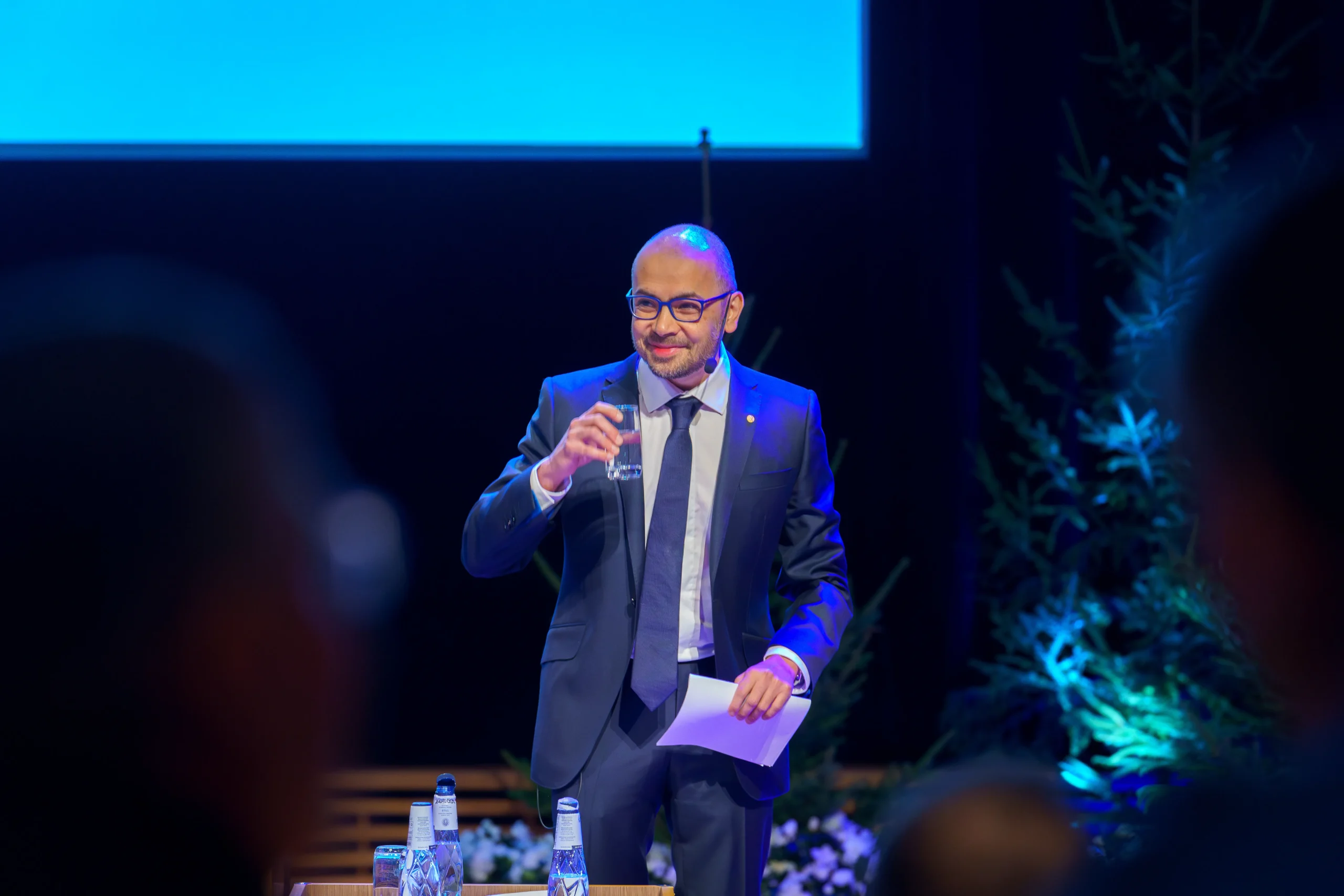
On October 9, 2024, the Royal Swedish Academy of Sciences awarded the 2024 Nobel Prize in Chemistry to Demis Hassabis and John Jumper, sharing the award with biochemist David Baker of the University of Washington. At forty-eight, Hassabis became one of the youngest chemistry laureates in modern history.
Personal Life, Isomorphic Labs, and Future Horizons
Outside the lab, Hassabis lives quietly in North London. He married Dr. Teresa Niccoli, an Italian molecular biologist and senior fellow at University College London who investigates genetic mechanisms behind neurodegenerative diseases like Alzheimer’s. They have two sons. When work permits, Hassabis still plays poker and follows Liverpool Football Club matches.
In 2023, Alphabet merged DeepMind with the Google Brain division into a single unified Google DeepMind unit, naming Hassabis chief executive and appointing him Alphabet’s Chief Scientist. He also founded and runs Isomorphic Labs, an independent Alphabet subsidiary applying AlphaFold’s structural modeling algorithms directly to commercial pharmaceutical drug discovery.
Demis Hassabis Social Media Presence & Verified Accounts
| Platform | Handle / Destination | Verified Link |
|---|---|---|
| X (Twitter) | @demishassabis | Visit Official Profile |
| Google DeepMind | Official Research Organization | deepmind.google |
| Isomorphic Labs | Official Drug Discovery Enterprise | isomorphiclabs.com |
| Nobel Prize Official | Chemistry 2024 Laureate Page | nobelprize.org |
| YouTube | @GoogleDeepMind | Watch on YouTube |
Frequently Asked Questions
Question: What is Demis Hassabis’s exact height?
Answer: Demis Hassabis has never publicly released his physical height measurements. Because he is a computer scientist and research executive rather than a professional athlete or public entertainer, personal physical statistics are not documented in official biographical records.
Question: How old is Demis Hassabis?
Answer: Demis Hassabis was born on July 27, 1976, in London, United Kingdom. He is 50 years old as of 2026.
Question: Who is Demis Hassabis married to?
Answer: Hassabis is married to Dr. Teresa Niccoli, an Italian molecular biologist and neuroscientist at University College London whose research focuses on neurodegenerative diseases. The couple lives in North London with their two sons.
Question: Why did Demis Hassabis win the Nobel Prize in Chemistry?
Answer: Hassabis was awarded the 2024 Nobel Prize in Chemistry alongside Dr. John Jumper for developing AlphaFold2, an artificial intelligence system that solved the 50-year-old challenge of predicting the three-dimensional structures of proteins from their amino acid sequences.
Question: What is Demis Hassabis’s educational background?
Answer: Hassabis completed his undergraduate studies at Queens’ College, Cambridge, graduating in 1997 with a Double First in Computer Science. In 2009, he earned a PhD in cognitive neuroscience from University College London, conducting research on episodic memory and imagination.
Question: What is Demis Hassabis’s estimated net worth?
Answer: Demis Hassabis’s net worth is not publicly verified. Following Google’s £400 million acquisition of DeepMind in 2014 and his leadership equity grants as Alphabet Chief Scientist, media outlets speculatively estimate his wealth between $200 million and $500 million, though no audited personal disclosures exist.