Daniel Ek Biography: Age, Height, Spotify Leadership & Tech Moonshots
Discover how Spotify founder Daniel Ek out-engineered digital piracy, built a streaming titan, backed Neko Health, and transitioned to Executive Chairman.
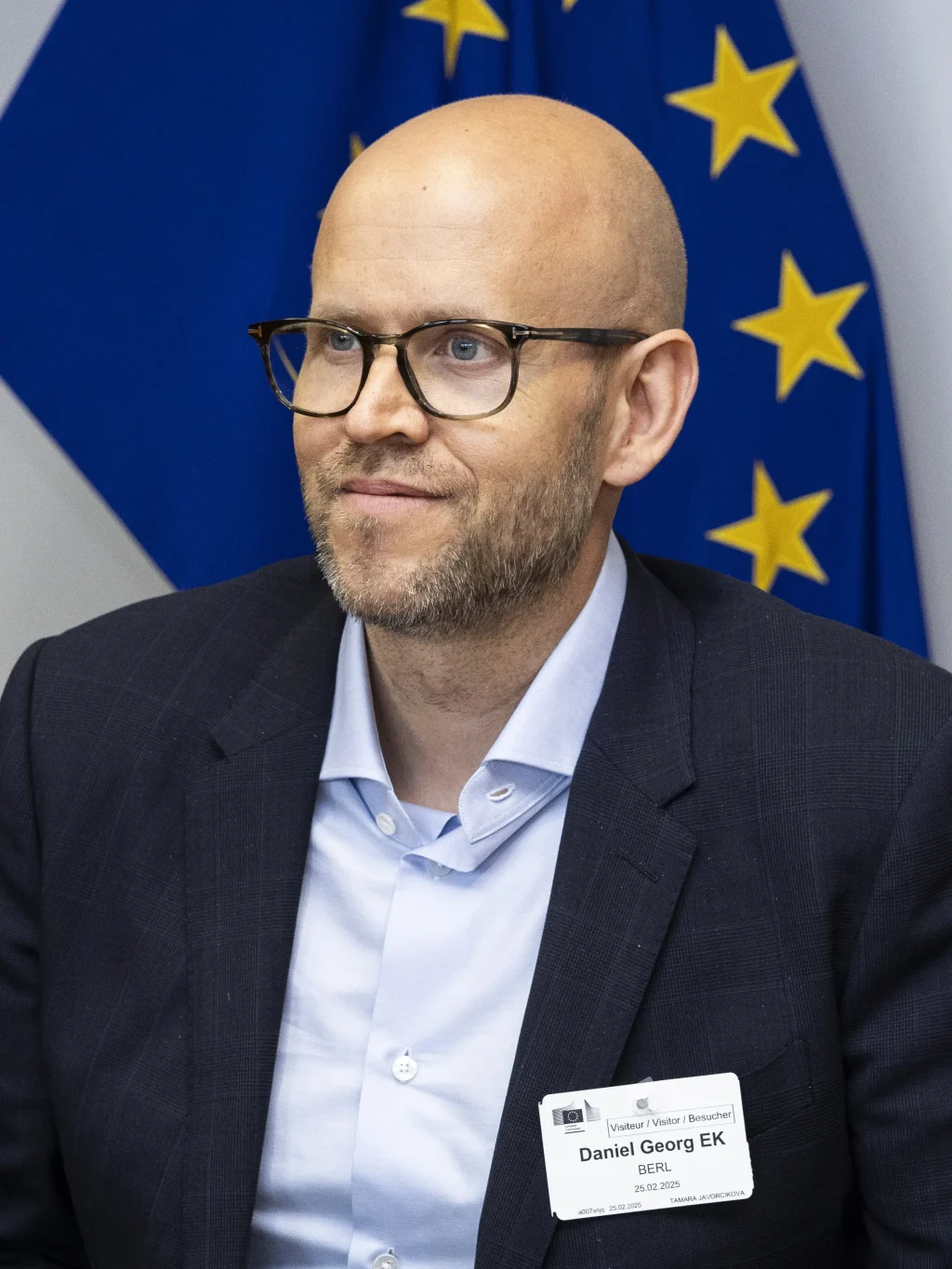
Photo: Lukasz Kobus / European Commission
Daniel Ek broke the music piracy crisis of the 2000s by doing something record labels thought was insane. He made stealing music pointless.
Back in 2006, the record business was bleeding billions. CD sales had fallen off a cliff. Millions of people downloaded MP3s from Kazaa, LimeWire, and The Pirate Bay without paying a dime. The industry responded with lawsuits, dragging college students into court and slapping DRM software on discs. None of it moved the needle. Ek looked at the wreckage and realized the core problem wasn’t consumer morality. It was speed and friction. Piracy was simply more convenient than walking into a shop or paying two dollars for an individual track on iTunes.
His answer was Spotify. Built in Stockholm with co-founder Martin Lorentzon and a handful of brilliant systems coders, the software played songs in under 200 milliseconds. Click play, and the music started instantly—no buffering wheel, no download delays, no malware risk. You could listen to tens of millions of songs for free with audio ads, or pay ten dollars a month to take tracks offline on your phone.
It rescued recording industry revenues and fundamentally altered how humans consume culture.
Ek never fit the typical Silicon Valley mold. He avoided stadium keynotes, wore plain sneakers, and spent his early thirties obsessed with server latency rather than tech-celebrity status. Now in his forties, he has stepped back from the grind of running Spotify’s day-to-day operations to serve as Executive Chairman. His attention has turned toward European deep tech, backing high-stakes engineering projects through his investment fund Prima Materia and his body-scanning company Neko Health.
Daniel Ek Quick Biography & Personal Facts
| Full Name | Daniel Georg Ek |
|---|---|
| Date of Birth | February 21, 1983 |
| Current Age | 43 years old |
| Birthplace | Rågsved, Stockholm, Sweden |
| Nationality | Swedish |
| Height | 5 ft 9.5 in (177 cm) |
| Education | IT-Gymnasiet, Sundbyberg (2002); KTH Royal Institute of Technology (attended 8 weeks) |
| Primary Role | Co-founder & Executive Chairman of Spotify |
| Key Companies | Spotify, Neko Health, Prima Materia, Advertigo, μTorrent |
| Spouse | Sofia Levander (married 2016 at Lake Como) |
| Children | Two daughters (Elissa and Colinne) |
| Estimated Net Worth | ~$12.5 Billion (Forbes estimate, tied to Spotify equity) |
Early Life in Rågsved and Teenage Coding
Ek grew up in Rågsved, a working-class suburb on the southern edge of Stockholm. His mother gave him a classical guitar when he was four, but it was his family’s first desktop computer that hooked him completely. By fourteen, he was coding websites in his bedroom. He charged local Stockholm businesses a few hundred dollars to set up digital homepages, writing the HTML and managing small servers on his own.
Demand grew fast. To keep up, Ek started paying his schoolmates with video game cartridges and computer parts to do graphic design while he handled backend scripting. By sixteen, he was earning more monthly cash than his parents.
He finished high school at IT-Gymnasiet in Sundbyberg in 2002 and entered the engineering program at KTH Royal Institute of Technology in Stockholm. He lasted eight weeks. The theoretical math courses felt painfully slow compared to the commercial internet explosion happening outside the classroom door, so Ek dropped out to work in tech full-time.
From Advertigo to μTorrent: Pre-Spotify Ventures
His early twenties were a whirlwind of startups. Ek worked at Jajja Communications, an early Swedish search engine optimization shop, then took on senior engineering responsibilities at Tradera, an online auction marketplace that eBay bought in 2006. He also served as chief technology officer at Stardoll, a virtual fashion community for teenage web users.
Realizing how messy contextual advertising was at the time, Ek launched Advertigo. The algorithmic marketing startup gained rapid traction across Europe. In 2006, Swedish digital marketing network TradeDoubler acquired Advertigo, netting Ek his first major windfall.
TradeDoubler was co-founded by Martin Lorentzon. The two men hit it off. Right around the same time, Ek briefly took the helm as chief executive officer of μTorrent, working alongside its reclusive Swedish creator Ludvig Strigeus. When BitTorrent bought μTorrent later that year, Ek walked away financially independent at twenty-three.
Founding Spotify: Outrunning Digital Piracy
Retirement at twenty-three turned out to be boring. Ek bought a red Ferrari, got an apartment in downtown Stockholm, and hung out at nightclubs. Within a few months, he felt miserable and aimless.
He called Martin Lorentzon. They spent hours brainstorming in Ek’s apartment. Napster was long dead, but Kazaa and BitTorrent were thriving. Record labels treated file-sharers like criminals, yet millions of listeners were voting with their mice every day. Ek knew legal threats were useless against zero-cost, instant digital distribution. The only way to win was to beat pirate software at its own game: make a legal jukebox so fast and responsive that waiting for an MP3 download felt like using a dial-up modem.
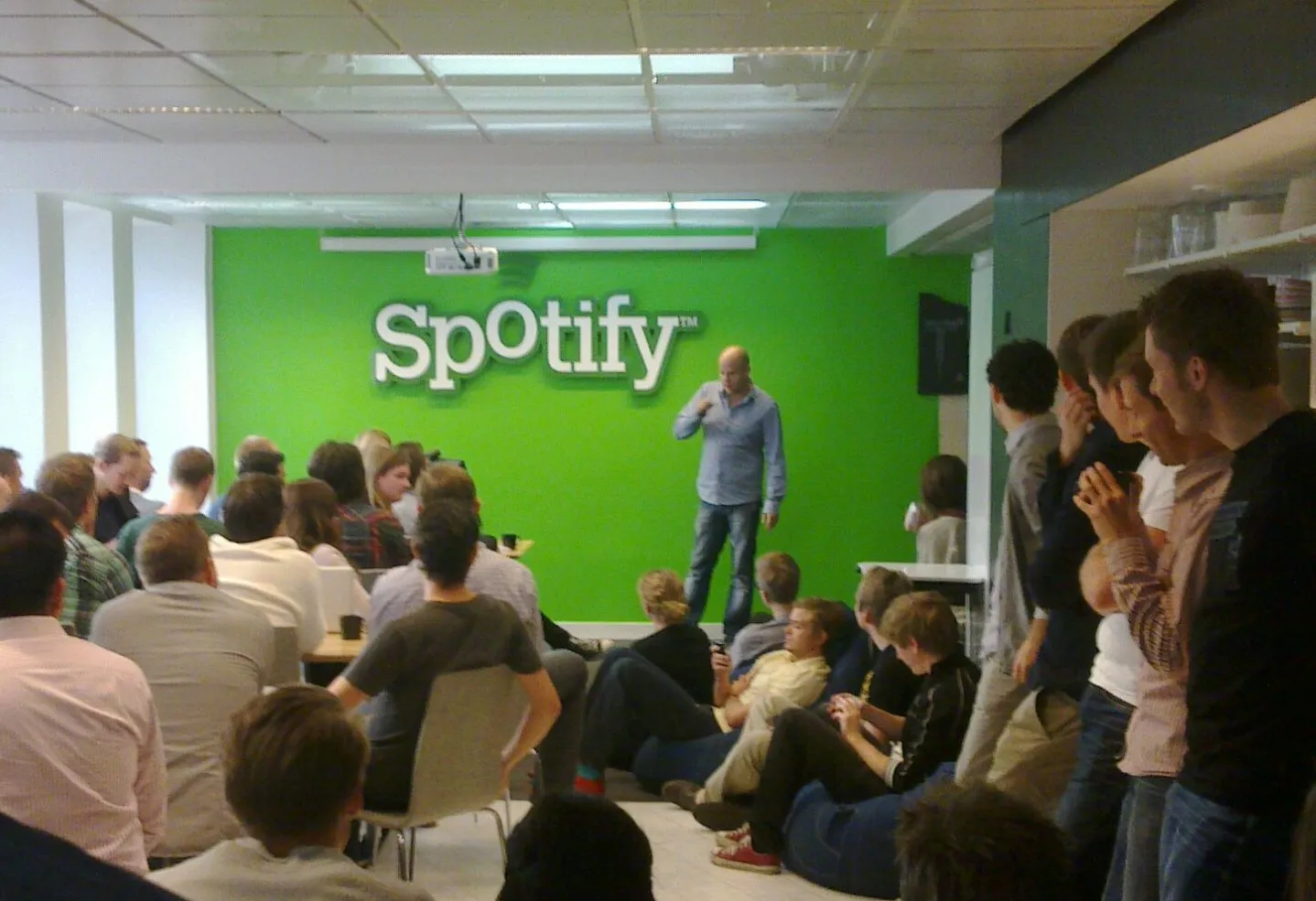
In April 2006, Ek and Lorentzon incorporated Spotify AB in Stockholm. Lorentzon supplied initial funding; Ek recruited Ludvig Strigeus and a tight cadre of systems engineers. They spent two solid years attacking audio latency. They built a custom hybrid peer-to-peer and client-server caching model that could retrieve and stream audio packets in less than 200 milliseconds. When Spotify launched in Scandinavia and Western Europe in October 2008, listeners were stunned. You pressed a track name, and the music played instantaneously.
Global Streaming Economics and Artist Relations
Building the software was easy compared to convincing American record label bosses. U.S. label heads viewed free streaming as commercial suicide, convinced it would destroy profitable ninety-nine-cent digital track sales on Apple’s iTunes.
Ek spent three grueling years flying back and forth between Stockholm and New York, arguing that piracy was already taking 100% of the market. He finally secured U.S. licensing agreements, launching Spotify in America in July 2011. Within ten years, the service blew past 600 million monthly listeners and hundreds of millions of paying subscribers.
Growth triggered furious debates over royalty splits. As covered in Taylor Swift’s biography, major artists famously pulled their catalogs over free-tier streaming payouts, forcing Spotify back to the negotiating table to refine royalty models. On the other hand, artists like the chart-dominating singer featured in Ed Sheeran’s biography rode Spotify’s global recommendation playlists to billions of cumulative plays. Ek’s response was always pragmatic: Spotify paid out roughly seventy percent of its revenue back to rights holders, funneling billions of dollars back into recording studios every single year.
Swedish Tech Advocacy and Public Policy
Ek has never been shy about tangling with politicians. In 2016, he and Lorentzon published an open letter warning the Swedish government that punitive tax rates on employee stock options and a severe housing shortage in Stockholm were choking local startups. They warned that if Swedish policy didn’t modernize, Spotify would move its technical hiring to London, New York, and Berlin.
The letter sparked heated debate in the Riksdag, prompting changes in startup stock option taxes and residential zoning rules. Much like the municipal struggles documented in Brian Chesky’s biography during Airbnb’s expansion, Ek demonstrated that tech leaders must actively push policymakers if they want local tech hubs to survive.
Beyond Music: Neko Health, Prima Materia, and AI Moonshots
Over the past few years, Ek’s attention has drifted well beyond music playlists.
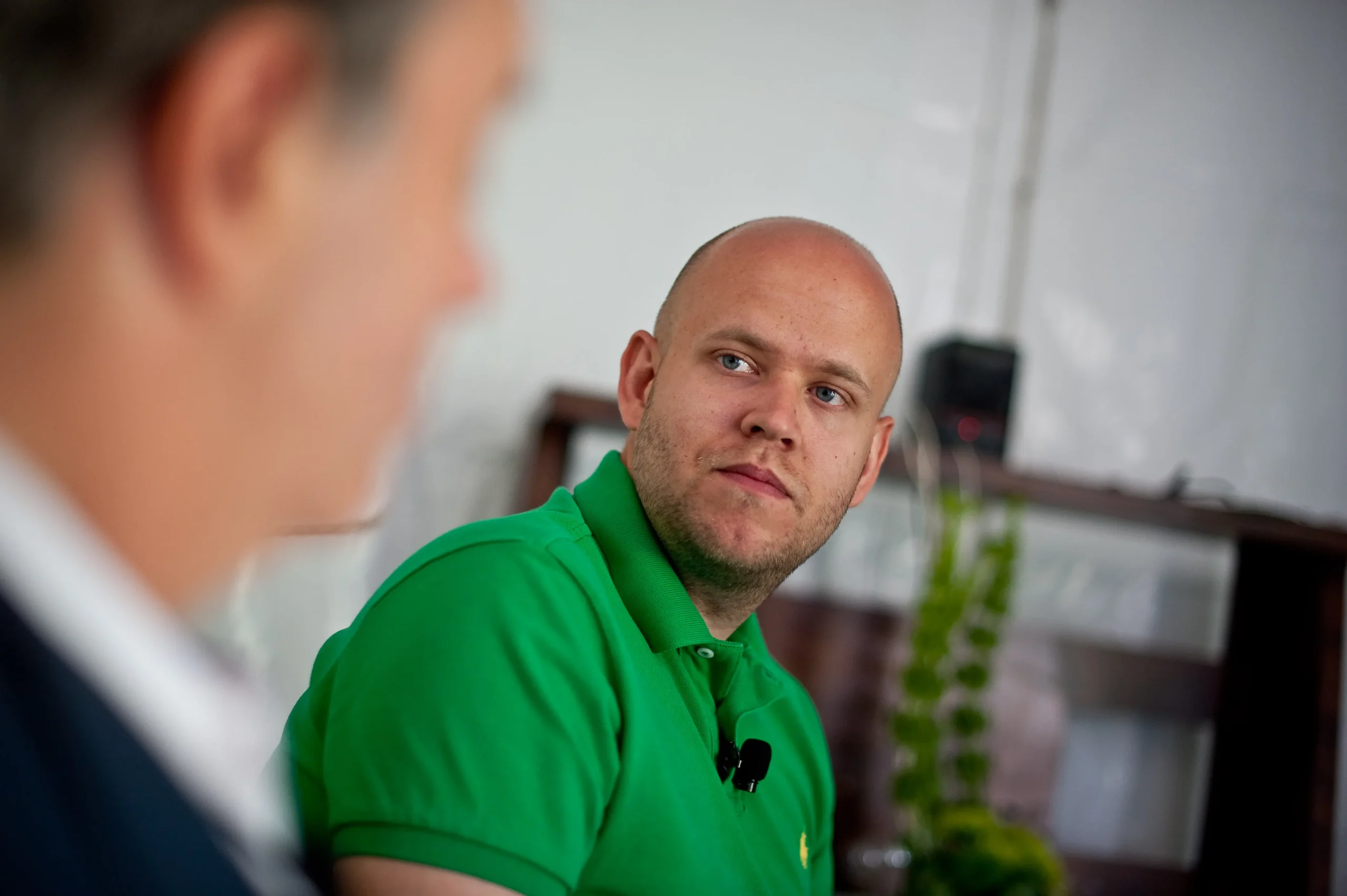
In 2018, he teamed up with technologist Hjalmar Nilsonne to launch Neko Health. They built non-invasive 360-degree clinical scanning pods equipped with over seventy specialized sensors. Using artificial intelligence, the pods analyze skin lesions, heart health, and metabolic indicators in under fifteen minutes. Neko Health opened walk-in clinics in Stockholm and London, with appointments booking out months in advance.
In February 2021, Ek launched Prima Materia alongside early Spotify investor Shakil Khan. Ek pledged one billion euros of his own capital toward European “moonshots”—companies tackling synthetic biology, clean energy, and defense technology. Prima Materia became the lead backer of Helsing, a European artificial intelligence company developing real-time live sensor processing software for defense platforms, where Ek serves as chairman of the board. That push for European technological independence parallels the frontier science described in Demis Hassabis’s biography.
Personal Life: Lake Como Wedding, Arsenal Ambition, and Family
In August 2016, Ek married his longtime partner Sofia Levander at Villa Pliniana on Lake Como, Italy. The wedding had plenty of star power. Comedian Chris Rock officiated the ceremony, pop star Bruno Mars served as wedding singer, and Mark Zuckerberg flew in for the weekend. Ek and Levander live in Stockholm with their two daughters, Elissa and Colinne.
When he isn’t reviewing balance sheets or code architectures, Ek watches Arsenal. In April 2021, after the European Super League project collapsed, Ek made a formal bid to buy Arsenal F.C. from its American owners. He recruited Arsenal legends Thierry Henry, Dennis Bergkamp, and Patrick Vieira to join his ownership bid. The Kroenke family turned down his offers, but Ek told supporters he remains ready if ownership ever decides to sell.
Daniel Ek Social Media Presence & Verified Accounts
Official platforms and verified channels for Daniel Ek are listed below:
| Platform | Official Handle / Link | Status |
|---|---|---|
| X (Twitter) | @eldsjal | Verified |
| @eldsjal | Verified | |
| Daniel Ek | Verified | |
| Spotify Newsroom | Spotify Portal | Corporate |
| Prima Materia | Prima Materia | Official |
Frequently Asked Questions About Daniel Ek
Question: How tall is Daniel Ek?
Answer: Daniel Ek stands approximately 5 feet 9.5 inches tall (177 cm), a measurement documented across public biographical records.
Question: How old is Daniel Ek?
Answer: Daniel Ek was born on February 21, 1983, which makes him 43 years old.
Question: When and why did Daniel Ek start Spotify?
Answer: Ek incorporated Spotify in Stockholm in April 2006 with Martin Lorentzon. He wanted to provide a legal, near-instant streaming player that eliminated piracy friction while paying royalties to artists and record labels.
Question: Who is Daniel Ek’s wife?
Answer: Daniel Ek married Sofia Levander in August 2016 at Lake Como, Italy. Comedian Chris Rock officiated the ceremony, Bruno Mars performed live, and the couple has two daughters named Elissa and Colinne.
Question: What is Daniel Ek’s estimated net worth?
Answer: Forbes estimated Daniel Ek’s net worth at approximately $12.5 billion in 2026, primarily anchored in his equity ownership of Spotify alongside European venture holdings.
Question: Did Daniel Ek try to buy Arsenal?
Answer: Yes, in April 2021 Daniel Ek launched a multi-billion-pound bid to acquire Premier League club Arsenal F.C., backed by club legends Thierry Henry, Dennis Bergkamp, and Patrick Vieira, though the owners declined to sell.
Question: What is Neko Health?
Answer: Neko Health is a preventative medical technology company founded by Daniel Ek and Hjalmar Nilsonne in 2018. It uses 360-degree scanning pods and AI algorithms to detect cardiovascular and skin conditions early.