Palmer Luckey Biography: Age, Height, Oculus Rift, Anduril & Net Worth
Discover the biography of Palmer Luckey, from inventing the Oculus Rift in his teenage garage to founding autonomous defense titan Anduril Industries.
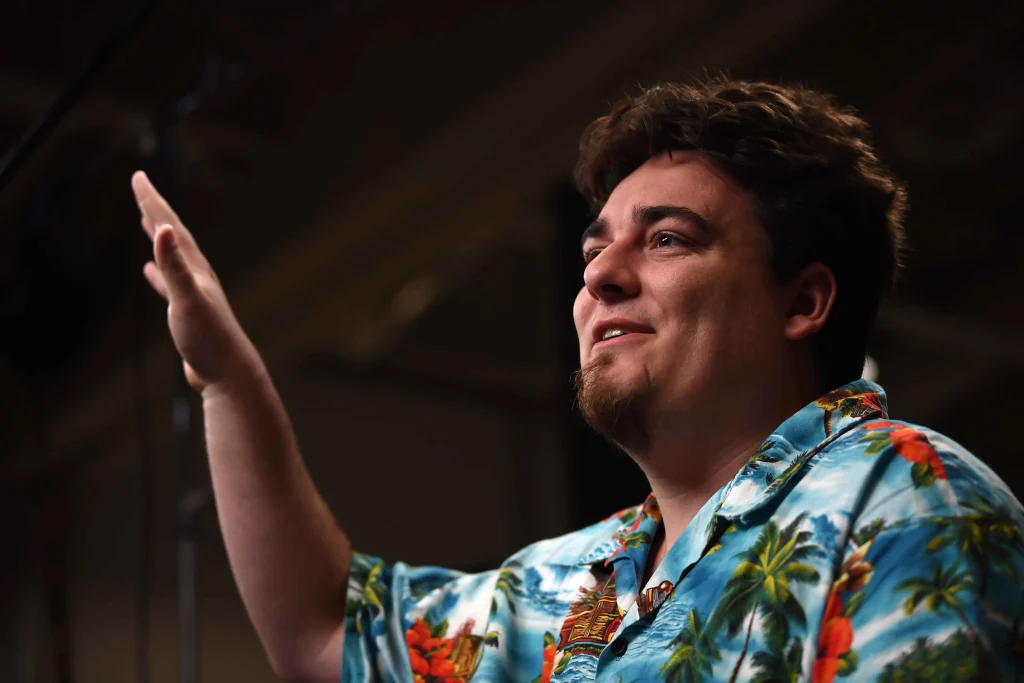
Photo: Stephen McCarthy / Collision via Sportsfile (CC BY 2.0)
Palmer Freeman Luckey dismantled two legacy industries before his thirty-fifth birthday.
Born September 19, 1992, in Long Beach, California, Luckey spent his late teens soldering displays inside an unheated camper trailer parked in his parents’ driveway. By twenty-one, he had launched the modern consumer virtual reality revival with the Oculus Rift, raised millions through Kickstarter, and pocketed a $2 billion buyout from Mark Zuckerberg. Then he walked away from consumer tech altogether. In 2017, he co-founded Anduril Industries, turning his attention to sovereign defense hardware, autonomous border surveillance, and rocket-boosted air interceptors.
Now 34 years old in 2026, Luckey is an outlier in American technology. Silicon Valley builds software; Luckey builds physical machines. His workshop hours revolve around custom circuit fabrication, optical geometry, and tactical hardware. With Anduril holding multi-billion-dollar military contracts alongside major industrial expansions, Luckey’s work has become central to twenty-first-century defense production.
| Palmer Luckey: Quick Biography Facts | |
|---|---|
| Full Name | Palmer Freeman Luckey |
| Date of Birth | September 19, 1992 |
| Current Age | 34 years old (as of 2026) |
| Place of Birth | Long Beach, California, United States |
| Height | 5 ft 7 in (170 cm) |
| Nationality | American |
| Education | California State University, Long Beach (Journalism major; withdrew to build Oculus) |
| Key Companies Founded | Oculus VR (2012), Anduril Industries (2017), ModRetro (2009/2024) |
| Flagship Inventions | Oculus Rift VR Headset, Lattice OS, Roadrunner, Barracuda, Ghost |
| Spouse | Nicole Edelmann (married in 2019) |
| Estimated Net Worth | ~$6 Billion (Forbes market estimate; private unlisted equity holdings) |
Early Life, Teenage Engineering, and Garage Laboratories
Luckey grew up in Long Beach, California. His mother, Julie, homeschooled him alongside his three younger sisters—Ginger, Roxanne, and Maeve—while his father, Donald, worked at a local car dealership.
Homeschooling gave him unstructured hours. He used them to tear apart electronics. In his early teens, Luckey filled his parents’ garage with high-voltage gear, assembling Tesla coils, lasers, and homemade electromagnetic coilguns. The hobby left him with frequent shocks, occasional shrapnel burns, and a stubborn obsession with hardware mechanics.
At 14, he started taking community college courses at Golden West College and Long Beach City College. By 2010, he transferred into California State University, Long Beach, choosing a journalism major and running the online desk of the student newspaper. He skipped most social campus life. His nights were spent scouring government surplus auctions for obsolete military head-mounted displays.
He financed his projects by fixing water-damaged iPhones bought off Craigslist, clearing roughly $36,000 in profit. He bought up vintage 1990s VR helmets from Vuzix, Kaiser Electro-Optics, and Forte Technologies. They were heavy, clunky, and had tunnel-vision 40-degree fields of view. Luckey decided he could build a better optical engine himself. Working in a cramped camper trailer, he built over fifty distinct prototypes, soldering mobile phone screens to ski goggles and running custom lenses to widen the viewer’s peripheral vision. He called the sixth prototype the Oculus Rift.
The Oculus Rift Breakthrough, John Carmack, and the $2 Billion Buyout
In 2012, Luckey posted his prototype design on an obscure hardware enthusiast forum called MTBS3D. John Carmack saw it.
Carmack, the legendary coder behind Doom, requested a sample unit. Luckey shipped him a fragile collection of circuit boards and acrylic glass held together by hot glue and duct tape. Carmack strapped custom gyro sensors to the plastic frame and brought it to E3 in June 2012, showcasing a playable build of Doom 3 BFG Edition. The gaming press went wild.
To turn the unit into an actual kit, Luckey co-founded Oculus VR in April 2012 with Brendan Iribe, Michael Antonov, and Nate Mitchell. Their August 2012 Kickstarter campaign asked for $250,000. It crossed that target in hours, eventually pulling in $2.4 million from nearly 10,000 developers. Instead of relying on bespoke military micro-displays that cost tens of thousands of dollars, Luckey used mass-market smartphone panels and compensated for optical distortion in software. That single engineering choice changed consumer VR forever.
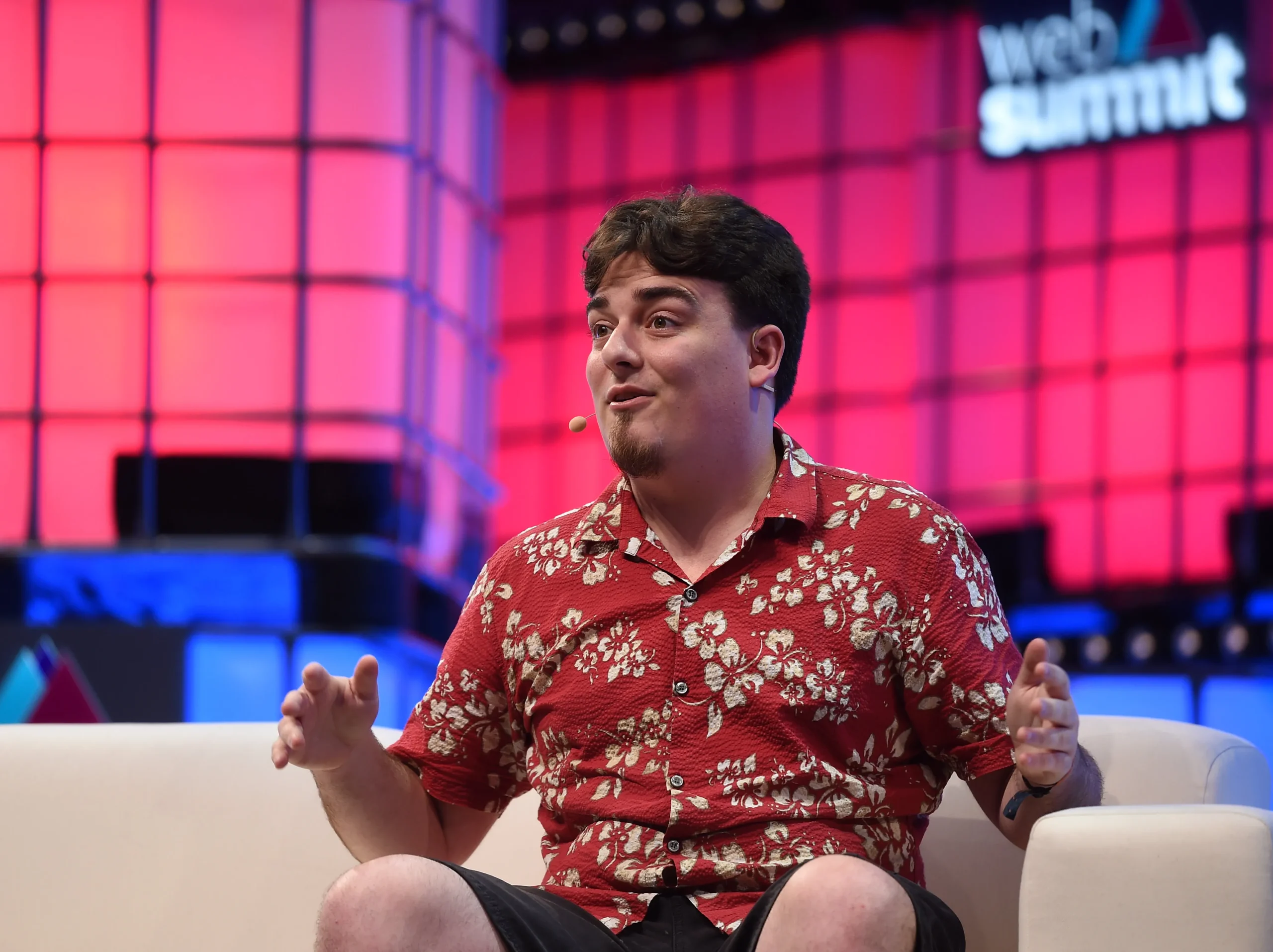
Twenty-two months later, Facebook bought Oculus VR for roughly $2 billion in cash and stock. Palmer was twenty-one years old.
The deal triggered an avalanche of Silicon Valley investment into spatial computing and immersive hardware. Much like Sam Altman redirected startup acceleration and capital deployment, Luckey’s garage triumph proved that outsider hardware hackers could beat established research conglomerates. Luckey stayed on as Oculus’s chief public advocate and lead hardware architect until March 2017, when internal frictions and political donation controversies led to his sudden exit from Facebook.
Founding Anduril Industries: Building Autonomous Defense Hardware
Luckey did not retire to the beach. He went into national defense.
In June 2017, Luckey teamed up with former Palantir executives Trae Stephens, Brian Schimpf, and Matt Grimm, plus ex-Oculus hardware engineer Joseph Chen, to establish Anduril Industries. The thesis was blunt: traditional defense contractors take twenty years and billions of taxpayer dollars to build hardware that runs on decade-old code. Anduril would operate like a Silicon Valley startup, spending private venture capital to build and test finished defense products before selling them to governments.
The core product is Lattice OS. It functions as an artificial intelligence platform that ingests raw telemetry from fixed towers, ground sensors, radar units, and autonomous drones, fusing them into a single, intuitive combat map. In 2018, Anduril deployed autonomous Sentry Towers along remote border sectors, tracking border intrusions without human intervention. The platform quickly secured major Programs of Record with U.S. Customs and Border Protection and the Department of Defense.
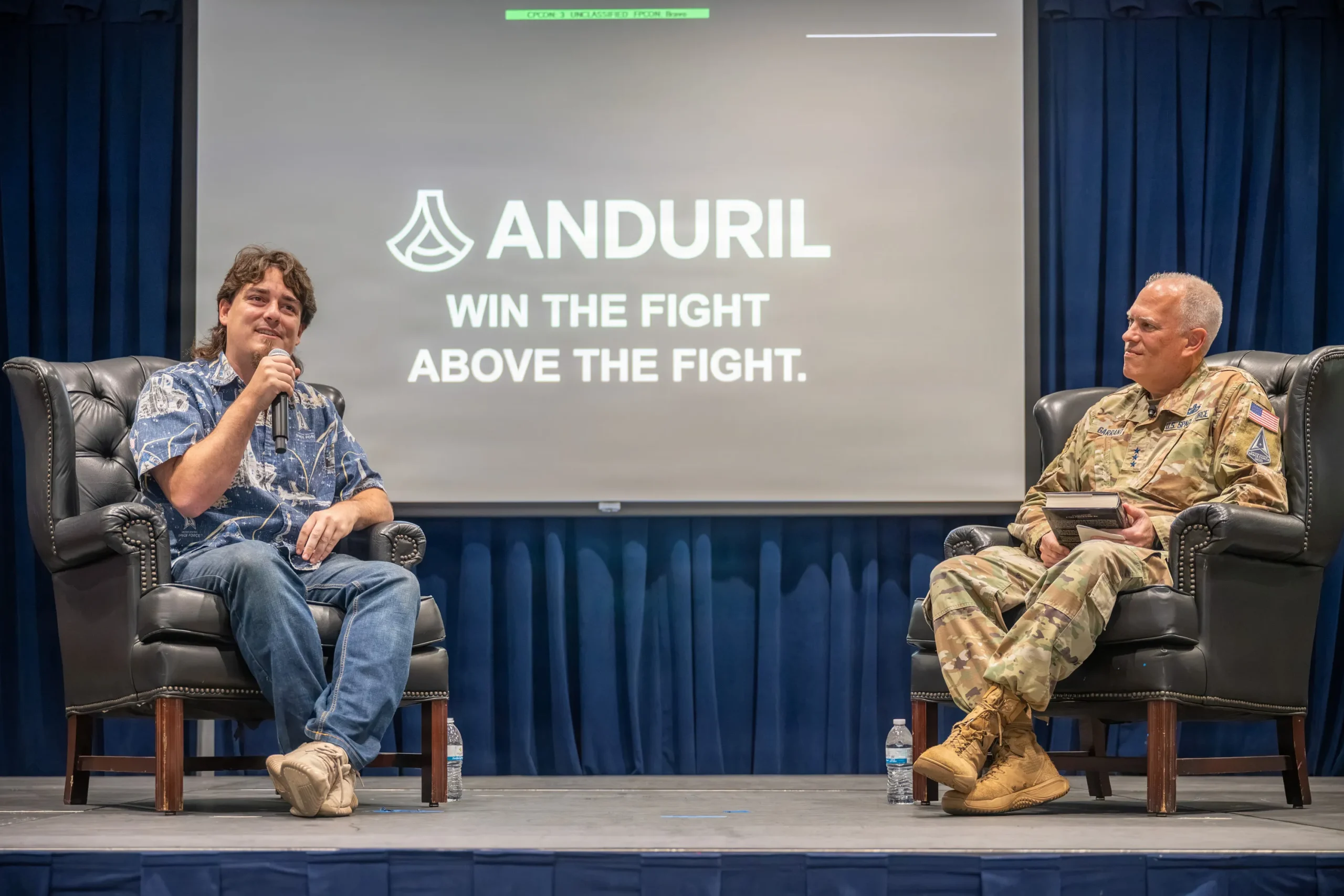
Hardware came next. Anduril built Ghost, a quiet autonomous surveillance drone; Roadrunner, a recoverable jet-powered vertical-takeoff interceptor capable of destroying inbound aerial threats; and Barracuda, an air-breathing autonomous cruise platform designed for rapid manufacturing. In the ocean, Anduril deployed the Dive-LD and Dive-XL autonomous underwater vehicles for deep-sea reconnaissance.
This hardware velocity mirrors the computational leaps spearheaded by chip leaders like Jensen Huang at NVIDIA and algorithmic pioneers like Demis Hassabis at Google DeepMind. By 2026, Anduril secured massive government contracts, including a $6.6 billion joint initiative with the U.S. Navy to expand domestic submarine manufacturing through its Arsenal-1 and ArsenalOS infrastructure programs.
Personal Life, Marriage, and Military Vehicle Collection
Luckey rarely wears formal suits. Even during high-level congressional meetings and international keynote speeches, he typically appears in Hawaiian shirts, cargo shorts, and flip-flops.
In 2019, he married Nicole Edelmann, an avid gamer and former esports community manager whom he dated during his early Oculus days. The couple has one child and lives in Newport Beach, California. Luckey’s sister, Ginger Luckey, is married to former Florida Congressman Matt Gaetz.
At home, Luckey spends his downtime restoring historic military machinery. He holds an active helicopter pilot license and owns a flyable Sikorsky UH-60 Black Hawk. His private marina houses two diesel submarines and an authentic Mark V Special Operations Craft purchased from the U.S. Navy. Luckey does his own wrenching on the fleet, spending weekends tracking down hydraulic leaks and repairing marine engines.
In the same vein that design-obsessed founders like Brian Chesky personally shaped product layouts during Airbnb’s climb, Luckey remains embedded in Anduril’s machine shops, directly inspecting turbine mounts, optical housings, and carbon-fiber assemblies.
Palmer Luckey Social Media Presence & Verified Accounts
Luckey posts technical opinions, defense commentary, and manufacturing updates across his verified accounts.
| Platform | Verified Profile / Handle | Direct Link |
|---|---|---|
| X (formerly Twitter) | @PalmerLuckey (Verified) | Visit X Profile |
| Palmer Luckey (Official Page) | Visit Facebook Profile | |
| Official Company Website | Anduril Industries Official Portal | Visit Anduril.com |
Frequently Asked Questions About Palmer Luckey
Question: How tall is Palmer Luckey?
Answer: Palmer Luckey is 5 feet 7 inches tall, which measures roughly 170 centimeters.
Question: How old is Palmer Luckey in 2026?
Answer: Born on September 19, 1992, Palmer Luckey is 34 years old in 2026.
Question: What is Palmer Luckey’s net worth?
Answer: Forbes estimates his wealth at approximately $6 billion. Because his equity is tied directly to private valuation rounds of Anduril Industries rather than liquid assets or public filings, that figure remains an unverified market estimate.
Question: Why did Palmer Luckey leave Facebook in 2017?
Answer: Luckey departed Facebook in March 2017 after controversy erupted regarding his financial contributions to external political groups. Following his departure, he co-founded Anduril Industries.
Question: What does Anduril Industries manufacture?
Answer: Anduril builds autonomous military systems, including Lattice AI software, automated sensor towers, jet-powered Roadrunner interceptors, Ghost surveillance drones, and unmanned submarines.
Question: Who is Palmer Luckey’s wife?
Answer: Palmer Luckey married Nicole Edelmann in 2019. The couple has one child and lives in Newport Beach, California.